Tandoori Marinade Recipe — Works for Chicken, Lamb and Paneer
This is the tandoori marinade we’ve developed and refined over years of cooking with our clay tandoor oven – and the one we come back to every single time. It works beautifully for chicken, lamb, paneer and vegetables, and produces results that are genuinely comparable to a good Indian restaurant.
The secret most tandoori marinade recipes miss is the gram flour, also called atta or chickpea flour. Unlike plain wheat flour, gram flour has almost no taste of its own and doesn’t make the marinade feel stodgy or heavy. What it does is bind the liquid marinade to the surface of whatever you’re cooking, preventing it from simply dripping off when skewered or placed on a grill. When the intense heat hits it, the gram flour chars beautifully — adding that slightly smoky, slightly nutty depth that is a defining characteristic of properly cooked tandoori food.
The other non-negotiable is time. Four hours is the absolute minimum for this marinade to do its work – the lactic acid in the yoghurt needs time to penetrate the meat and tenderise the muscle fibres. Overnight in the fridge is significantly better. For bone-in chicken pieces or thick cuts of lamb, 24-48 hours produces the most deeply flavoured result. We typically put whatever we’re marinating in the fridge before bed the night before and cook it the following evening.
This marinade was developed specifically for our clay tandoor oven — if you have one, see our complete guide to cooking with a tandoor oven for tips on getting it up to temperature and how to cook naan alongside the main dishes. If you don’t have a tandoor, don’t worry — this marinade works equally well on a BBQ, under a very hot grill or in an oven cranked to its maximum temperature.
How to Cook Tandoori Dishes
In a Clay Tandoor
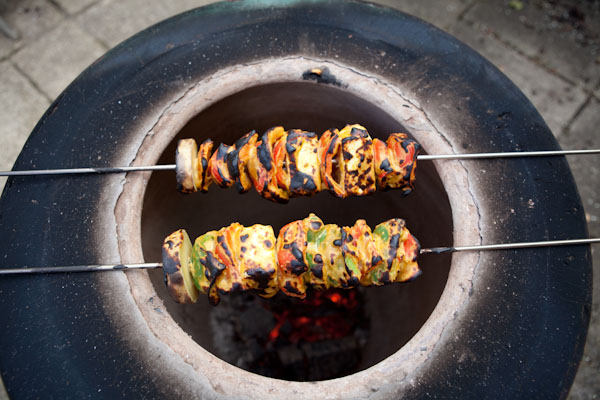
The ultimate method. Get the tandoor to at least 400°C — the walls should have lightened in colour and you should be unable to hold your hand 30cm above the opening for more than two seconds. Lower skewered meat vertically into the oven. At full temperature bone-in chicken pieces take 10-15 minutes, seekh kebabs 6-8 minutes, paneer tikka 6-8 minutes. See our full tandoor cooking guide for a complete walkthrough.
On a BBQ
The best home alternative to a tandoor. Get the BBQ as hot as possible — let the coals burn down to glowing white embers before cooking. The direct charcoal heat combined with the smoke from dripping marinade produces results very close to a tandoor. Cook bone-in chicken pieces for 12-18 minutes turning regularly, until the juices run clear.
Under the Grill
Crank the grill to maximum and preheat for 10 minutes before cooking. Place marinated pieces on a wire rack set over a baking tray and grill on the top shelf, turning halfway. Bone-in chicken pieces take 20-25 minutes. Keep watching — the marinade chars quickly at high heat which is what you want, but there’s a fine line between beautifully charred and burnt.
In the Oven
Set the oven to maximum temperature — 240°C or as high as it goes. Use the top shelf and again a wire rack over a baking tray so heat circulates under the food. The results are good if not quite as dramatic as a tandoor or BBQ, but very practical for cooking large quantities. Finish under the grill for the last 3-4 minutes for a better char.
Tandoori Marinade
Ingredients
Method
- Place the gram flour in a dry frying pan and toast over a medium heat for 2-3 minutes, stirring constantly, until it turns a shade darker and smells nutty. Remove from heat and allow to cool. This step removes the raw flour taste and deepens the flavour.
- Combine the toasted gram flour, yoghurt, crushed garlic, grated ginger, lemon juice and oil in a large bowl. Mix until smooth.
- Add the Kashmiri chilli powder, ground bird's eye chilli, turmeric, cumin, ground coriander and salt. Mix thoroughly until fully combined and the marinade is a consistent deep orange-red colour.
- Taste and adjust seasoning — add more salt, lemon juice or chilli to your preference.
- Add your prepared ingredients (chicken pieces, lamb, paneer or vegetables) and coat thoroughly. Make sure every surface is covered.
- Cover and refrigerate for a minimum of 4 hours — overnight gives significantly better results. For bone-in chicken pieces and lamb, 24-48 hours produces the most flavourful result.
- When ready to cook, remove from the fridge 30 minutes before cooking to allow the meat to come to room temperature.
Notes
- Kashmiri chilli powder gives a vibrant red colour without excessive heat — it’s available from most Asian supermarkets and online. If unavailable, use standard red chilli powder but the colour will be less vivid
- Don’t skip the gram flour — it binds the marinade to the food and prevents it sliding off during cooking
- For a deeper red colour add a teaspoon of tomato purée or a pinch of red food colouring — this is how restaurants achieve the intensely red colour
- If cooking in a regular oven, cook at the highest setting (240°C) for best results — the marinade needs high heat to char correctly
Tandoori marinade Ingredients
- 450g of natural yoghurt
- 2 tablespoons of Gram Flour (atta)
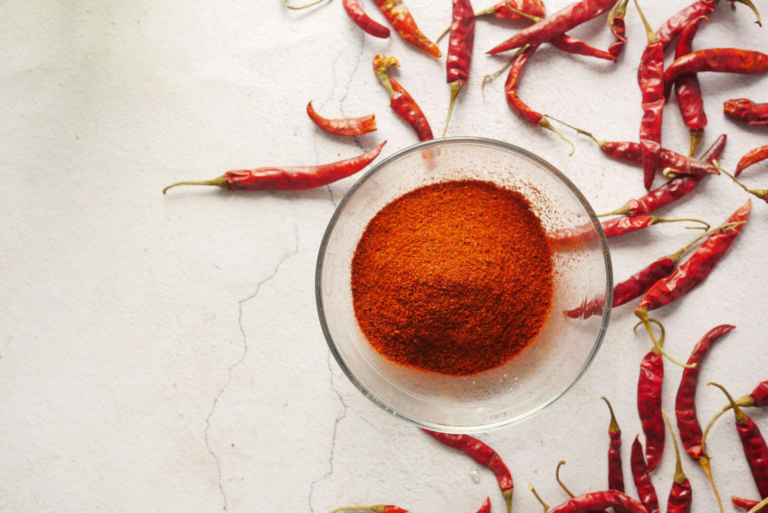
- 2 teaspoons of red chilli powder
- 1 ground birds eye chilli
- 2 teaspoons of turmeric
- 2 teaspoons of ground cumin
- 2 teaspoons of ground coriander seeds
- salt to taste
As you’d expect this is a fairly forgiving recipe so don’t worry too much if you don’t have all of the ingredients, feel free to adapt it to your tastes and preferences.
What to Marinate
This recipe is versatile enough to work with virtually anything you want to cook at high heat.
Chicken — bone-in thighs and drumsticks are the classic choice and genuinely the best. The bone adds flavour and the fat in the thigh meat keeps it moist even at tandoor temperatures. Breast works too but dries out more quickly — watch it carefully. Score the skin and flesh deeply before marinating so the flavours penetrate properly.
Lamb — leg of lamb steaks, shoulder chops and diced lamb all work beautifully. Lamb has a natural affinity with the spicing in this marinade — the cumin and coriander complement the flavour of the meat rather than masking it. Marinate for a minimum of 24 hours, 48 hours for the best result.
Paneer — cut into 3cm cubes and marinated for at least 2 hours. Paneer holds its shape brilliantly at high temperatures and develops an excellent char. Thread onto skewers alternating with peppers, onion and mushrooms for a colourful vegetarian option. Alternative this marinade works great for our paneer and pineapple tikka recipe – our Indian version of that 1970’s classic canapé.
King prawns — marinate for no more than 1 hour as the lemon juice will start to denature the protein. Cook for 3-4 minutes maximum at high heat.
Vegetables — peppers, courgette, mushrooms, cauliflower and red onion all work well. Cut into chunks and thread onto skewers. 6-8 minutes at high heat gives a good result with some charring.
Variations
Hotter version — increase the bird’s eye chilli to 2-3 pods and add a teaspoon of our habanero hot sauce to the marinade. The fruity heat of habanero works particularly well with the spicing.
Mint and coriander version — blend a large handful each of fresh mint and coriander with the yoghurt before adding the other ingredients. This gives a green-tinted marinade (hariyali style) with a fresher, more herbaceous flavour.
Fish version — reduce the yoghurt to 250g, add an extra tablespoon of lemon juice and a teaspoon of mustard seeds. Marinate fish for no more than 30 minutes and cook quickly at high heat.
Milder family version — omit the bird’s eye chilli, halve the Kashmiri chilli powder and add a teaspoon of paprika for colour without heat. The result is fragrant and spiced but not hot.
FAQ
What makes a good tandoori marinade?
Three things: yoghurt as the base (the lactic acid tenderises meat), gram flour to bind the marinade to the surface during cooking, and sufficient marinating time — at least 4 hours, overnight for best results. Most shop-bought tandoori paste shortcuts on at least one of these.
Can I use this marinade without a tandoor?
Yes — this marinade works equally well on a charcoal BBQ, under a very hot grill or in an oven at maximum temperature. The tandoor produces the most dramatic results but good tandoori chicken can absolutely be made at home without specialist equipment.
Why is my tandoori chicken not red?
The vivid red of restaurant tandoori chicken typically comes from Kashmiri chilli powder — a mild, deep red variety — combined in many cases with a small amount of red food colouring. This recipe uses Kashmiri chilli for the colour. For a more vivid red add a teaspoon of tomato purée or a tiny pinch of red food colouring.
Can I use Greek yoghurt instead of natural yoghurt?
Yes, Greek yoghurt works well and produces a slightly thicker, richer marinade. The higher fat content can help the marinade adhere to the meat. Use the same quantity.
How long should I marinate tandoori chicken?
Minimum 4 hours — overnight gives significantly better results. For bone-in pieces and lamb, 24 hours produces the most deeply flavoured, tenderised result. Don’t marinate for longer than 48 hours as the lemon juice will start to break down the protein too aggressively.
What is gram flour and where can I buy it?
Gram flour (also called atta or chickpea flour) is made from ground dried chickpeas. It’s widely available from Asian supermarkets, health food shops and online. It’s the key binding ingredient in this marinade — don’t substitute with plain wheat flour which has a different flavour and doesn’t char in the same way.
Can I freeze tandoori marinated chicken?
Yes — you can freeze raw chicken in the marinade. The freezing and thawing process actually extends the tenderising effect of the marinade. Defrost overnight in the fridge and cook as normal.
Related Recipes
Lamb Kofta Kebab Recipe The natural companion dish. Spiced minced lamb on skewers that cook brilliantly alongside tandoori chicken in a clay oven or on a BBQ.
Cooking with a Tandoor Oven Our complete guide to using a clay tandoor — how to heat it up, what to cook and the lessons we learned the hard way.
Dishoom Black Daal Recipe – The perfect accompaniment to a tandoori spread. Rich, buttery dal makhani made easy in a slow cooker.
Indian Rasam Recipe – A light South Indian broth that works beautifully as a starter before tandoori dishes.
Scotch Bonnet Sauce An excellent dipping sauce alongside tandoori chicken for those who like serious heat.
Lime Pickle Recipe – The classic accompaniment to any Indian meal, particularly good alongside tandoori dishes.
Homemade Yogurt Recipe – Why not make your own yogurt which is tangy and surprisingly easy to make.