Easy Rasam Recipe
Rasam is one of South India’s most beloved dishes. A thin, intensely flavoured broth that manages to be simultaneously sour, spicy, earthy and deeply comforting. If dal makhani is North India’s great comfort food, rasam is the South’s equivalent, found on family tables from Tamil Nadu to Karnataka every single day.
The flavour profile is built around three pillars: tamarind for sourness, tomato for body and sweetness, and a generous quantity of black pepper and chillies for heat. The curry leaves, mustard seeds and asafoetida fried in ghee at the start (a technique called a tarka or tadka) bloom into the broth and give it that distinctive toasty, aromatic depth that makes rasam smell and taste like nothing else.
Unlike many Indian dishes, rasam comes together quickly. Once you have your ingredients ready it takes under 30 minutes from start to finish, making it one of the most practical South Indian recipes to have in your weeknight repertoire.
What is Rasam?
Rasam is a thin South Indian soup or broth made with tamarind, tomatoes, pepper and spices. It is one of the foundational dishes of South Indian cuisine alongside idli, dosa and sambar, and has been eaten in the region for centuries.
The word rasam comes from the Sanskrit word “rasa” meaning juice or essence — which describes the dish perfectly. It is thin and watery in texture, quite unlike the thick gravies of North Indian cuisine, and is closer in consistency to a clear broth than a traditional soup.
Rasam is eaten in several ways depending on the region and the household. Most commonly it is poured over plain boiled rice and eaten as part of a thali – the rice absorbs the flavour of the rasam beautifully. It can also be served in a small cup and drunk as a digestive after a meal, or served as a light starter in its own right. In many South Indian homes rasam is served as a second course after sambar, the rice and rasam course is a staple of the traditional meal structure.
Beyond its culinary role, rasam has a reputation as a restorative dish. The combination of black pepper, ginger, turmeric and tamarind has been used medicinally in Ayurvedic tradition for generations. In South India, a bowl of rasam is the first thing produced when someone has a cold or feels under the weather, in much the same way a bowl of chicken soup is the traditional remedy in western households.
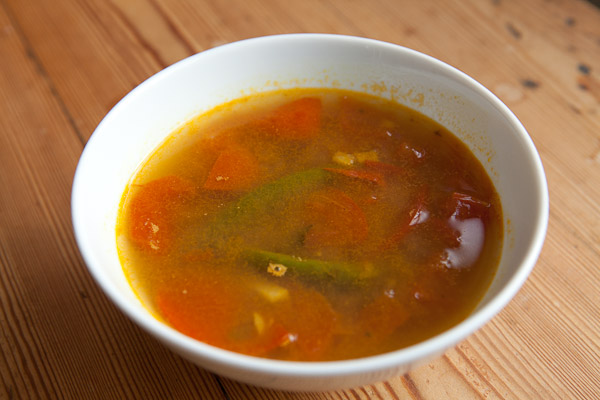
Easy South Indian Rasam Recipe
Ingredients
Method
- Soak the tamarind in just enough hot water to cover for 10 minutes, crushing with the back of a spoon to extract the pulp. Strain through a sieve into a bowl and set aside. If using tamarind paste, dissolve in 100ml warm water.
- Heat the ghee or oil in a pan over a medium heat. Add the mustard seeds and curry leaves and cook until the mustard seeds begin to pop.
- Add the crushed cumin, dried red chilli, crushed black pepper and asafoetida. Stir and cook for 30 seconds until fragrant.
- Add the chopped tomatoes, green chillies, ginger, lentils, turmeric and salt. Stir to combine.
- Pour in the 750ml of water and the strained tamarind water. Stir well.
- Bring to the boil then reduce to a gentle simmer. Cook for 20 minutes until the lentils are completely soft and have dissolved into the broth.
- Taste and adjust seasoning — add more salt, tamarind or chilli to taste.
- Serve garnished with fresh coriander, either as a soup or poured over rice.
Notes
- If you can’t find tamarind block, tamarind paste is an easy substitute — use 2 tablespoons dissolved in warm water
- Asafoetida (hing) is available from Asian supermarkets and adds an onion-garlic flavour. It can be omitted if unavailable but does make a difference to the final taste
- Rasam can be made thinner or thicker by adjusting the water quantity — for a thinner soup add 250ml more water
- Leftovers keep for 2-3 days in the fridge and reheat well
What to Serve With Rasam
Poured over rice — the classic and most traditional way to eat rasam. Plain boiled basmati or parboiled rice soaks up the broth beautifully. Add a spoonful of ghee over the rice before pouring the rasam over the top.
As a soup with papadum — serve in a small bowl or cup with crispy papadum for dipping. This works very well as a light starter before a larger Indian meal.
Alongside a thali — rasam is a standard component of a South Indian thali alongside rice, sambar, a dry vegetable dish and pickle. If you’re cooking a larger Indian spread it belongs on the table.
With idli or dosa — the crispy fermented rice pancake (dosa) or steamed rice cake (idli) are traditional South Indian breads that pair perfectly with rasam as a dipping broth.
As part of an Indian feast — rasam pairs particularly well alongside our tandoori marinade recipe for a mixed South and North Indian spread, or alongside our Dishoom black daal recipe for a dal-focused vegetarian meal.
FAQ
What does rasam taste like?
Rasam has a complex, layered flavour — simultaneously sour from the tamarind, sweet from the tomatoes, earthy from the cumin and peppercorns, and spicy from the chillies and black pepper. The curry leaves and asafoetida fried in ghee add a distinctive toasty, aromatic depth. It is thin and brothy in texture rather than thick like most Indian curries.
What is asafoetida and can I leave it out?
Asafoetida — sold as “hing” in Asian supermarkets — is a dried resin with a strong smell that mellows dramatically during cooking into an onion-garlic-like flavour. It’s a traditional ingredient in rasam and many South Indian dishes. If you can’t find it you can leave it out — the rasam will still be very good — but if your local Asian supermarket stocks it, it’s worth buying for the authenticity it adds.
Can I use tamarind paste instead of tamarind block?
Yes. In my experience tamarind paste is a convenient substitute. It is much easier to find in the UK compared to fresh tamarind. Use 2 tablespoons dissolved in 100ml of warm water in place of the soaked tamarind block. The flavour is slightly less complex than fresh tamarind but works well and saves a significant amount of preparation time.
Is rasam vegan?
This recipe uses ghee which is clarified butter and therefore not vegan. Substitute an equal quantity of coconut oil or neutral vegetable oil and the recipe becomes fully vegan. All other ingredients are plant-based.
Why has my rasam come out too sour?
This usually means the tamarind quantity was slightly too high or the tamarind was particularly strong. Add a small amount of sugar — half a teaspoon at a time — and simmer for a further 5 minutes. A little jaggery (unrefined cane sugar) is the traditional correction in South Indian cooking.
Can I make rasam ahead of time?
Yes. Rasam actually improves slightly after a few hours as the flavours develop further. Make it earlier in the day and reheat gently before serving. It keeps for 2-3 days in the fridge. You may need to add a splash of water when reheating as it thickens slightly on standing. It also freezes extremely well.
Can I make rasam without lentils?
Yes. The lentils add body and a slight thickening to the broth but are not essential. Some rasam recipes contain no lentils at all, particularly the faster versions like lemon rasam or pepper rasam. Without lentils the rasam will be slightly thinner and clearer.
Rasam Variations
Rasam has as many regional variations as India has kitchens. Here are the most popular:
Tomato Rasam — the version in this recipe and the most common for beginners. Tomatoes provide body, natural acidity and a gentle sweetness alongside the tamarind.
Pepper Rasam (Milagu Rasam) — a simpler, more pungent version emphasising black pepper above everything else. Less tamarind, more pepper, traditionally drunk as a cold remedy. Genuinely excellent.
Garlic Rasam — whole roasted garlic cloves added to the broth, deeply aromatic and slightly mellower in its sourness. Very popular in Karnataka.
Pineapple Rasam — a sweeter, more unusual variant where ripe pineapple replaces some of the tamarind and tomato. Sounds strange, tastes wonderful.
Lemon Rasam — the tamarind is replaced with fresh lemon juice, added off the heat at the end. Cleaner, brighter and very quick to make.
Mysore Rasam — includes coconut and coriander seeds, giving it a slightly thicker consistency and more complex spicing than the standard version.
This recipe is the classic tomato rasam and the best starting point if you’re new to the dish.
More Indian Recipes
Dishoom Black Daal Recipe — the famous London restaurant’s take on dal makhani, made easy with a slow cooker. Rich, buttery and deeply satisfying.
Tandoori Marinade Recipe — our go-to marinade for tandoori chicken, vegetables or paneer. The gram flour helps it bind and char beautifully.
Lime Pickle Recipe — a punchy, sharp condiment that pairs brilliantly alongside rasam as part of a South Indian meal.
Mint and Coriander Chutney — the classic cooling chutney that works alongside almost any Indian dish.