
Growing chillies is like any form of gardening, before too long your plants will pick up some sort of pests or disease. Chilli plant pests and diseases can be wide ranging however once you know what to look out for the cures are often simple.
In this article we’ll look at some of the more common problems your plants may face.
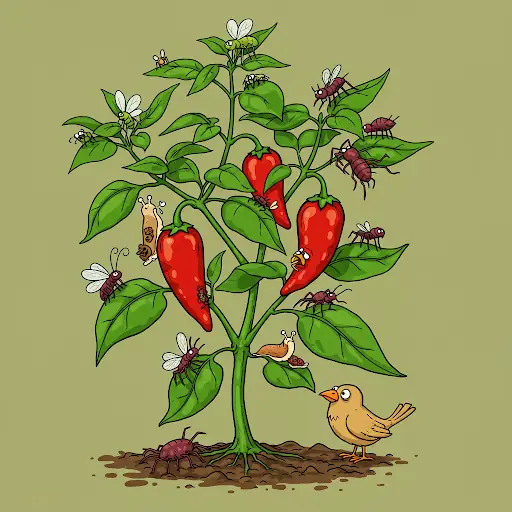
Slugs & Snails
These are often the worst enemies of chillie growers. There is nothing more that slugs and snails like more than to tuck into a young juicy chilli plant. Tell tale signs (apart from the obvious slime trails) are that young branches near the base of the plant have been stripped away overnight or parts of leaves (often the centre) have been munched away.
Both kinds of mollusks prefer dark damp places to live so some simple housekeeping around the garden can deter them living near your plants. Try to keep areas around the base of your plants free from fallen leaves that have a tendency to rot. Climbing ivy is another favoured hiding place so try to trim back at the bottom of walls where the ivy meets the ground.
Preventing Slugs & Snails
There are various methods to combat these pests including the traditional slug pellets. However these can be harmful to any birds that eat the poisoned pellets so a more organic approach may be better. That said there are quite a few organic slug pellets entering the market now which are much safer for pets and wildlife.
You can try beer traps – simply half fill a cup with beer (not lager) then bury the cup in the soil near your chilli plants so the rim is level with the ground. At least with this method they should die happy!!
Physical Barriers to Prevent Slugs
Copper is known to repel slugs and snails because it produces a very slight electric charge that they hate. You can purchase copper rings to place around the base of plant pots or can place copper tubing or piping round you raised beds. The slugs and snails can’t stand it so much they avoid crawling over to get to your chilies and will head off elsewhere in search of food. The downside to this is that copper piping or rings can be expensive, however once purchased it should last you for years.I have had very good success using this method.
Another potential deterrent to use are egg shells sprinkled around the base of your plants. Slugs supposedly hate crawling over the shells. Another method that has had mixed results for me is to sprinkle used coffee grounds around the base of the plants. This is not only a snail deterrent but it helps add much needed nitrogen to the soil, aiding your pepper plants growth.
Molusc Hunts Work!
Another very effective method, if more time consuming is to go on regular snail hunts. If you can spare the time head out just after dark armed with a torch as this is the best time to catch the enemy on the move. If you have a root around in and around the chilli plants you’ll be amazed how many you find. Once you find them you have two options – relocate them somewhere else or end their chilli eating once and for all.
Slugs and Snails are both hermaphrodites (they can reproduce on their own without a mate) and also can lay huge numbers of eggs. This means a single mollusk amongst your chilli plants can soon lead to a whole army feasting on your chilli seedlings you’ve been carefully nurturing over the spring. As a result it is crucial that any treatment or action is not just a one off. If you continue you snail hunts every night for a week or two you should make a serious dent in the population and from then on less frequent hunts (once a week) should keep them at bay.
Related: We’ve put together a more detailed article on Slugs and Snails that may be on interest.
Aphid Infestations on Chilli Plants
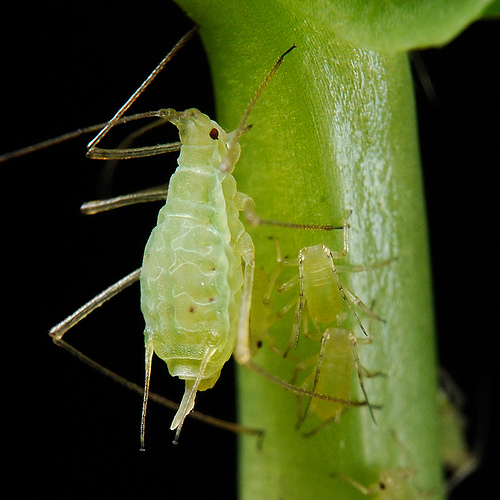
These tiny creatures can infest your plants at any time during the growing season. They look like tiny white specks and tend to gather around the shoot tips, flower buds and all over younger leaves. At first glance they can look like some form of fungus however if you take a much closer look each speck will have legs!
Aphids also leave a sticky white residue on leaves that they have been feeding on. Again this is easily mistaken for fungus. As mentioned the aphids tend to attack and feed on the new growth of the plants resulting in stunted or deformed growth.
How to Control Aphids on Chili Plants
- Sprays: After lots of experimentation we have found two types of spray that can work well against aphid infestations. Firstly we recommend trying a very weak soap solution sprayed onto you chilli plants twice a week for 2 weeks. Secondly Neem oil is a naturally occurring pesticide found in seeds from the neem tree. It has been proven to work very well against aphids and other pests and while more costly is our preferred version. Buy some now on Amazon.
- Natural predators. Lady birds and hover flies are natural predators of aphids. Trying to attract them into your garden is a great way to naturally control the pests. Planting bright flowers (french marigolds work particularly well) in and around your chillies is a great way to attract these bugs. This works well as a preventative measure. If you need an instant impact you can purchase ladybirds or larvae from Amazon and simply release them onto you plants or into your greenhouse for an immediate aphid feast! A more sustainable long term option is to install a ladybird nest box into your garden close to your plants.
Related: How I solved my aphid problem.
Thrips
Thrips are small, slender insects that can cause significant damage to chilli plants by feeding on their leaves, flowers, and fruits. They are also known to transmit the tomato spotted wilt virus, which can transfer over to chilli plants.
Symptoms:
- Silvery or bronze streaks on leaves
- Deformed or scarred fruit
- Stunted plant growth
Control Methods:
- Manual removal: Simply spray your pepper plants with fresh water which can be moderately successful at removing the thrips and larvae from leaves. Be sure to spray the underside of the leaves.
- Blue Sticky Traps: Use blue sticky traps to attract and catch thrips.
- Reflective Mulch: Mulching with reflective materials can deter thrips by confusing them.
- Spinosad spray: An organic pesticide that effectively targets thrips while being safe for beneficial insects. It is worth noting that spinosad can be harmful to bees so I only use it inside a greenhouse and as a last resort.
- Avoidance: Often thrips are brought into growing spaces when you buy new plants from a nursery or garden centre. When buying new plants always inspect them carefully before purchasing and consider isolating them for a week or two before moving them near your other plants.
Whitefly on Chilli Plants
Whitefly are tiny white flying insects that cluster on the undersides of leaves, feeding on plant sap and excreting a sticky honeydew residue. In a sealed greenhouse with no natural predators they can multiply extremely rapidly. A minor infestation can become serious within days during warm summer weather.
Whitefly Symptoms:
- Tiny white insects flying up when plant is disturbed
- Sticky residue on leaves — sometimes black sooty mould follows
- Yellowing leaves on heavily affected plants
Whitefly Control methods:
- Yellow sticky traps: hang at plant height throughout the greenhouse. Whitefly are strongly attracted to yellow and these both monitor and control populations
- Neem oil spray: applied every 5-7 days disrupts the whitefly life cycle effectively over 2-3 weeks
- Move plants outside: even briefly exposing greenhouse plants to outdoor conditions introduces natural predators rapidly
- Encarsia formosa: a parasitic wasp available by mail order that provides effective biological control in greenhouses at temperatures above 18°C
Related: Our dedicated whitefly guide covers identification, control and prevention in full detail.
Red Spider Mite on Chilli Plants
Red spider mite is a serious pest in hot dry greenhouse conditions – exactly the conditions UK greenhouse growers create in summer. The mites themselves are almost invisible to the naked eye but the damage they cause is distinctive. Look for a very fine webbing on the undersides of leaves and a pale, speckled or bronzed appearance to the leaf surface where mites have been feeding.
Spider Mite Symptoms:
- Fine webbing on leaf undersides and between stems
- Pale, stippled or bronzed leaf appearance
- Leaves becoming dry and papery in severe infestations
- Rapid spread in hot, dry conditions
Spider Mite Control methods:
- Increase humidity — red spider mite thrives in hot dry conditions. Regularly misting plants and the greenhouse floor raises humidity and makes conditions less hospitable
- Neem oil spray — effective applied every 3-5 days. Cheap and available on Amazon.
- Phytoseiulus persimilis — a predatory mite available by mail order that is the most effective biological control for red spider mite. Releases directly onto affected plants
- Move plants outside — exposure to outdoor humidity and natural predators dramatically reduces mite populations
Mold & Rot on Pepper Plants
These kinds of problem can occur with any type of plants. Symptoms can be anything from mold on the leaves to brown, sot fruit, fungus around the stems. The usual causes are irregular or over watering, over crowding of plants or poor ventilation. As is the case when growing any plants, leave plenty of space between chilli plants, keep them well ventilated (especially if growing inside) and water regularly but not too often. If you get the balance right you should avoid these kind of problems quite easily.
A greenhouse fan heater running in fan-only mode during mild spells improves air circulation and significantly reduces fungal disease risk — see our greenhouse heater recommendations.
Tips for Disease/Pest Free Chilli Plants
- Good Garden Hygeine. Keeping your growing area clean can prevent fungal infections and other diseases from thriving. Regularly remove dead or dying leaves and other plant debris. Perform an annual deep clean of your greenhouse and/or growing equipment including pots. Avoid overwatering or having a damp growing environment by increasing ventilation. Also ensure adequate spacing between plants to ensure good airflow.
- Choose disease resistant chilli varieties. Choosing commercially produced F1 chilli varieties can be a good way to ensure your plants are less susceptible to disease.
- Use Organic Pest Control. I’ve head great success with encouraging and even buying ladybirds to control aphids. Also Neem oil has proven effective at getting any outbreaks under control.
- Inspect your pepper plants. It is much easier to control pests and diseases if you catch them early. Make a point of regularly inspecing your plants regularly (at least once a week).
- Inspect new plants. If you are buying new chilli plants from a nursery or garden centre always inspect them for pests and diseases thoroughly before buying them.
FAQ
What are the most common pests on chilli plants in the UK?
The most common pests affecting UK chilli plants are aphids, whitefly (particularly in greenhouses), red spider mite (in hot dry conditions), slugs and snails (for outdoor and young plants) and thrips. Aphids and whitefly are the two most frequently encountered problems for greenhouse growers.
What is the best organic treatment for chilli plant pests?
Neem oil is our preferred organic treatment for most sap-sucking pests including aphids, whitefly and red spider mite. It disrupts the pest life cycle and is effective used consistently every 5-7 days for 2-3 weeks. For physical pests like slugs and snails, organic slug pellets and copper barriers are the most effective organic options.
How do I prevent pests on chilli plants?
Prevention is significantly easier than cure. Inspect plants weekly and catch infestations early. Maintain good airflow in the greenhouse: stagnant air encourages both fungal problems and pest populations. Plant French marigolds alongside chillies to attract beneficial insects. Inspect any new plants carefully before introducing them to your growing space. Keep the greenhouse clean and remove dead plant material regularly.
What is the white sticky substance on my chilli plant leaves?
A sticky white or clear substance on chilli leaves is almost certainly honeydew which is the waste product excreted by aphids and whitefly as they feed on plant sap. If you see it, turn the leaves over immediately and check for the pests themselves. Black sooty mould often follows honeydew if left untreated.