
Potting On Chillies: When and How to Get it Right
Potting on is simply the process of moving a chilli plant into a progressively larger pot as it grows. It is one of the most important things you can do to maximise your chilli harvest. Get the timing right and your plants grow steadily and healthily throughout the season. Pot on too late and you get root-bound plants that stall; too early into pots that are too large and you risk root rot from waterlogged compost.
This guide covers the complete potting on process from the first prick-out of seedlings through to the final container size for a mature plant.
When to Re-Pot Chilli Plants
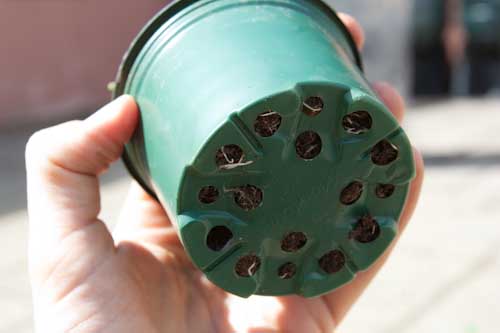
The most reliable indicator that a chilli plant needs potting on, is roots appearing through the drainage holes at the bottom of the pot. When thin white roots are visible pushing out of the holes, the plant has filled its current pot and needs more space.
Other signs that a plant is ready to pot on:
- The plant needs watering more frequently than usual. This can mean the root ball has taken up most of the available compost and there’s less growing medium to retain moisture between waterings
- The plant appears to have stalled. Growth has slowed or stopped despite good light, watering and feeding
- The plant looks visually too large for its pot. Top-heavy foliage causing the pot to be unstable is usually a good indication a bigger pot is needed.
- The compost dries out very rapidly after watering
How quickly this happens depends primarily on temperature and light. In a warm propagator or heated greenhouse in spring, plants may be ready to pot on within 2-3 weeks of the previous potting. On a cool windowsill it may take 6-8 weeks.
The Pot Size Progression: From Seed to Final Container
The single most common potting on mistake is moving plants into pots that are too large too quickly. This can seem counterintuitive (surely a bigger pot means more room to grow?) however the problem is moisture. A small root system in a large pot cannot use all the water in the compost. The outer and bottom layers of compost stay wet for too long, creating conditions that encourage fungal root problems and rot.
The right approach is to move up in small increments, increasing pot diameter by roughly 3-5cm each time. The progression I tend to use:
| Stage | Pot size | When |
|---|---|---|
| Germination | Seed cell or small module tray | Sowing time |
| First prick-out | 3″ (7-8cm) pot | First true leaves appear |
| Second pot | 5″ (12-13cm) pot | Roots showing at base |
| Third pot | 7-8″ (18-20cm) pot | Roots showing at base |
| Final container | 10-12″ (25-30cm) pot or larger | Spring/early summer |
Some growers skip the intermediate stages and move straight from small pots to large containers. This works if you’re using a very free-draining compost mix with plenty of perlite — the drainage prevents the waterlogging problem. With a more moisture-retentive mix, the staged approach is safer. Take a look at our article on if pot size matters for a deeper dive and our own experiment results.
For the best potting compost for each stage see our complete guide to potting medium for chilli plants.
Save Money on Small Pots
Proper plant pots are unnecessary for the early stages. Some of the best options for 3″ pots cost nothing:
Clear plastic drinking cups. The standard 9cm disposable cup is almost exactly the right size for the first prick-out stage. A drill or heated skewer makes drainage holes in the base in seconds. The clear plastic has a useful additional benefit: you can see exactly how dry the compost is without removing the plant, helping you avoid both overwatering and letting the compost dry out completely.
Old yoghurt pots. 500g yoghurt pots are a good size for the first potting on stage. Wash thoroughly and add drainage holes.
Toilet roll tubes. For the very first prick-out from seed cells, standing toilet roll tubes in a tray works well. Biodegradable and the entire tube can go into the compost when potting on, avoiding any root disturbance.
Once plants are in their second or third pot it’s worth investing in proper plastic plant pots as they last for years and the standard sizes are cheap.
How to Pot On Without Damaging Your Plants
The technique matters almost as much as the timing. The aim is to move the plant with its root ball intact and with minimal disturbance to the roots.
1. Water the plant an hour before potting on. Moist compost holds together as a root ball much better than dry compost, which falls apart and leaves roots exposed. Don’t water immediately before, the compost should be damp throughout but not waterlogged.
2. Prepare the new pot first. Fill the new pot partially with your compost mix, firming it gently. You want the root ball to sit at the right depth when placed in. The top of the root ball should end up 2-3cm below the rim of the new pot to allow for watering.
3. Ease the root ball out gently. For small seedlings in cell trays, a lolly stick or the flat handle of a teaspoon works well as a small spade to loosen the compost around the edges before lifting. Hold the seedling by a leaf, never the stem, leaves are replaceable, stems are not. The aim is to lift the entire root ball in one piece.
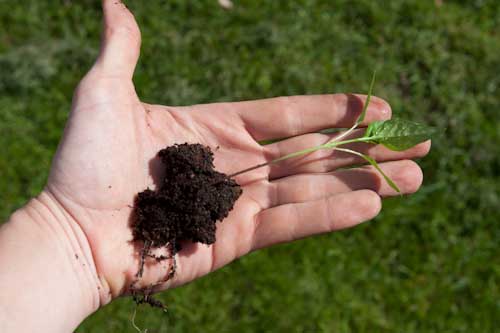
4. Pot the plant slightly deeper than before. This is a useful trick particularly for seedlings that have become leggy. Chilli plants, like tomatoes, will produce additional roots from any part of the stem that is buried. Planting slightly deeper than the original soil level gives the plant a more extensive root system and a sturdier base. For a leggy seedling, burying the stem up to the lowest set of leaves produces a noticeably more robust plant.
5. Fill around the root ball and firm gently. Add compost around the sides of the root ball, firming gently but not compacting. Leave 2-3cm of space at the top of the pot for watering.
6. Water in carefully. Use a watering can with a fine rose and water gently around the base of the plant. This settles the compost around the roots without washing compost away from the stem. A light watering is sufficient, you’re bedding the plant in, not saturating it.
Can I Pot On When the Plant Is Flowering or Fruiting?
This is one of the most common questions we receive. The honest answer is: ideally avoid it, but sometimes it’s necessary.
Potting on stresses a plant temporarily. When a plant is already directing energy into flowering and fruit development, adding the stress of root disturbance can cause flower drop and slow fruiting. The comment section on this page has several examples of readers who repotted during fruiting and experienced exactly this.
If you must pot on during flowering or fruiting:
- Choose a slightly larger pot rather than making a big jump in size
- Water thoroughly the day before to minimise root disturbance
- Do it in the evening or on a cooler day to reduce heat stress
- Expect some slowing of growth for 1-2 weeks while the plant recovers
The better approach is to avoid needing to pot on during the fruiting stage by staying ahead of the pot size progression in spring. If a plant reaches its final pot size by June, it shouldn’t need potting on again until the following spring when it’s being repotted after overwintering.
Repotting Overwintered Plants
Chilli plants that have been overwintered need repotting into fresh compost in spring, the previous season’s compost is depleted of nutrients and often compacted. See our complete overwintering guide for the full overwintering and spring revival process.
The repotting technique for overwintered plants is slightly different from potting on a young seedling. With an established plant that has been growing for 2-3 seasons the root ball can be very dense. You can gently tease out some of the outer roots before repotting into the same size pot with fresh compost, this stimulates new root growth without requiring a larger container every year.
After Potting On: What Next?
Once in their final container, the main variables that determine your harvest are feeding, watering and light. See our guides:
Feeding Chilli Plants. When to start feeding, which fertiliser to use and how to adjust feeding as plants move from vegetative growth to fruiting.
Watering Chilli Peppers. How often to water at each stage and how to avoid both overwatering and drought stress.
Growing Chillies in a Greenhouse. If your plants are heading outside or into a greenhouse for summer, this covers the setup and management.
FAQ
Can I repot a chilli plant when it’s flowering?
It’s best avoided but sometimes necessary. Repotting during flowering can cause temporary flower drop as the plant redirects energy to root establishment. If you must repot, water the day before to minimise root disturbance, move to a only slightly larger pot, and expect 1-2 weeks of slowed growth while the plant adjusts.
How do I know if my chilli plant is root bound?
The clearest sign is roots growing out of the drainage holes at the bottom of the pot. Other signs: the plant needs watering much more frequently than usual, growth has stalled despite good conditions, or the compost dries out very rapidly after watering.
What happens if I put my chilli plant in a pot that’s too big?
The roots can’t use all the water in the compost, so the outer and lower compost stays wet for too long. This creates conditions for root rot, fungal problems and yellowing leaves. Small incremental pot size increases are always safer than large jumps.
Should I use fresh compost when potting on?
Yes. Always use fresh compost when potting on. The existing compost in the smaller pot will still be attached to the root ball and goes with the plant. The new compost filling the space around the root ball in the larger pot provides fresh nutrients and good structure for new root growth.
Can I pot on in autumn?
Only if you’re overwintering the plant indoors. Potting on in autumn to a larger outdoor container doesn’t make sense as the plant’s growth slows significantly in autumn and the extra compost won’t be used before winter. If overwintering, pot into a slightly smaller container than the summer pot. The plant is cut back and has fewer roots to support.
My seedlings look leggy, Can potting on help?
Yes. Potting leggy seedlings deeper than their previous soil level buries part of the stem, which produces additional roots and results
Hi,
I’m growing kashmiri chillies and getting a huge amount of good quality peppers, but I think they need re-potting because they need so much water and the soil level has dropped. Is it ok to re-pot during the fruiting stage?
Nick O,
Personally I wouldn’t repot them during fruiting. Doing so could stress the plants which MAY lead to adverse growth, leaf drop etc. Instead I would maybe top up the soil in the pots, keep watering as needed and lean the lesson for next year to pot them on before they start flowering. You’ll likely find that if you grow in bigger pots next year you’ll get an even bigger harvest of chilies. Good luck!
my chilli plant is about 2 weeks old and its about 5cm tall. Am i suppose to repot now or wait till grows more like 10cm?
Anis,
It depends what size pot it is currently in. As a rough guide once the plant is slightly higher than the pot it is in then you can probably pot it on to a larger pot. Good luck!
My chillies are flowering and still in 1 litre pots. Is it ok to repot them, or should I just take a chance?
Thanks
You might slow down the growth by repotting them when they are flowering but you’ll likely end up with a larger plant and more fruit.
At what point do you consider your seedlings “leggy?”
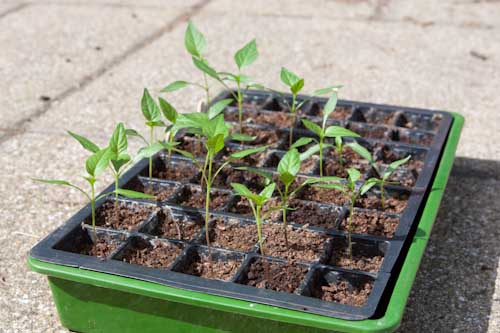
Mine look roughly like the ones in your last two photos, so I assume they’re doing ok? Also, for the last photo, did you plant the pepper deeper in the soil than it was in the original cell? I was told this was a step one could take to try and combat “leggy-ness” in addition to increasing light.
Yes, absolutely I always tend to pot on my peppers a little deeper than before. Like tomato plants the plant will produce more roots and ultimately lead to a healthier plant.
Have to say what a great and especially informative website. Im completely new to this but am now fascinated with the prospect of growing my own chillies. i recently bought some hot cayenne seeds which have are currently germinating What other tpes would you recommend to me to sow?. I live in the south of England but my garden isnt south facing but still gets quite good light. I like hot chillis but want ones that are good for beginners and suited for Uk weather. Thank you and keep up the good work
richard – Jalapeno are very easy to grow, and useful in the kitchen. Also try apache which are a quick growing nice compact plant which produces lots of small hot fruit. This year i’m trying ring of fire which are like a cayenne but hotter and are supposed to be easy. You could try a habanero, which are much hotter but produce wonderful flavour.
Hy, I live in Spain and have a terrible time trying to grow chillies. I don’t understand because it is nearly impossible to grow anything outside here because the sun is so strong and things tend to burn and die. What do you suggest I do, I really need to learn because I am so interested in growing my own.
Desparate Peggy
Peggy – What has been the issue? If they are drying out too much maybe try mulching around the base of the plants to prevent them drying out too much. If you are more specific about the problem maybe I can help.
I’m in my first year of chilli growing and have good variety of chillis on the go. Is it advisable to pinch the tops out or to just let them be?
Steve – This can be a contentious issue. If the plants are looking a bit leggy (tall and thin due to lack of light) then i’ll pinch out the tops. If they look reasonably healthy however i’d just let them get on with it! Good luck.