
Spicy Pizza Sauce Recipe – Homemade with Fresh Chilli
If you are making your own pizza at home it is genuinely worth making your own sauce too. The difference between a good homemade pizza sauce and a jar of shop-bought tomato sauce is substantial.
This recipe has been our go-to pizza sauce for years. The combination of passata (for a smooth, concentrated tomato base) with fresh chopped tomatoes (for brightness and texture) gives a depth that neither alone provides. The fresh chilli adds background warmth that you notice rather than identifying as “heat”. A whole cayenne simmered in the sauce infuses it gently throughout cooking. The basil is non-negotiable!
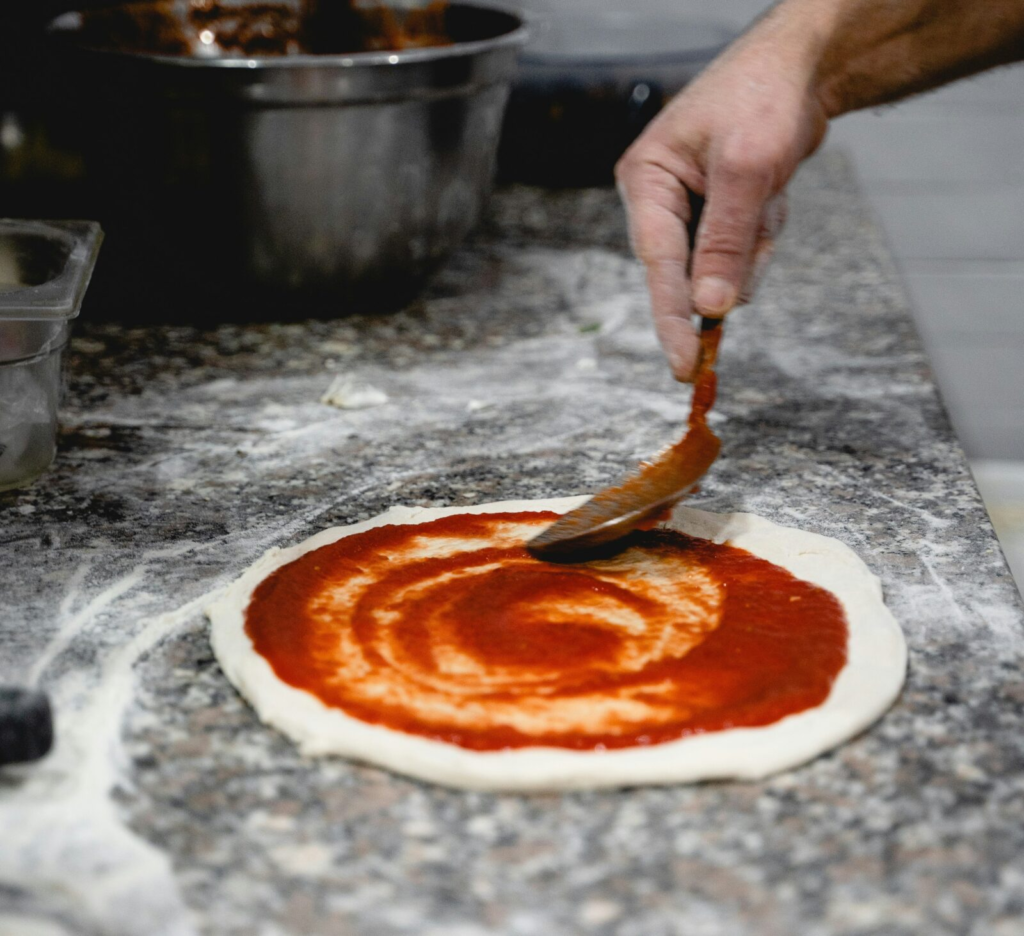
The key technique is time. A ten-minute simmer produces a good sauce. A twenty-minute simmer produces a noticeably better one. Thirty minutes and you have something truly outstanding. The longer the sauce reduces the more the flavours concentrate and the more the raw tomato edge mellows into something more complex. The cooking heat should be low throughout. Aim for a gentle simmer and definitely not a boil..
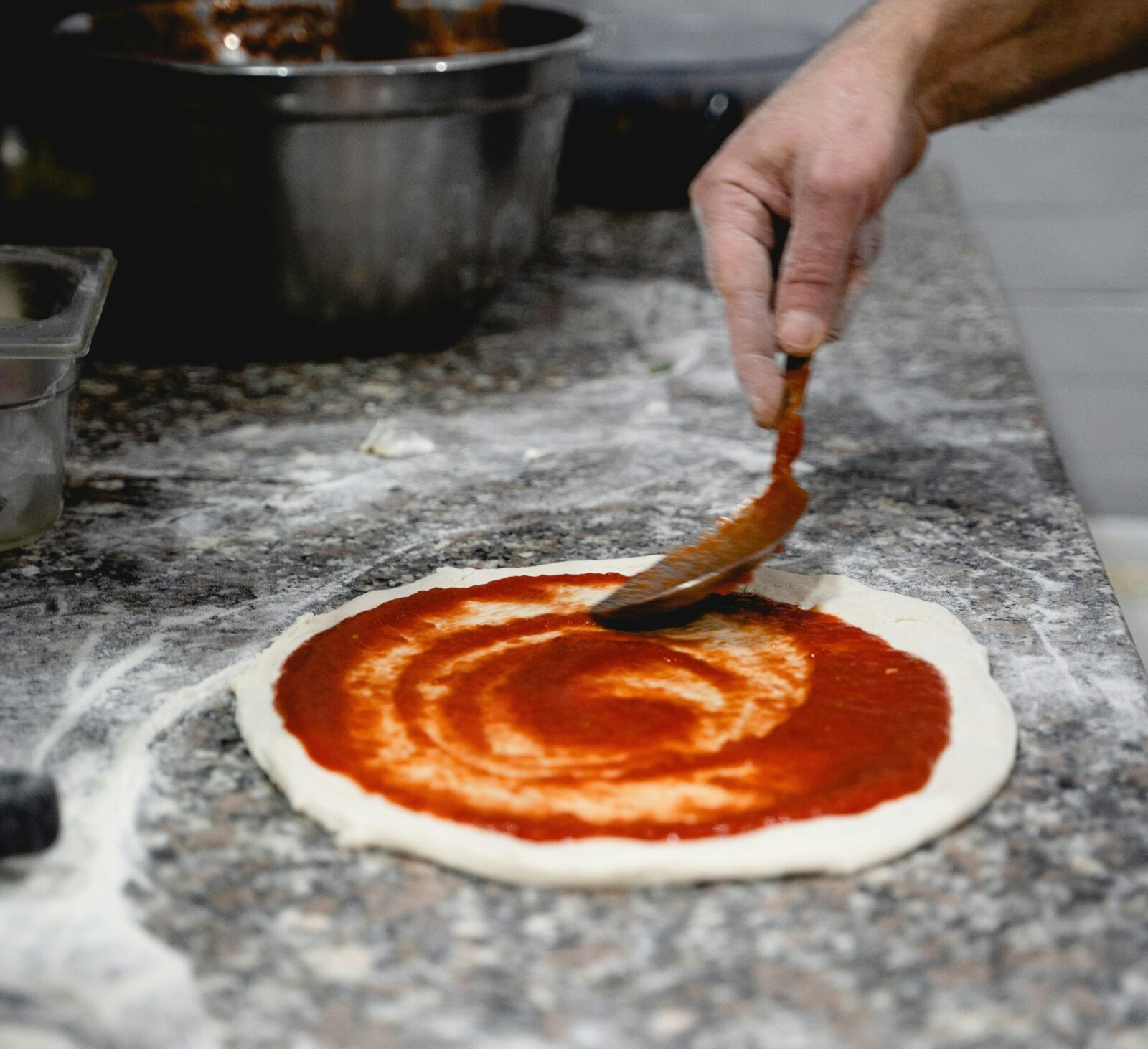
Spicy Homemade Pizza Sauce
Ingredients
Method
- Heat the olive oil in a small saucepan over a medium heat. Add the sliced garlic and fry gently for 1-2 minutes until it begins to turn golden. Watch carefully as burnt garlic will make the sauce bitter and can't be rescued.
- Add the chopped fresh tomatoes and stir to combine with the garlic. Cook for 2 minutes until the tomatoes begin to soften.
- Pour in the passata and stir well. Add the whole chilli, leaving it whole so the heat infuses gently into the sauce during simmering. For more heat slice the chilli before adding.
- Tear the basil leaves roughly and add to the pan. Season with a pinch of salt and sugar if using.
- Bring to a gentle boil, then reduce to the lowest heat and simmer for a minimum of 10 minutes. The longer you simmer the more concentrated the tomato flavour gets. 20 minutes gives an excellent result, 30 minutes is even better.
- Remove the whole chilli if used. Push the sauce through a fine sieve to remove any lumps of garlic, tomato skin, basil leaves and chilli. This produces a smooth, glossy sauce. Alternatively leave it chunky if you prefer more texture or blend with a stick blender for a half way house.
- Allow to cool slightly before spreading on pizza bases. The sauce should be thick enough to spread without running off the edges.
Notes
- The variety of chilli toy use is up to you. Cayenne gives a medium background heat, but for a hotter sauce we love the flavour that Aji Lemon chillies add.
- If the sauce tastes too acidic add a pinch of sugar. This is the classic Italian fix for tinned or jarred tomato products that can be a bit bitter.
- The sauce keeps in the fridge for 3-4 days in a sealed container. We always make a larger batch and either use it throughout the week or freeze half of it for future use.
The Chilli Question: Which Variety to Use?
The choice of chilli completely changes the character of the finished sauce.
Cayenne. This is our default choice. A whole cayenne simmered in the sauce for twenty minutes gives a pleasant background warmth that most people wouldn’t identify as chilli heat. It just makes the sauce taste more alive. For more pronounced heat, slice the chilli before adding rather than leaving it whole.
Aji Lemon (Lemon Drop). For a noticeably hotter sauce. Good for a pizza that’s genuinely spicy rather than subtly warm.
Scotch bonnet. For the heat-obsessed. A quarter of a scotch bonnet sliced and simmered through the sauce produces something with genuine fire and an interesting fruity dimension.
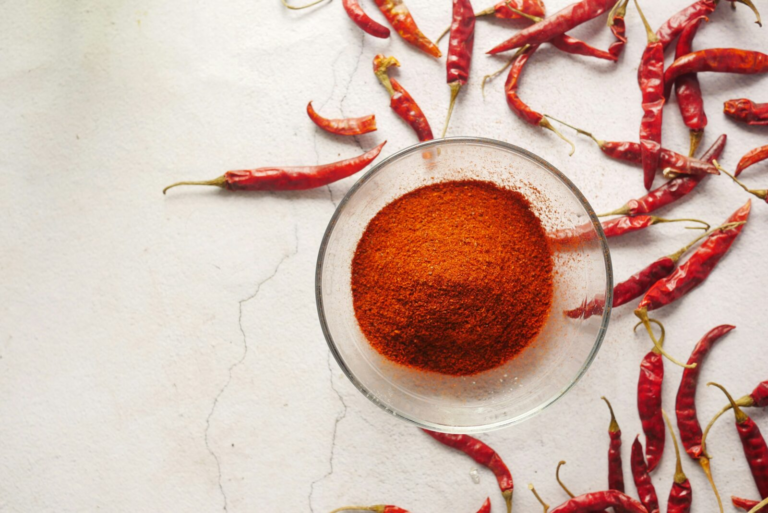
Dried chilli flakes. A perfectly good shortcut if you don’t have fresh. A generous pinch simmered into the sauce gives a different character from fresh.
Why Simmering Matters
Most homemade pizza sauce recipes suggest five minutes for cooking time. This is enough to make an adequate sauce – just ask any Italian nonna (grandmother). For a genuinely good one, the simmer time is the variable that makes the biggest difference to the final sauce.
The chemistry is straightforward. Extended gentle heat drives off water (which concentrates the flavour), converts the glutamates in tomato into more complex flavour compounds, softens the acidity of raw tomato and allows the garlic and basil to fully permeate the sauce rather than sitting as distinct elements within it.
A sauce simmered for thirty minutes is noticeably thicker, darker and more complex than the same sauce at ten minutes. The only risk is burning so be sure to keep the heat genuinely low and stir every few minutes.
To Sieve or Not to Sieve
The recipe includes pushing the finished sauce through a sieve to produce a smooth, glossy result. In our opinion this is the right call for a pizza where you want clean, even coverage. Sieving also removes any pieces of chilli or garlic that could burn in the high heat of a pizza oven.
If you prefer a chunkier, more rustic sauce (better suited to a thicker base or a pizza with hearty toppings) then feel free to skip the sieve and leave the texture as it is. Either works well.
Make Ahead and Storage
This sauce is one of the best make-ahead recipes in our collection. It keeps in the fridge in a sealed container for 3-4 days. We often make a double or triple batch on a Sunday and use it through the week for weeknight pizzas, pasta or lasagne. The sauce also freezes very well.
What to Put on Top
Once the sauce is sorted, the pizza toppings are yours to choose. A few combinations that work particularly well with a spicy tomato base:
Classic Margherita. Mozzarella and fresh basil. The simplicity lets the sauce quality do the work.
With chilli oil. Drizzle our homemade chilli oil over the finished pizza for an extra chilli dimension over and above the sauce.
With our habanero hot sauce. A few drops of our habanero hot sauce after cooking for those who want serious heat.
Scotch bonnet and mozzarella. For a genuinely hot pizza. Use the scotch bonnet version of the sauce and top simply with mozzarella. The simplicity is the point.
FAQ
Can I use tinned tomatoes instead of passata?
Yes. Tinned plum tomatoes work well and we often use them. Crush them roughly in the tin before adding or blend briefly after cooking. The texture will be chunkier than with passata unless you sieve the finished sauce. Add 5 minutes to the simmer time as tinned tomatoes have more water to cook off and time needed to break down.
Can I make pizza sauce without cooking it?
Yes. Some recipes use raw sauce, particularly Neapolitan-style pizza cooked at very high temperatures where the sauce cooks on the pizza itself. For a home oven (typically 220-250°C) a cooked sauce gives significantly better results as the temperature isn’t high enough to fully cook raw sauce on the pizza.
How much sauce does this recipe make?
Enough for two large pizzas or four individual ones. Scale up proportionally. This recipe doubles and triples well.
Can I use dried basil instead of fresh?
You can but the result is noticeably different. Fresh basil added at the end of cooking gives a bright, fragrant result. Dried basil added at the start gives a more muted, herbal background note. If using dried, use one teaspoon and add at the start of cooking rather than the end.
Why is my pizza sauce too watery?
Either the simmer time was too short or the heat was too high (producing steam rather than evaporation). Return to the heat on the lowest setting with the lid off and continue reducing until the sauce coats the back of a spoon without running off immediately.
Can I add oregano?
Yes. Dried oregano is a classic addition to pizza sauce. Add one teaspoon along with the basil. Particularly good if you’re going for a more traditional Italian character.
Related Recipes
The Perfect Pizza Recipe. Our full pizza recipe including the dough. This sauce is designed to go with it.
Sourdough Pizza Recipe. The advanced pizza dough using sourdough starter. This sauce works beautifully with it.
Easy Pizza Recipe. A quicker pizza approach for busy weeknights. The same sauce works perfectly here.
Chilli Oil Recipe. Drizzle over the finished pizza for an extra chilli dimension. Our most popular condiment recipe.
Habanero Hot Sauce. For those who want to take the heat further.
Scotch Bonnet Sauce. A few drops on a finished pizza slice is a genuinely excellent combination.
Homemade Salsa Recipe. Another quick tomato-based sauce worth having in your repertoire.
One Comment