
Demon Red Chillies – Growing Guide, Heat Level and Harvest Tips
Demon Red chillies (Capsicum annuum) is one of the best compact chilli varieties available to UK growers. The plants are small enough to thrive on a sunny south-facing kitchen windowsill, ornamental enough to look attractive as a houseplant, and prolific enough to keep you in fresh chillies from July through to November. The small upright pods ripen from green through black to vivid red. A single plant covered in pods in various stages of ripeness is a genuinely striking sight on a kitchen windowsill.
We have grown Demon Red repeatedly at The Chilli King and it remains one of our most reliably recommended varieties for beginners and for anyone who wants to grow chillies indoors without specialist equipment. We tend to grow a few of these every year as they make great gifts for family and friends.
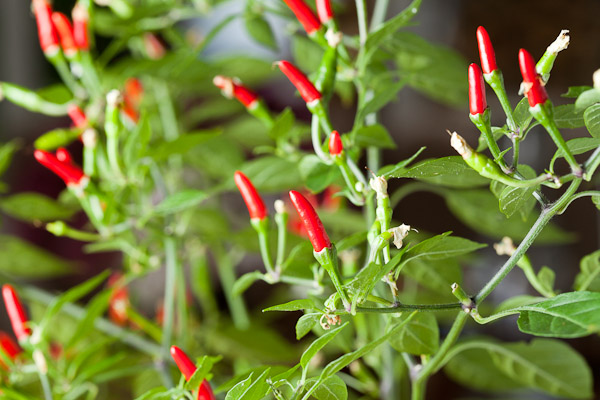
Heat Level – How Hot are Demon Red Chillies?
Demon Red are roughly 5,000-30,000 Scoville Heat Units (SHU). For context that is significantly hotter than a jalapeño (2,500-8,000 SHU) but considerably milder than a habanero or scotch bonnet (100,000-350,000 SHU). In practical cooking terms, one or two pods is enough to add a good level of heat to a pasta dish or stir fry without being overwhelming for most palates.
The heat tends to build gradually rather than hitting immediately. This is a common characteristic of many Capsicum annuum varieties. The flavour is clean and peppery with good chilli character despite the small pod size. See our complete Chilli Heat Guide for how Demon Red compares to every other major variety.
Demon Red Chilli — Key Facts
| Characteristic | Detail |
|---|---|
| Species | Capsicum annuum |
| Heat level | 5,000-30,000 SHU (medium) |
| Pod size | 1-2cm. Very small, grow upright |
| Plant height | 30-40cm — compact |
| Pod colour | Green → black → red (as it ripens) |
| Days to maturity | 65-75 days from seedling transplant |
| Best use | Fresh, drying, flakes, table decoration |
| UK suitability | Excellent. Fast growing. Very well suited to indoor and windowsill growing. |
Why Demon Red is One of Our Favourite UK Windowsill Varieties
Growing chillies on a windowsill in the UK requires a variety that can cope in the lower light levels and temperatures of a typical British summer. Demon Red is exceptionally well suited to this environment for several reasons:
Compact growth habit. The plant maxes out at about 30-40cm tall in a typical pot. This makes it genuinely manageable on a windowsill or kitchen counter without needing significant pruning.
Prolific production. A single healthy Demon Red chilli plant produces dozens of pods simultaneously throughout summer and well into autumn. When we grow these plants in our kitchen window they tend to be still flowering and setting fruit deep into October. This is long after our outdoor/greenhouse varieties have finished.
Ornamental value. The pods grow upright on the plant rather than hanging down, which is unusual and visually striking. The transition through green, black and red simultaneously on the same plant throughout the season again makes them look more interesting.
Fast to mature. As a Capsicum annuum variety, Demon Red is significantly faster to ripen than chinense varieties like habanero or scotch bonnet. If you sow them in February/March you will typically have ripe pods by July even on a windowsill without specialist grow lights.
How to Grow Demon Red Chillies in the UK
Sowing Seeds
For the best results sow Demon Red seeds from February to April. As a fast-maturing annuum variety it doesn’t need the early January start that slower chinense varieties require. Late February or March is perfectly adequate and still gives plenty of time to ripen a full crop before autumn.
We usually sow 1-2 seeds per cell in a fine compost, cover lightly then water. Germination is fastest at 22-25°C. If you have one a heated propagator is ideal (see our guide to heated propagators). If you are germinating on a windowsill watch out for cool night time temperatures – see our germination temperature guide for more detail/advice. Demon Red seeds germinates quickly so expect seedlings within 7-14 days at optimum temperature.
Light Requirements
A south-facing windowsill usually provides enough light for Demon Red chillies from April onward. For earlier sowings in February-March when UK light levels are still low, a grow light significantly improves seedling quality. Take a look at our guide to grow lights for chilli plants for recommendations at every budget.
Potting On
We sow the seeds in module or seed trays then move to 3-inch pots once seedlings are established, then to a final pot of 1-2 litres. Because Demon Red stays compact, it doesn’t need a large final container like some other varieties. A 15-18cm pot is usually sufficient for a productive plant to thrive. See our guide to potting on chilli plants for technique and timing.
Watering and Feeding
Water when the top inch of compost feels dry. Demon Red in a small pot on a sunny windowsill may need watering every 2-3 days during summer. Never let the pot sit in standing water. Begin feeding with a liquid fertiliser once the plant is established in its final pot. A high-potassium tomato feed or specialist chilli fertiliser such as chilli focus applied weekly once flowering begins gives the best results.
Pinching Out
Pinching out the growing tip when the plant reaches 15-20cm can encourage bushy, dense growth and more fruiting. For a windowsill plant this is particularly worthwhile – a compact bushy plant with multiple stems carries far more pods than a single-stemmed plant. See our pinching out guide for full technique.
Overwintering Demon Red
Despite its small stature, Demon Red overwinters well and comes back as a productive perennial in its second year. A plant overwintered on a warm indoor windowsill will start producing pods weeks earlier than any seed-grown plant the following season.
Prune back to 15-20cm of main stem in October-November once light levels fall and temperatures drop. Reduce watering significantly and keep in a frost-free location at minimum 10°C. New growth will typically appear in February-March as light levels increase. Read our complete overwintering guide for full details.
When Are Demon Red Chillies Ripe?
This is one of the most common questions about Demon Red. This is understandable because the pods go through several colour changes before fully ripening. Here is your ripening guide:
Green. Unripe. Edible but with a sharper, grassier flavour and less heat than a ripe pod.
Black or purple-black. This is the intermediate stage that catches many growers off guard. The pods turning black is completely normal and not a sign of disease or damage. Parry in our comments was alarmed to find all their pods had turned black. This is simply part of the natural ripening process. The pods will continue to ripen from black to red if left on the plant.
Red. Fully ripe. Maximum heat, fullest flavour, best for drying. See our guide to when chillies are ripe for a full explanation of the ripening process.
What to Do With Demon Red Chillies
Use fresh. Between 2-3 demon red pods is enough to add significant heat to a pasta sauce, stir fry, curry or scrambled eggs. The small pod size makes them very convenient. Simply pick directly from the plant and add whole or roughly chopped.
Dry for flakes. The thin skin makes Demon Red one of the easiest varieties to air dry. Place on a tray in a warm spot (an airing cupboard works well) and leave for 2-3 weeks until completely brittle. Crush by hand for coarse flakes or grind for powder. See our guide to making chilli flakes for more detailed instructions and tips.
Leave as table decoration. Demon Red plant covered in pods at various ripening stages makes a genuinely attractive table centrepiece. The pods hold well on the plant for several weeks after ripening and the visual effect of green, black and red pods are attractive.
Preserve in oil. A handful of whole dried Demon Red pods added to a bottle of olive oil creates a pleasant mild chilli oil. See our chilli oil recipe for the full method.
Add to chutney or jelly. Demon Red works well as part of a mixed chilli chutney alongside hotter varieties. See our famous chilli chutney recipe and chilli jelly recipe.
Freeze them. When we have a surplus freezing them is perhaps the simplest way of preserving them. Simply pick the pods, wash, dry then pop them in a ziplock bag or container before freezing. Check out our full freezing guide.
FAQ
How hot are Demon Red chillies?
Demon Red measures approximately 5,000-30,000 Scoville Heat Units. We describe them as medium heat, comparable to say a hot cayenne. Noticeably hotter than a jalapeño but significantly milder than habanero or scotch bonnet. One or two pods is typically enough to season a dish for 2-4 people.
Why have my Demon Red chillies turned black?
Completely normal, don’t panic! The pods turn black or purple-black as an intermediate stage of ripening before turning red. This is a characteristic of many Capsicum annuum varieties. Leave the pods on the plant and they will continue ripening from black to red over the following 1-3 weeks.
Can I grow Demon Red on a north-facing windowsill?
Demon Red, like all chillies need as much light as possible. A north-facing windowsill doesn’t receive direct sunlight and is unlikely to provide enough light for reliable fruiting. A south or west-facing windowsill is preferred. If a south-facing position isn’t available, a grow light is the practical solution.
When should I sow Demon Red seeds?
February to April is the ideal window for UK growing. As a fast-maturing annuum variety it doesn’t need the early January start that slower chinense varieties require. Late February or March sowing gives plenty of time to produce a full crop before autumn.
How many pods does a Demon Red plant produce?
A healthy well-cared-for Demon Red plant in its prime produces dozens of pods simultaneously. 50-100+ pods over a full season is common. The plant flowers and sets fruit continuously from June through to October, making it one of the most productive compact and reliable varieties available.
Can I save seeds from Demon Red chillies?
Yes. Allow pods to fully ripen to red on the plant, then remove seeds and dry thoroughly before storing in a paper envelope in a cool dry place. Demon Red is an open-pollinated variety so seeds should breed true if not cross-pollinated with another variety growing nearby. If you are growing indoors away from other chilli plants the seeds should perform well.
How long does a Demon Red plant live?
Chilli plants are perennials in their native climate. In the UK, Demon Red overwintered on a warm windowsill can survive for several years. They will produce fruit earlier and often more prolifically in its second and third year than in its first. See our overwintering guide for how to keep it through winter.
Where to Buy Demon Red Chilli Seeds
Demon Red seeds are widely available from UK seed suppliers. Look for them at:
- Suttons Seeds: one of the most reliable UK seed retailers
- Thompson & Morgan: usually stock Demon Red annually
- Sea Spring Seeds: specialist chilli seed supplier with excellent quality control
- Amazon UK: Demon Red chilli seeds are available on Amazon with next-day delivery from several suppliers
When buying, look for seeds packed for the current season and from a reputable supplier — seed viability drops after 2-3 years. Avoid seeds from general auction sites where variety accuracy can be unreliable.

I wonder if we talking about the same chili. The red devil aka birds eye. Here in Africa we eat them raw with the meal. One plant can produce a bunch of them.
We need demon red chill seeds
Hi I have grown a Demon Red Chillli plant this year and it looks very healthy and full of flowers and chilli’s the only problem is the chilli’s have all turned black!! Can I rescue them?
Parry,
Don’t worry this is perfectly normal. Turning black is often part of the ripening process. Have a look at this post for more information.
Thanks for your reply, I will wait then till jan/feb
Steve
They look great .
Could you start growing form seed for next season now ?
Steve
Steve,
Thanks. It’s probably a bit early to start for next year unless you have a semi serious grow light set up. I usually get my seeds in after the new year. Of course annum varieties like Demon Red grow much quicker so you can plant them much later. I’ll probably be planting mine around late February.