
Habanero Salsa Recipe – Yucatecan Charred Habanero Salsa
A few years ago, travelling around Mexico’s Yucatán Peninsula, my wife and I encountered a revelation that has influenced how we cook with chillies ever since. Almost every restaurant and roadside taqueria we stopped at had a small bowl of habanero salsa on the table. Not a complicated salsa with twelve ingredients, usually just charred habaneros, garlic, lime and a splash of orange juice, blended to a rough paste. Simple, fiery and extraordinarily good.
What made it distinctive was the charring. In the UK we tend to use chillies raw or cooked into dishes. In the Yucatán, the standard preparation involves putting the habaneros directly over/under a flame or onto a dry pan until they char and blister. This technique fundamentally changes the flavour of the habaneros. The raw fruity heat of the habanero mellows into something smokier and more complex. The flesh softens and becomes almost jammy. The char adds a bitterness that balances the habanero’s natural sweetness. The result is nothing like the fresh habanero you started with.
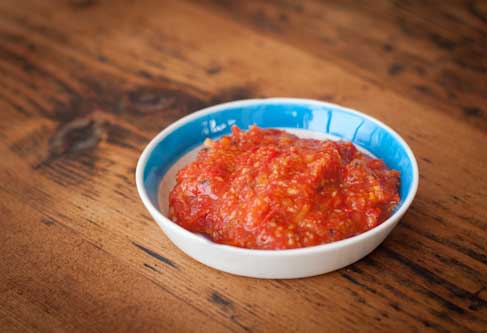
In quite a lot of places they would serve three or four different versions of the salsa at the table simultaneously. Each using a slightly different variety of habanero, slightly different proportions, some with more orange, some with just lime. This recipe is the base version that underpins most of them. In Mexico it’s called a salsa but in practice it functions more like a hot sauce – something you drizzle onto everything rather than serve with a specific dish. The best way to eat it, in our opinion, is with scrambled eggs. It’s also excellent on tacos, grilled fish, rice dishes and anything else that benefits from serious fruity heat.
Yucatecan Charred Habanero Salsa
Ingredients
Method
- Place the whole habanero peppers and unpeeled garlic cloves on a baking tray lined with foil.
- Place under a medium-high grill and cook for 8-10 minutes, turning every 2-3 minutes, until the habaneros are charred and blistered in places and the garlic is soft. The habaneros should be just starting to blacken — this char is what gives the salsa its distinctive smoky depth.
- Remove from the grill and allow to cool for 5 minutes until comfortable to handle.
- Wearing gloves, remove and discard the habanero stems. Deseed the habaneros if you want to reduce the heat slightly — for maximum heat leave the seeds in.
- Squeeze the garlic cloves from their skins — they should pop out easily.
- Place the charred habaneros and garlic in a pestle and mortar or food processor along with the salt. Grind or blend to a rough paste — leave some texture rather than blending completely smooth.
- Add the lime juice, orange juice and lime zest if using. Mix well. Taste and adjust salt.
- Transfer to a sterilised jar or bottle. Store in the fridge for up to two weeks.
Notes
- Always wear nitrile gloves when handling habaneros. The capsaicin penetrates skin quickly and the burning sensation from habanero contact lasts for hours
- The char marks on the habaneros are important. They add a smoky dimension that raw habaneros don’t have. Don’t rush this stage. Use a BBQ instead of the grill if you can for more flavour
- For a slightly milder version substitute two habaneros with two mild red chillies (same flavour character, lower heat)
- The orange juice is not optional. It’s what makes this salsa distinctively Yucatecan and balances the habanero’s fruitiness beautifully
- In the Yucatán this salsa is traditionally made with a specific regional variety of habanero that is slightly less hot than the standard orange habanero. If your habaneros are particularly fierce, adding a little extra orange juice mellows the heat without compromising the flavour
The Charring Step — Why It Matters
The single most important thing in this recipe is not skimping on the charring. Properly charred habaneros (blistered and starting to blacken in places) taste completely different from habaneros that have been gently cooked. The char creates new flavour profile that adds a smoky, almost coffee-like taste to the habanero’s natural fruitiness.
Don’t be alarmed when the skins blacken. This is intentional and correct. The slightly bitter char balances the sweetness of the orange juice and the fruitiness of the habanero in a way that makes the finished salsa taste rounded rather than simply hot.
The same principle applies to the garlic. Unpeeled cloves grilled until completely soft and slightly coloured develop a sweet, nutty character that raw garlic can’t match.
How Hot Is This Salsa?
Very. Habaneros measure 100,000-350,000 Scoville Heat Units or roughly 10-35 times hotter than a jalapeño. See our complete chilli heat guide for where habaneros sit on the Scoville scale compared to other varieties.
However the heat in this salsa is noticeably more manageable than eating a raw habanero directly. The charring mellows the initial impact and the citrus juice distributes the capsaicin through the liquid rather than concentrating it. You still need to treat it with respect (this is a condiment to drizzle rather than spoon) but the overall heat experience is smoother and more tolerable than the raw pods.
For a milder version you can substitute two of the four habaneros with mild red chillies such as fresno or cayenne. The flavour profile remains similar but the heat is approximately halved.
The Orange and Lime — A Yucatecan Signature
Most hot sauces use only vinegar or lime for acidity. The Yucatecan version uses both lime and fresh orange juice and this combination is specifically local. The Yucatán grows a variety of bitter Seville-style orange that is used in cooking throughout the region.
Normal fresh orange juice works perfectly well as a substitute. The orange adds sweetness and a floral character that complements the habanero’s fruitiness without competing with it. It also lowers the overall heat perception slightly as the sugars in the orange juice have a mild cooling effect against the capsaicin.
What to Serve With Habanero Salsa
Scrambled eggs. Our preferred and most common use (and the simplest). A few drops over scrambled eggs on toast is genuinely one of the best breakfast combinations possible. The fruity habanero heat against rich egg yolk is tough to beat.
Tacos. The classic application. Any taco (fish, chicken, black bean, pork) will benefit from a small drizzle of this salsa. Use sparingly unless you have significant heat tolerance.
Grilled fish. The Yucatecan combination of grilled white fish with habanero salsa is one of the great Mexican seafood dishes. Particularly good with sea bass, bream or cod.
Rice and beans. Stirred through rice and black beans, a small spoonful transforms a simple side dish into something complex and satisfying.
As a cooking ingredient — a spoonful stirred into a tomato sauce, soup or stew at the end of cooking adds fruity heat and depth. Use as you would any concentrated chilli paste.
With our black bean quesadillas. Our black bean quesadilla recipe is the natural partner for this salsa. The earthiness of the black beans against the fruity habanero heat is a genuinely excellent combination.
Variations
Habanero and tomato salsa. Add two charred tomatoes alongside the habaneros for a more substantial, less concentrated salsa. The tomatoes add body and a subtle sweetness that makes the finished sauce more versatile.
Habanero and mango. Blend a small quantity of ripe mango into the finished salsa for a sweeter, more tropical character. This is particularly good with grilled chicken or fish.
Scotch bonnet version. Substitute scotch bonnets for the habaneros for a similar fruity heat with a Caribbean rather than Mexican character. See our scotch bonnet sauce recipe for a dedicated scotch bonnet version.
Fermented habanero salsa. The base ingredients of this salsa make an excellent starting point for fermentation. Omit the orange and lime juice, ferment the charred habaneros and garlic in a 2.5% salt brine for 7 days, then blend with fresh citrus juice. The fermented version has considerably more depth and complexity. See our fermented chilli sauce recipe for the detailed method.
FAQ
How long does habanero salsa keep?
Stored in a sealed jar or bottle in the fridge, this salsa keeps for up to 2 weeks. The lime and orange juice provide some acidity but this isn’t a fully preserved product like a cooked hot sauce. Refrigerate promptly after making and use within two weeks.
Can I make this salsa less hot?
Yes. Deseed the habaneros before blending (the seeds carry a significant proportion of the heat) or substitute half the habaneros with milder chillies such as fresno or cayenne. The flavour profile remains similar at lower heat levels.
Can I freeze habanero salsa?
Yes. Freeze in ice cube trays for portioned cooking quantities. Each cube adds a single serving’s worth of heat to a dish. Defrost fully before using as a table condiment.
Why use orange juice in a salsa?
Orange juice is a specifically Yucatecan addition that balances the habanero’s tropical fruitiness. The sweetness of the orange moderates the acidity of the lime and the combination with habanero is one of the classic Mexican flavour pairings.
Can I make this in a blender rather than a pestle and mortar?
Absolutely. A blender or food processor works well and is faster for larger quantities. Pulse rather than blending continuously to retain some texture. The pestle and mortar gives more control over the final consistency and is traditional for this style of salsa.
Is this the same as a Mexican hot sauce?
The distinction between salsa and hot sauce is fluid in Mexican cooking, both describe a liquid chilli condiment. This recipe is thicker than a standard hot sauce and closer to a rough paste, which is the traditional Yucatecan style. Blending with more liquid would produce something closer to a pourable hot sauce.
Related Recipes
Habanero Hot Sauce Recipe. A smoother, more sauce-like habanero recipe with charred garlic and carrot. Different technique, same ingredient.
Scotch Bonnet Sauce Recipe. If you want Caribbean rather than Mexican fruitiness, scotch bonnet is the habanero’s closest flavour cousin.
Fermented Chilli Sauce Recipe. For the most complex habanero condiment possible, fermentation produces a completely different depth of flavour over 7-14 days.
Black Bean Quesadilla Recipe. The natural food pairing for this salsa. Black bean and habanero is one of the great Mexican flavour combinations.
Chilli Heat Guide. Where habaneros sit on the Scoville scale and how they compare to scotch bonnet, naga and other varieties.
Demon Red Chillies. If you want to grow your own chillies for this recipe, habanero is ideal for UK growing — see our variety guides for alternatives if habanero proves too challenging.
I just made this recipe. Declicious! The orange juice combined with the habanero flavour is amazeballs!