
Cooking with a Tandoor Oven – Tips, Techniques and What to Cook
A few years ago I got a slightly random phone call from my father asking if I wanted a tandoor oven. He was at a local auction and had spotted a lot containing four fully functional, clay-lined tandoors that had presumably been used by some now-defunct catering business. The guide price was £30-50 each — an absolute bargain for something that costs several hundred pounds new.
A week later it arrived on our drive and my education in tandoor cooking began. They’re genuinely not the easiest things to use when you first get one — nothing like a regular oven — and it took several attempts and some genuine failures before we got consistently good results. This guide covers everything we’ve learned, including the mistakes we made so you don’t have to.
What is a Tandoor Oven
A tandoor is a cylindrical clay oven originating from the Indian subcontinent that has been used for thousands of years to cook bread and meat at extremely high temperatures. Traditional tandoors are buried in the ground up to their rim and fired with wood or charcoal. The clay walls absorb and radiate intense heat — typically 450-500°C at full temperature — which is what gives tandoori food its characteristic charred exterior and smoky flavour.
The cooking happens through three simultaneous heat sources: direct radiant heat from the glowing clay walls, convective heat from the hot air circulating inside, and direct heat from the embers at the bottom. Food on skewers is lowered into the oven vertically. Naan bread is slapped directly onto the hot clay walls. The combination of intense heat and a sealed clay environment is something a conventional oven simply cannot replicate.
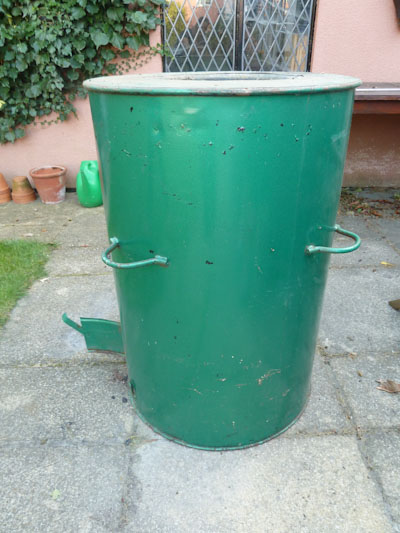
Home tandoors — whether purchased or DIY — work on exactly the same principle but are above ground, which means more heat is lost through the top and they require more fuel than a buried tandoor. Ours is built from an old oil drum lined with concrete and clay, with a small hatch at the bottom to manage airflow. It works very well.
How to Make a Tandoor Oven
Luckily I didn’t have to build our tandoor – we managed to pick it up at the local auction for about £40! However if you’re interested in building a tandoor then there are plenty of good resources on the web.
First off, here is a pretty good set of instructions for building a mini tandoor out of large terracotta pots. While the results look pretty good, it does look quite fiddly and you end up with a pretty small oven.
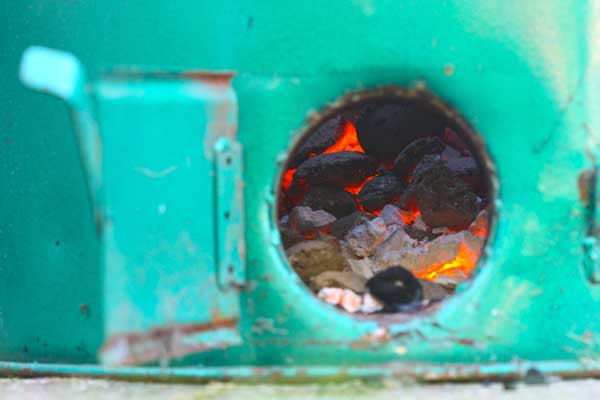
The tandoor we bought (pictured above) is very similar to the two examples above and is built from an old oil drum that has been lined with a thick layer of concrete and clay. There is a small hatch near the bottom (visible on the left hand side) that allows you to easily remove the ashes while also allowing you to adjust the airflow or draw by opening/closing the hatch door.
Cooking With a Tandoor Oven – Some Tips
Cooking with a tandoor oven is not like using your regular convection oven. It’s taken us a few attempts to get things right and iron out some of the initial challenges we were facing. Below I’ll share some of our experiences in the hope that they’ll help you avoid making the same mistakes!
One of the biggest challenges we faced when we started using the tandoor was getting it hot enough. Much like a pizza oven the key to successful cooking in a tandoor is getting the oven really hot (up to about 450 degrees Celsius). Once a tandoor is up to temperature the food you cook receives direct heat from the embers in the bottom of the oven as well as a massive amount of heat that is radiated out of the insulated walls of the tandoor. The result should be very high temperatures that allow you to cook your food on skewers very quickly. There’s some tips below about how we get the oven hot enough.
The first time we fired the tandoor up we just used standard bbq charcoal on its own. While this did get it pretty hot and we managed to cook a few naans it was quite clear that it was nowhere near hot enough. After about 5 minutes cooking most of the heat had been lost and the naans began taking much longer to cook (up to 15 minutes!).
When we acquired the tandoor the inside was covered in charred black residue that once we started cooking naans stuck to the back of the bread and made them taste horrible. At first I didn’t know whether to try and scrape this residue off the inside of the oven or not. It turns out that this reside is in fact soot which deposits on the tandoor walls if the fire is not burning at a high enough temperature. Once I finally managed to get the oven up to temperature the residue burnt off and disappeared completely.
Getting a Tandoor Up to Temperature
After a few attempts at getting the tandoor up to temperature I’ve settled on using a combination of charcoal and oak kindling. I usually start the fire with some scrunched up newspaper and oak kindling and keep feeding the wood on while the oven heats up. When I’m nearing being ready to cook i add a good dose of charcoal and wait for this to burn down to embers before cooking.
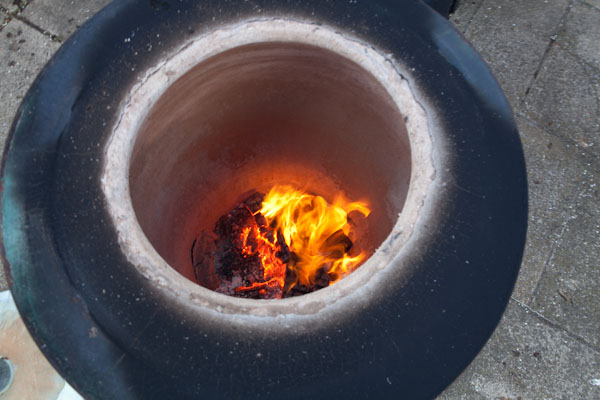
Key to increasing the strength of the fire inside is using the little hatch at the bottom. The wider the little door is open the more oxygen is sucked into the fire and the strong it burns. I’ll usually have it wide open to start with and once the oven is up to temperature I’ll gradually close it.
I usually try and allow about 1 hour at least in order to get the tandoor up to heat before starting to cook in it. Of course in India, tandoors are traditionally buried in the ground which helps to insulate them further and retain the heat – something that is hugely important as fuel tends to be expensive. Doing so would help heat retention but unfortunately we don’t really have a suitable spot in the garden for this so I’m resigned to feeding the oven a little more fuel!
What Can You Cook in a Tandoor Oven?
Far more than most people realise. The intense heat and smoky clay environment make a tandoor uniquely suited to a range of dishes.
Naan Bread
The classic and arguably the best thing to cook in a tandoor. Properly made naan requires temperatures that a domestic oven simply can’t achieve — at 240°C (the typical domestic oven maximum) naan takes 8-10 minutes and comes out somewhat bready. In a properly heated tandoor at 450°C it takes 90 seconds and comes out puffed, blistered, slightly charred and extraordinarily good.
The technique is specific: roll the dough thin, brush one side with water (this helps it stick to the wall), then slap it firmly against the clay wall of the tandoor using the cloth pad attached to the arm of the roti fork or a folded tea towel. At the right temperature it adheres immediately and puffs dramatically within seconds. Watch carefully — it goes from perfectly done to burnt in moments. Use a long skewer or fork to peel it off the wall before it overcooks.
Tandoori Chicken
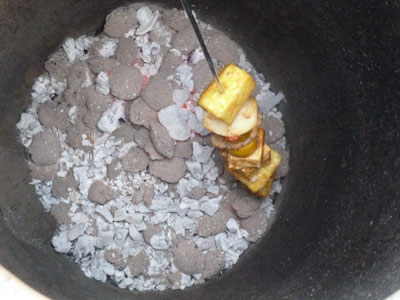
The definitive tandoor meat dish. Marinate bone-in chicken pieces — thighs and drumsticks work better than breast — in our tandoori marinade for a minimum of 4 hours, ideally overnight. Thread onto long flat skewers and lower vertically into the tandoor. At full temperature chicken pieces cook in 8-12 minutes and develop the characteristic charred exterior and juicy interior that defines good tandoori chicken.
The gram flour in the marinade is essential — it binds the marinade to the meat and chars beautifully rather than burning, adding flavour rather than bitterness.
Seekh Kebabs
Minced lamb or beef mixed with spices, onion, fresh chilli and coriander, moulded around a flat skewer. At tandoor temperatures seekh kebabs cook in 6-8 minutes. They should char on the outside while remaining slightly pink and juicy inside. The fat from the meat drips onto the embers and smokes, which is an essential part of the flavour.
For our full spiced lamb kofta recipe that works equally well in a tandoor, on a BBQ or on a griddle, see our lamb kofta kebab recipe.
Lamb Chops and Tikka
Any cut of lamb marinated for 24 hours cooks brilliantly in a tandoor. Leg of lamb, shoulder chops and lamb tikka all work well. The intense heat sears the exterior almost instantly, sealing in moisture while the marinade chars on the surface.
Paneer and Vegetables
Paneer tikka is one of the best things to cook in a tandoor — see our paneer and pineapple tikka recipe for the full method including the grill alternative.
What Doesn’t Work
Fish is possible but challenging — it cooks extremely quickly and can fall off the skewer before it’s done. Very delicate fish doesn’t suit the tandoor. Oily fish like mackerel works better. Avoid anything that needs low, slow cooking — the tandoor is a high-heat tool and can’t be moderated down to a gentle temperature.
The Importance of Marinading
With the exception of making naan bread, marinading is most definitely the key to any successful cooking on a tandoor. Not only do tandoori marinades add huge amounts of flavor to your food but they also tenderize the meat/vegetables. Also when inevitably some of the marinade falls off into the coals it burns adding that unmistakable smokey flavour that you only really get in a tandoor oven.
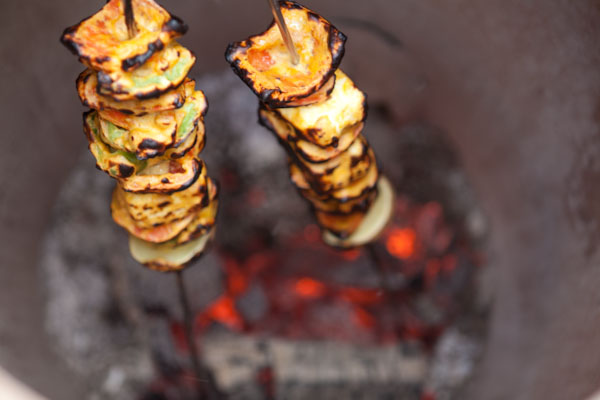
After a bit of trial and error and a few tips from an Indian chef they key to any successful marinade is to add some ‘atta’ or gram flour. Firstly the flour helps bind the liquid marinade to the ingredients, preventing it from simply dripping off. In addition gram flour doesn’t seem to have that ‘floury’ taste that regular plain wheat flour does. Be sure to take a look at our favorite tandoori marinade recipe.
Safety and Practical Tips
The tandoor gets extremely hot — treat it with genuine respect. Use long skewers (at least 60cm), heavy duty oven gloves, and keep children well away when it’s in use. The exterior metal of an oil drum tandoor also gets very hot — don’t touch it.
Never use the tandoor indoors or in an enclosed space. Carbon monoxide from the charcoal is dangerous. Our tandoor lives outside in the garden and that’s where it stays when in use.
The tandoor cools slowly — even hours after cooking has finished, the clay walls retain enough heat to cause serious burns. Never leave children unattended near a cooling tandoor and don’t assume it’s safe to touch just because the fire has gone out.
Positioning. Place the tandoor on a hard, level, non-combustible surface — concrete or paving stones. Keep it clear of fences, wooden structures and overhanging trees. In a garden setting, place it where smoke can disperse freely — neighbours have been known to complain.
The ash. The small hatch at the bottom is also where ash accumulates and can be removed. Regular ash clearance improves airflow and maintains cooking efficiency. Let the tandoor cool completely before removing ash.
Cleaning and Maintenance
A tandoor essentially self-cleans at full temperature — the intense heat burns off food residue and soot from the walls. After each use, fire the tandoor to full temperature for 30 minutes before cooking and any residue from the previous session will have burned away.
Between uses, keep the tandoor covered to prevent rainwater getting into the clay — a purpose-made cover or a large waterproof cover works well. Water in the clay can cause cracking when the tandoor is next fired, particularly if it heats rapidly. Always heat a tandoor that has been rained in very gradually, starting with a small fire and building heat slowly over 45 minutes before a full firing.
In winter, if you’re not using the tandoor for an extended period, store it somewhere dry or invest in a proper waterproof cover.
FAQ
How long does it take to heat a tandoor?
Allow at least an hour from a cold start — 90 minutes in cold weather. Rushing the heating process means you’ll be cooking at insufficient temperatures. The clay needs time to absorb and store heat, not just the air inside the oven.
What fuel should I use in a tandoor?
We use a combination of oak kindling to start the fire and establish a good base, then add lump charcoal for sustained cooking heat. Avoid charcoal briquettes — they burn cooler and produce more ash. Good lump charcoal gets hotter, burns cleaner and produces less waste.
How do I know when the tandoor is hot enough?
The clay walls should have whitened or lightened in colour as the soot burns off. Hold your hand 30cm above the opening — if you can’t hold it there for two seconds the tandoor is approaching cooking temperature. An infrared thermometer is the most accurate method — aim for 400°C minimum, 450°C+ for best results.
Can I use a tandoor in the rain?
Not ideal. Rain falling into the hot clay can cause thermal shock and cracking. If it starts raining while you’re cooking cover the tandoor immediately after use and allow to cool under cover. Never fire up a tandoor that has been saturated with rainwater without a very long slow heating process first.
How do I get naan to stick to the tandoor wall?
The wall must be hot enough — if it’s not, the naan will simply fall off. Brush one side of the dough with water immediately before applying, and slap it firmly against the wall rather than pressing gently. At the right temperature it will adhere instantly and puff within seconds.
Can I cook in a tandoor on a patio?
Yes, on a hard non-combustible surface away from anything flammable. The exterior of the tandoor gets very hot so keep it well clear of fences, garden furniture and structures. Check with your neighbours if smoke could be an issue.
Related Recipes for Your Tandoor
Tandoori Marinade Recipe — our go-to marinade for chicken, lamb, paneer and vegetables. The gram flour addition is the key.
Scotch Bonnet Sauce — an excellent accompanying dipping sauce for tandoori chicken.
Habanero Hot Sauce — fruity, intense heat that pairs brilliantly with the smoky char of tandoor-cooked meat.
Lime Pickle Recipe — the classic Indian accompaniment to a tandoori spread.
Indian Rasam Recipe — a light South Indian soup that works beautifully as a starter before a tandoori feast.
Great article for beginners, even here in India.
Can I put the tandoor on the terrace made of concrete, tmt rebars and bricks?
If not how can I make a platform on the terrace for the same purpose?