How To Make Chilli Powder – The Complete Guide
Knowing how to make chilli powder from scratch can seem daunting but the reality is it is very simple and incredibly rewarding. Once you have tasted homemade chilli powder you will wonder why you ever bought the supermarket version. Homemade chilli powder is fresher, more vibrant in colour, more fragrant and more flavourful than anything in a jar that’s been sitting on a shelf for six months. More importantly, when you make your own you control exactly what goes into it; the variety, the heat level, the blend and whether to include seeds or not.
This chilli powder guide covers everything: how to dry chillies properly using an oven or dehydrator, which varieties produce the best powder, how to grind to the right texture as well as storage.
Before You Start — Fresh or Dried Chillies?
This guide explains how to make powder from fresh chillies. To do this you will first need to dry the chilli pods before grinding. If you already have dried chillies or chilli flakes, skip straight to the grinding section. For a coarser grind see our homemade chilli flakes guide – same drying method, different end result.
If you’re working from a harvest glut of fresh chillies, this is one of the best ways to preserve them. Just be aware that 1kg of fresh chillies reduces dramatically during drying. Expect to end up with roughly 100g of dried chilli which then grinds down to a similar weight of powder. Fresh chillies with thin walls (cayenne, bird’s eye, ring of fire) are easier to dry and grind than thick-walled varieties such as Jalapeno.
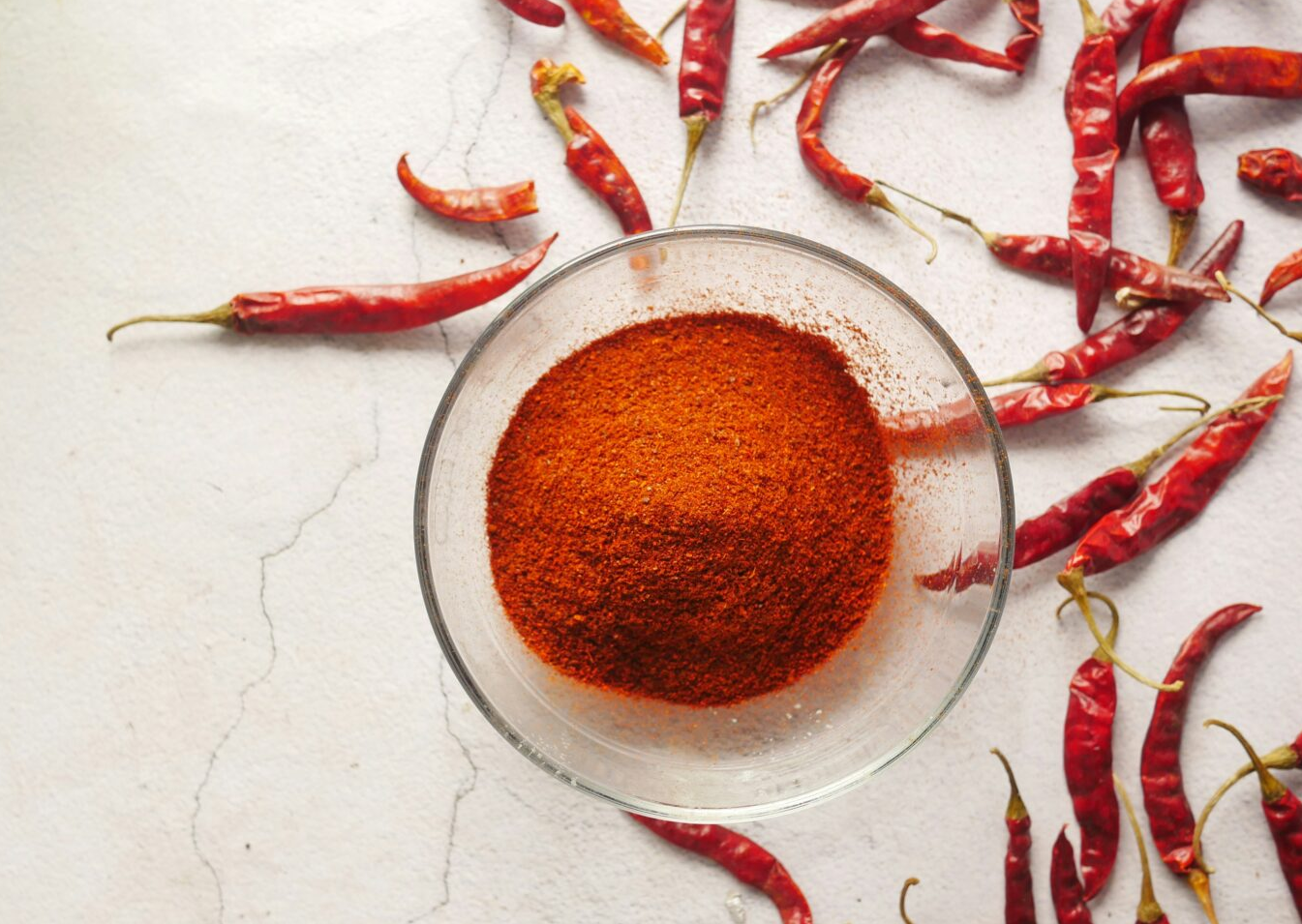
How to Make Chilli Powder
Step 1: Prepare Your Chillies
First of all you need to wash and dry your chillies with a clean tea towel or leave them to air dry. Any residual surface moisture left on the pods now will extend the required drying time.
Next simply remove the stems, cut each pod in half and possibly remove the seeds. Cutting the pods in half increased the surface area and speeds up the drying time.
Seeds in or out when making chilli powder?
This is the key flavour decision and the one most readers ask us about. The seeds themselves contain very little capsaicin – the heat is concentrated in the white pithy membrane that holds the seeds to the flesh. However in our experience the seeds can add a slightly bitter edge to powder when finished.
- Leave seeds in for maximum heat and convenience
- Remove seeds and membrane for cleaner, more purely fruity flavour at slightly lower heat
- Remove seeds, keep membrane — a good middle ground, removes the bitterness risk while retaining more heat
We generally remove seeds and leave the membrane when making chilli powder.
Step 2: Drying the Chillies
There are two main methods you can use to dry your chillies: oven and dehydrator.
Oven Method for Drying Chillies
Preheat your oven to roughly 80-90°C (175-195°F). If your oven doesn’t go this low, use its lowest setting with the door very slightly ajar to naturally reduce the heat inside.
Lay the halved chillies cut-side up on a baking tray in a single layer. Even better if you have them place the chillies on an oven proof cooling rack to maximize air flow around the chillies. Where possible ensure the chillies do not overlap or touch each other. Leave them in the oven for 3-5 hours, checking every hour.
The chillies are ready when they feel completely brittle. They should snap cleanly rather than bend when put under pressure. Any flexibility means residual moisture remains inside the flesh. Different varieties take different times: thin-walled cayenne and bird’s eye may be done in 2-3 hours; thicker walled habanero and scotch bonnets can take up to 5-6 hours.
Sometimes the pods can remain flexible when warm. As a result we have found it best to remove one pod from the over, let it cool for 5 minutes then apply the snap/bend test.
Signs they are done: the skin is papery and brittle, the flesh snaps cleanly, they feel light and completely dry when lifted. If in doubt, give them another 30 minutes.
Dehydrator Method (Our Preferred Option)
While we dried chillies successfully for many years using the oven method, a food dehydrator is significantly better. Once we upgraded we never looked back. The lower, more consistent temperature (55-60°C) and continuous airflow produce a more evenly dried chilli with better colour retention and a more vibrant final chilli powder.
Arrange halved chillies in a single layer on dehydrator trays at 55-60°C for 4-8 hours depending on variety. The lower temperature means the essential oils that carry the chilli’s fragrance are preserved rather than cooked off – this is directly visible in the finished powder’s colour and smell compared to oven drying.
If you make chilli powder regularly, a food dehydrator is one of the most worthwhile kitchen investments you can make. We don’t just use ours for chillies but also for herbs, mushrooms and fruit.
Air Drying (For Thin-Walled Varieties Only)
Thin-walled chillies like cayenne and bird’s eye can be successfully air dried by threading them on a length of string and hanging in a warm, dry, well-ventilated spot. A kitchen or conservatory in summer works well. This method takes usually takes 4-8 weeks but produces excellent results. We have discussed this in more depth in our guide to making a chilli ristra.
Just be aware that this method does not work reliably for thick-walled varieties in the UK climate. You need ideally a really sunny spot with very good ventilation to avoid problems with mould.
Step 3: Grinding Chillies to a Powder
Once your chillies have completely dried out and cooled, grinding them to a powder is the satisfying final step.
SAFETY TIP: Always wear food grade gloves when handling dried chillies and when removing the ground powder from the grinder. Dried chilli dust can also be intensely irritating to eyes and airways. Open a window and consider wearing a face mask when grinding superhot varieties.
Coffee or Spice Grinder (Best Option)
A dedicated spice grinder or repurposed coffee grinder gives the finest, most consistent chilli powder. When grinding pulse rather than running continuously. Short 5-7 second pulses with rests in between prevent the motor from overheating and give better control over the final texture.
A good electric spice grinder is the most efficient tool for the job, particularly if you are making larger batches. Look for one with a removable grinding bowl for easy cleaning – dried chilli residue is persistent and will flavour whatever you grind next if not thoroughly cleaned. As a result we recommend not using you regular food processor.
Pestle and Mortar (Good for Small Batches)
Works well for small quantities and gives excellent control over the final texture. More effort than an electric grinder but will get the job done. A large, heavy mortar is best. Some of the small decorative ones won’t provide enough force for brittle dried chilli without an enormous amount of effort/patience..
Standard Blender or Food Processor
These work but the result is less fine than a dedicated spice grinder. You’ll likely end up with some larger fragments. Also as mentioned above the chilli residue is likely to linger and flavour whatever you make next in it!
Which Chilli Varieties Make the Best Powder?
As mentioned above by changing the variety/varieties of chillies you use in your powder you can drastically change the flavour. Try adding some chipotles (smoked jalapenos) for a real smokey flavour or habaneros for a fruity yet hot taste. The great thing about chilli powder is you can play around with different combinations/blends depending on what types of chillies you have to hand.
The variety you choose dramatically changes the flavour, heat and colour of the finished powder. This is the real advantage of making your own chilli powder. Below are some common varieties we regularly use.
Cayenne: The classic chilli powder variety. It gives a vibrant red powder with clean, medium heat and good flavour. One of the easiest varieties to grow in the UK and one of the most productive. See our Chilli Heat Guide for exactly where cayenne sits on the Scoville scale.
Ancho (dried Poblano): Dark, earthy, mildly hot with complex chocolate-coffee notes. The most popular chilli powder variety in Mexican cooking. Dried before grinding.
Chipotle (smoked Jalapeño): If you want to add a smoky dimension to your powder, chipotle is the answer. Smoke the jalapeños over wood chips before drying and grinding. The result is the basis of one of the world’s most recognisable spice flavours.
Habanero: Makes a fiery, fruity chilli powder with enormous heat. Use it sparingly as a small pinch of habanero powder can be enough to heat a whole dish. The fruity character that makes habaneros distinctive comes through clearly in the powder.
Scotch Bonnet: Similar to habanero powder but with the distinctive Caribbean character. Brilliant for seasoning jerk dishes, rice and peas or anything where you want authentic Caribbean heat.
Naga / Bhut Jolokia: For serious heat. Label the jar clearly. A tiny pinch is a meaningful cooking quantity.
Bird’s Eye: Clean, sharp heat with an Asian character. Makes a good all-purpose hot powder for adding to stir-fries and curries.
Blending varieties — some of the most interesting chilli powders come from blending. A base of cayenne (for colour and standard heat) with 10-20% habanero (for fruity complexity) and a small addition of ancho (for earthiness) produces a genuinely complex powder.
Making a Chilli Spice Blend
Plain chilli powder is pure ground dried chilli with nothing added. A chilli seasoning or spice blend incorporates other spices. Here’s the blend we often make from our chilli harvest.
The Chilli King House Chilli Powder Blend
- 10 parts dried cayenne
- 1 part cumin (toasted)
- ½ part smoked paprika
- ½ part garlic powder
To toast cumin: add whole cumin seeds to a hot dry pan with no oil. Shake or stir constantly for 2-3 minutes until the seeds darken slightly and release their aroma. Remove immediately and grind in a pestle and mortar or spice grinder. Toasted cumin has a significantly deeper, more complex flavour than untoasted so do not skip this step.
This blend is excellent on grilled meat, in burgers, stirred into yoghurt as a dip base or anywhere you’d use a standard chilli powder.
How to Store Chilli Powder
Properly dried and stored, homemade chilli powder keeps for 12-18 months without significant quality loss — far longer than the 3-6 months shop-bought powder is typically at its best.
Key storage rules:
Store in an airtight jar. Exposure to air causes oxidation which degrades both colour and flavour. Small Kilner jars work really well and make excellent gifts.
Keep in a dark cupboard. Light degrades the pigments in chilli powder rapidly. A vivid red powder left in sunlight for a week will turn brick-coloured and lose much of its flavour. This is why your own powder looks so much better than the faded stuff in clear jars at the supermarket.
Keep away from heat and steam. Storing above a hob is a common mistake. Heat and moisture accelerate degradation. It is far better to store you chilli powder in a dark cool dry cupboard.
Label with variety and date. This is helpful when you have multiple jars from different varieties or batches.
For large quantities, the powder can be frozen in airtight containers or freezer bags for up to 2 years with minimal quality loss.
FAQ
How long does it take to make chilli powder at home?
The drying stage takes the most time. 3-5 hours in an oven at low temperature, or 4-8 hours in a dehydrator. The preparation (washing, halving) takes 15 minutes and the grinding takes under 5 minutes. Plan for a half-day project with most of the time hands-off while the chillies dry.
Can I make chilli powder from shop-bought chillies?
Yes. Fresh chillies from a supermarket or Asian grocery work perfectly well. Dry them following the method above. For a shortcut, buy already-dried chillies from an Asian supermarket and skip the drying stage entirely — just grind them directly.
My chilli powder has gone clumpy. What is wrong?
Clumping indicates residual moisture. Either the chillies weren’t fully dried before grinding, or moisture has got into the storage jar. Spread the powder on a baking tray and return to a low oven (80°C) for 30 minutes to drive off the moisture, then re-grind and store in a properly sealed jar.
Can I make chilli powder in a regular blender?
Yes, though a dedicated spice grinder gives a finer result. Blend in short pulses rather than continuously. Sieve the result through a fine mesh and return larger fragments to the blender for another pass.
Is homemade chilli powder hotter than shop-bought?
Usually yes. Commercial chilli powder is often a blend of mild and hot varieties to produce a consistent, broadly palatable product. Homemade powder from a single hot variety like cayenne or habanero will typically be significantly hotter. More importantly it will be fresher and more fragrant. Heat fades more slowly than flavour, so old commercial powder often tastes flat even if it’s still hot.
How do I clean my grinder after making chilli powder?
Grind a small amount of dry white rice. This absorbs residual chilli oil and fragrance from the grinding chamber. Discard and repeat if needed. Wipe clean with a dry cloth. Avoid water in electric grinder bowls unless the manufacturer confirms they’re dishwasher safe.
Can I use a pepper mill to grind chilli powder?
A standard pepper mill isn’t designed for dried chillies and the grinding mechanism may be too coarse or get damaged. A dedicated spice grinder or coffee grinder is the right tool. A dedicated table chilli grinder filled with chilli flakes works differently — see our article on those.
Related Guides
How to Make Chilli Flakes: the companion article covering the coarser grind. Uses the same drying method but stops at the flake stage rather than grinding to powder.
Chilli Grinder — Spice Up Your Dining Table: our article on table chilli grinders as condiment and gift idea.
How to Freeze Peppers: if you have more chillies than you can dry, freezing is the quickest preservation method.
Chilli Oil Recipe: another excellent way to preserve a harvest of dried chillies.
Chilli Chutney Recipe: the best use for a large glut of fresh chillies.
When Are My Chilli Peppers Ripe?: for homegrown chillies, fully ripe fruit makes the best and most vibrant powder.
Chilli Heat Guide: the complete Scoville scale guide to help you choose the right variety for your preferred heat level.