
Sweet Chilli Sauce Recipe – Homemade Thai-Style with Fresh Chillies
Several years ago, while travelling through Southeast Asia with my now wife, I became mildly obsessed with the little dishes of dipping sauce that appeared on the table alongside almost everything from grilled chicken from roadside stalls, spring rolls from street markets, fish cakes from Bangkok lunch spots. The sauce was always variations on the same theme: sweet, sharp, with genuine chilli heat underneath and a depth that the bottle of supermarket sweet chilli sauce in the fridge at home never quite delivered.
When I got back to the UK I spent a few weeks attempting to reverse engineer what I had been eating and the key difference turned out to be simple: fresh chillies rather than dried flakes, proper good quality rice vinegar rather than malt vinegar and a splash of fish sauce for genuine depth. The result was something incomparably better than the supermarket version. It was brighter in colour, more complex in flavour, with real fruitiness from the fresh chillies rather than the flat dried heat you get from a jar.
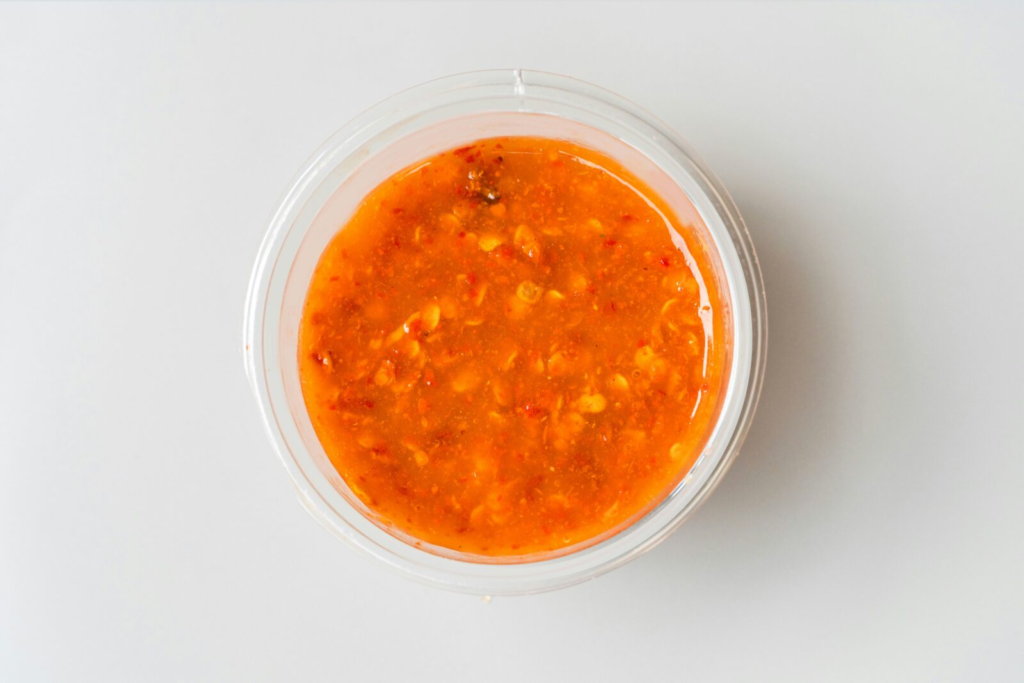
This is the recipe I’ve made ever since. It uses fresh red chillies from the garden or supermarket, takes 25 minutes and produces a genuine Thai-style sweet chilli sauce that works as a dipping sauce, a glaze, a marinade ingredient or drizzled straight from the jar onto almost anything that needs a flavour boost.
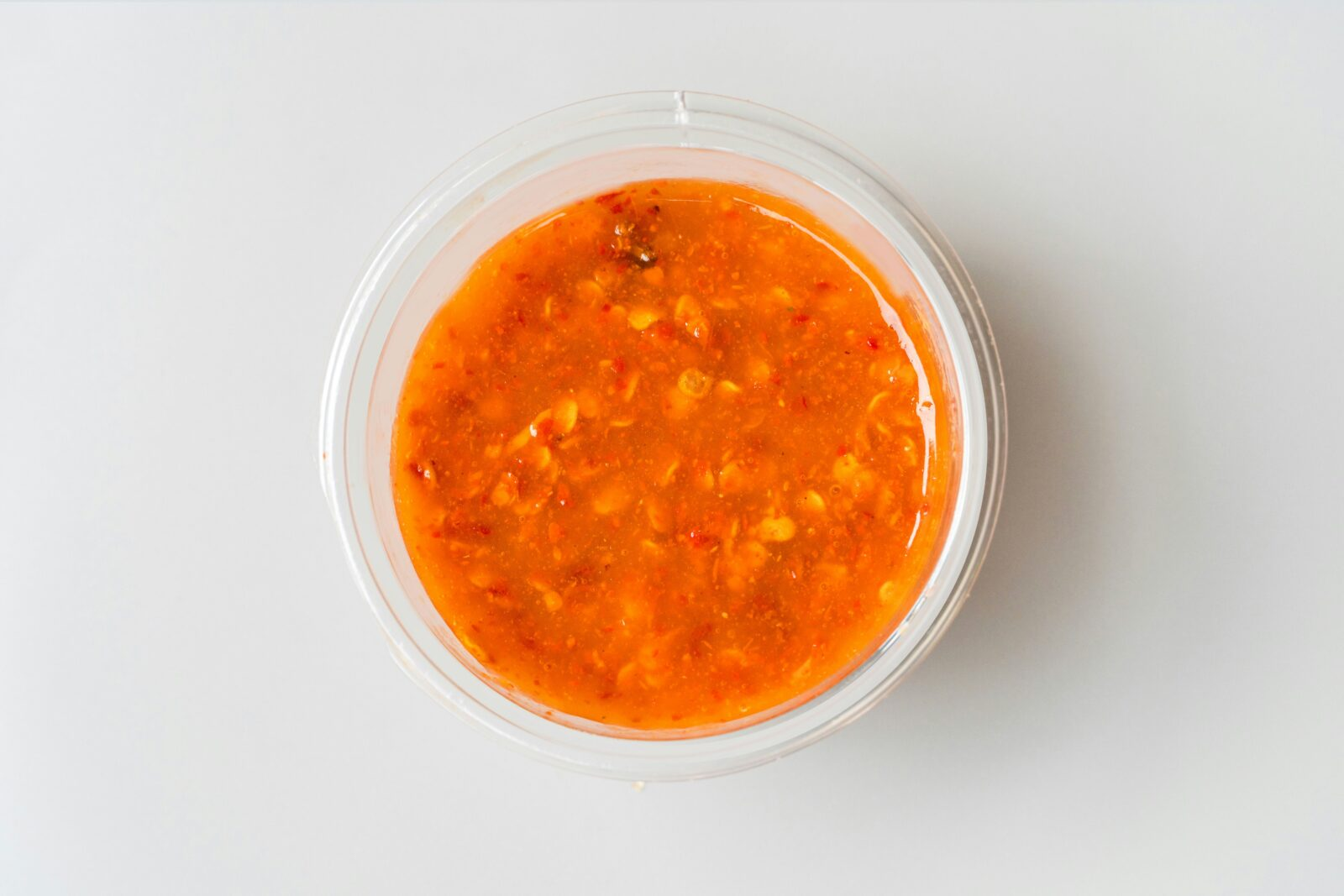
Homemade Sweet Chilli Sauce
Ingredients
Method
- Remove the stalks from the chillies. For a milder sauce remove the seeds from half of them. For full heat leave all seeds in. Roughly chop the chillies, garlic and ginger.
- Place the chopped chillies, garlic and ginger in a blender or food processor and blitz to a coarse paste. Don't blend completely smooth, some texture in the finished sauce is more authentic.
- Combine the rice vinegar, sugar, water and salt in a medium saucepan. Stir over a low heat until the sugar has fully dissolved.
- Add the chilli paste to the pan and bring to a gentle boil, stirring regularly.
- Reduce heat and simmer for 12-15 minutes, stirring every few minutes, until the sauce has reduced and thickened to a glossy, lightly syrupy consistency. It should coat the back of a spoon. The sauce will thicken further as it cools. Be careful not to over-reduce it.
- If using fish sauce, add in the final 2 minutes of cooking. Taste and adjust if needed (more sugar for sweetness, more chilli for heat, a little more vinegar if it needs sharpness).
- If the sauce is too thin after cooling, return to the heat and stir in the cornflour slurry. Cook for 1-2 minutes until thickened. Alternatively reduce by simmering a further 5 minutes.
- Allow to cool to room temperature. Transfer to a sterilised jar or bottle. Keeps refrigerated for up to 6 weeks.
Notes
- Fresh chillies produce a significantly better sauce than if using dried flakes. They give a brighter colour, more complex flavour, genuine fruitiness that dried chillies can’t replicate
- The fish sauce is the authentic Thai addition that elevates this from a generic sweet sauce into something genuinely complex. It adds savoury depth without tasting fishy. Don’t skip it if you can help it
- The sauce will appear thinner than you expect while hot. It thickens noticeably as it cools.
- For a chunkier texture reminiscent of authentic Thai versions, don’t strain the sauce after cooking. Instead leave all the chilli and garlic pieces in it.
- For a smooth dipping sauce, push through a fine sieve after cooling.
- This recipe doubles and triples well. Make a large batch during chilli harvest season and it keeps for up to 6 weeks.
What Makes This Different from Shop-Bought
Most commercial sweet chilli sauces contain very little actual chilli and garlic. They are primarily water and sugar thickened with starch. You can taste this the moment you try them alongside something made with real fresh chillies. Shop bought versions tend to have a uniform texture, the flavour is one-dimensional sweetness with a mild background heat, the colour is a uniform traffic-light red that doesn’t come from actual chilli.
A homemade Thai sweet chilli sauce made with fresh chillies has a completely different character. The colour comes from real capsicum pigments which have a deeper, slightly less uniform red with visible flecks of chilli and garlic. The flavour has layers: the initial sweetness, then the acidity of the vinegar, then the genuine heat of the chilli building at the back of the throat, and underneath all of it the savoury depth that fish sauce adds.
It’s also significantly cheaper per jar than the good quality Thai brands, and you control the heat level — the single most useful adjustment for home cooking.
The Authentic Angle: Nam Jim Gai
Sweet chilli sauce is known in Thailand as nam jim gai (literally “dipping sauce for chicken”) and originates as a condiment across Thai, Malaysian and wider Southeast Asian cuisine. The version most people in the UK know is a Westernised export product. The authentic version served at Thai street food stalls is noticeably different: chunkier texture, more pungent garlic, genuine chilli heat and that distinctively savoury undercurrent from fish sauce.
This recipe is somewhere between the two. Accessible enough for a UK kitchen, authentic enough to taste like what you’d find in Thailand. The fish sauce is optional if you’re cooking for vegetarians but I’d strongly encourage including it. It doesn’t make the sauce taste fishy, it just makes everything taste more complex and complete.
Choosing Your Chillies: The Most Important Decision
The variety of chilli you use determines the heat level and the flavour character of the finished sauce. Here’s the honest guide:
Cayenne. Our default recommendation. Medium heat, bright red colour and a clean chilli flavour that produces a well-balanced sauce. If you grow your own cayenne you’ll have exactly the right quantity from a typical harvest glut for a couple of batches. See our guide to when chillies are ripe for when to harvest for best flavour.
Fresno. Slightly fruiter than cayenne with similar heat. Excellent for sweet chilli sauce. If you can find them, worth using.
Bird’s eye / Thai chilli. The most authentic choice for a Thai-style sauce. Significantly hotter than cayenne so use 4-5 bird’s eyes rather than 8 larger chillies and the heat level is similar. The flavour is the most authentic to the sauce you’d find in Thailand.
Long red mild chilli. For a genuinely mild version with good colour. Use 10-12 larger mild chillies rather than 8 hot ones. Good for serving to a mixed group where heat tolerance varies.
Mixed varieties. One of the joys of growing your own is using whatever is ripe simultaneously. A mix of cayenne, habanero and whatever else is ready produces a complex, nuanced sauce that’s more interesting than any single variety.
Supermarket red chillies. The large red finger chillies widely available in UK supermarkets work perfectly well. They’re typically cayenne-type chillies at medium heat. Use 8 large ones.
The Two Methods: Reduction vs Cornflour
Most sweet chilli sauce recipes use one of two approaches to achieve the characteristic glossy thickness. The choice matters:
The Reduction Method (Our Preference)
Simply simmer the sauce until it reduces and the sugar concentration creates a natural syrupy thickness. This takes slightly longer (15-20 minutes at a low simmer) but produces a better flavoured sauce. More concentrated chilli character, better colour retention, more complex from the caramelisation of the sugars.
The practical note: the sauce will look thinner than you expect while hot. It thickens significantly as it cools. Remove from heat when it coats the back of a spoon and trust the cooling process.
The Cornflour Method
Adding a cornflour and water slurry at the end of cooking thickens the sauce quickly and produces a very glossy, slightly more gelatinous result closer to the shop bought bottle texture. Useful if you want the sauce ready quickly or if you prefer a thicker consistency from the start.
Both work. The reduction method produces a better-tasting sauce; the cornflour method produces a quicker one that more closely resembles commercial sweet chilli sauce in texture. The recipe above includes the cornflour as an optional step, use it only if the sauce hasn’t thickened enough after cooling.
The Fish Sauce Question
Fish sauce is the ingredient that most UK sweet chilli sauce recipes omit entirely and shouldn’t. The authentic Thai recipe includes fish sauce which adds savoury depth that makes the sauce genuinely complex rather than simply sweet and hot.
It doesn’t make the sauce taste fishy. What it does is add “umami”, the savoury baseline that prevents the sweetness from being one-dimensional. A sauce with fish sauce and one without taste noticeably different. The version with fish sauce has more layers; the version without is flatter and sweeter.
For a vegetarian version, substitute soy sauce at the same quantity. Not identical but a reasonable alternative that adds the same savoury dimension.
What to Serve With Sweet Chilli Sauce
The honest answer is almost everything. But here are the specific combinations worth trying:
Spring rolls and wontons. The classic application. The contrast between hot crispy pastry and cool sweet sharp sauce is one of the great snack food combinations.
Grilled chicken. The combination the name literally describes. Brush over chicken thighs for the final few minutes of grilling or use as a table dipping sauce. Outstanding.
King prawns. Grilled or pan-fried prawns with a small bowl of this sauce alongside. One of the most satisfying quick dinners possible.
Halloumi. A combination that has become ubiquitous at UK food markets for good reason. The saltiness of the halloumi and the sweet heat of the sauce is complementary.
As a pizza drizzle. A few drops over a finished pizza slice is something worth trying. Works particularly well with our homemade spicy pizza sauce underneath.
Dipping sauce for anything fried. Fish cakes, tempura vegetables, salt and pepper squid, chicken strips, tofu. The universal application.
As a marinade. Brush over chicken, salmon or tofu 30 minutes before cooking. The sugar caramelises under heat and produces a beautiful glaze.
As a glaze. Brush over salmon or chicken thighs in the final 5 minutes of oven cooking. The caramelised sweet chilli crust is one of the easiest impressive-looking results in home cooking.
Stirred through noodles. A tablespoon stirred through cooked rice noodles with some julienned cucumber and a handful of coriander is a genuinely good quick lunch.
With our fermented chilli sauce. Mixing a spoonful of our fermented chilli sauce into the finished sweet chilli sauce adds fermented complexity. An interesting experiment.
Sweet Chilli Sauce Variations
Ginger-forward version. Double the ginger for a more pronounced warmth and a slightly more complex finish. Works particularly well as a marinade.
Garlic-forward version. Add two extra cloves and leave the garlic pieces chunky rather than blending to a paste. More pungent, more interesting.
With lemongrass. Add one finely sliced lemongrass stalk (the white inner part only) to the blending step. Adds a floral, citrus dimension that pushes the sauce further into authentic Thai territory.
With lime juice. Add the juice of one lime at the end of cooking. Adds sharpness and brightness that works particularly well as a dipping sauce for seafood.
Mango sweet chilli. Blend a quarter of a ripe mango into the chilli paste before cooking. The mango sweetness reduces the sugar needed and adds a tropical character. Excellent with grilled fish and king prawns.
FAQ
Can I make sweet chilli sauce without fresh chillies?
Yes. Dried chilli flakes work as a substitute at approximately one teaspoon per two fresh chillies. The result is less complex and has a different colour – more opaque and less vibrant than fresh. For the best result use fresh chillies when possible. Your own homegrown chillies produce outstanding sweet chilli sauce.
How long does homemade sweet chilli sauce keep?
In a sterilised sealed jar stored in the fridge, up to 6 weeks. In a sealed sterilised jar in a cool dark cupboard (properly processed), up to 3 months. Always sterilise jars properly before filling. Signs of spoilage (any mould, off smell or unusual appearance) mean discard immediately.
Why is my sweet chilli sauce too thin?
Either it needed more reduction time or more cornflour. Return to the heat and simmer for a further 5-10 minutes with the lid off, stirring regularly. Alternatively add a cornflour slurry (1 teaspoon cornflour mixed with 2 tablespoons cold water) and stir through on the heat for 2 minutes.
Why is my sweet chilli sauce too thick?
Add small amounts of water and stir through on gentle heat until the consistency loosens to your preference. A tablespoon at a time is the right approach, it is easier to thin than to re-thicken.
Can I make sweet chilli sauce without fish sauce?
Yes. Omit entirely for a vegan version, or substitute soy sauce at the same quantity (one tablespoon) for a savoury depth without animal products. The flavour is slightly different but still very good.
Can I use any colour of chilli?
Yes. Green chillies produce a green sweet chilli sauce with a slightly grassier flavour. Yellow and orange chillies produce beautiful golden sauces with a sweeter, fruitier character. The cooking method is identical regardless of colour.
Is this the same as the Mae Ploy bottle sauce?
Similar in concept but noticeably better in flavour. Mae Ploy and similar commercial brands are perfectly good but contain less chilli and garlic than a homemade version and tend toward a simpler sweetness. A homemade version with fresh chillies, proper vinegar and fish sauce has significantly more complexity.
Can I freeze sweet chilli sauce?
Yes. Freeze in ice cube trays for perfectly portioned single servings. Transfer to a freezer bag once frozen. Keeps for up to 3 months in the freezer.
Related Recipes
Fermented Chilli Sauce Recipe. For the most complex chilli condiment you can make at home. 7-14 days of hands-off fermentation produces something extraordinary.
Scotch Bonnet Sauce Recipe. Pure fruity Caribbean heat. A completely different sauce character from sweet chilli.
Habanero Hot Sauce. Our charred habanero sauce with garlic and carrot.
Chilli Oil Recipe. The simplest chilli condiment. Made with dried chillies and ready in 20 minutes.
How to Preserve Chillies — Complete Guide. Every method for using a harvest glut.
When Are My Chilli Peppers Ripe?. For growing your own chillies to use in this recipe.
Chilli Heat Guide. Where different chilli varieties sit on the Scoville scale to help you choose the right heat level.