
How To Freeze Peppers – Without Losing Heat, Flavour or Texture
Can you freeze chillies? Yes. All varieties of chilli pepper freeze extremely well and keep for 12 months or more. Frozen chillies can be used straight from frozen in any cooked dish.
To freeze chilli peppers: wash and dry thoroughly, spread on a baking tray in a single layer and freeze for 2 hours until solid, then transfer to airtight freezer bags removing as much air as possible. Label with variety and date. Frozen chillies keep for at least 12 months and can be used straight from the freezer in cooked dishes.
Freezing peppers from the garden is one of the easiest and most effective ways to preserve your chillies, allowing you to enjoy your homegrown peppers throughout the winter, and if you are lucky right through until next year’s crop is ripe.
All varieties of both sweet peppers and hot chillies freeze well so long as you follow some simple advice.
Why Bother To Freeze Your Peppers?
If you are growing peppers in a relatively cool climate like me (Northern Europe) you will be only too aware that the growing season is limited. Slower growing varieties such as Habanero, Naga, Scotch Bonnet etc take several months to grow to maturity. The fruit take several weeks to ripen. As a result many of us chilli growers end up with a large glut of ripe fruit near the end of summer.
Freezing them reduces waste and ensure we have a supply of chillies to use throughout the rest of the year. Freezing is easy to do and preserves much of the nutritional value of the fruit.
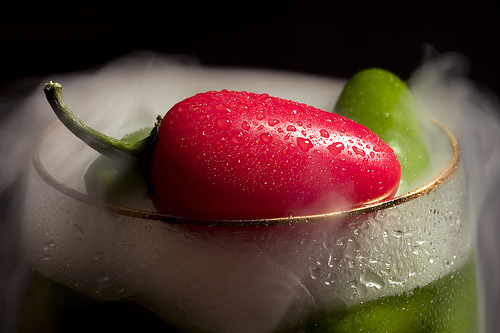
I’m ashamed to say that in the first year or two I wasted quite a few peppers by either not picking them when ripe (which stimulates the plants to grow more) or simply not using all of the fresh chilies I had picked. The key then is to pick preserve your chilli peppers so you can use them throughout the year.
There are many different ways to preserve them but in my opinion frozen peppers taste the freshest in cooking and the nearest you’ll get to a fresh pepper in the winter. So if you want to try and retain that fresh pepper taste year round freezing is your best option.
How Long Do Frozen Chillies Last?
Frozen chillies last at least 12 months in a properly sealed airtight freezer bag with the air removed. In practice we regularly use frozen chillies that have been stored for 2 years or more with no detectable quality loss. Bruce in our comments found 3-year-old Fresno chillies in perfect condition. The official guidance from most freezer manufacturers is 3-6 months but this is extremely conservative for chillies that have been dried properly and sealed well.
The key to maximum freezer life is:
- Dry chillies completely before freezing. Any surface moisture causes freezer burn
- Remove as much air as possible from the freezer bag
- Label with variety and date so you use oldest stock first
Do You Need to Blanch Chillies Before Freezing?
No. Chilli peppers don’t need blanching before freezing. Unlike many vegetables, chillies can be washed, dried and frozen directly without any blanching step. Simply wash, dry thoroughly, flash freeze on a tray for 2 hours to prevent them clumping together, then transfer to airtight freezer bags.
Blanching is only worth doing if you plan to store for longer than 6 months and want to preserve the brightest colour. The heat of blanching deactivates the enzymes that cause colour deterioration over time. For everyday freezing of a harvest glut, skip the blanching and go straight to the freezer.
How To Freeze Chillies
- Wash and Dry Your Chillies
The first and most crucial step in freezing any vegetable is cleaning them properly. Here’s how to prepare your chili peppers:
Rinse: Wash the peppers thoroughly under cool, running water to remove dirt.
Dry: You can help them to dry quickly by spreading them out and lightly patting with a tea towel or paper towels. Residual moisture can cause freezer burn, so it’s essential that the peppers are completely dry before freezing. I leave them to air dry for a couple of hours to be safe.
2. Decide Whether to Freeze Whole or Sliced
There seems to be a lot of debate about whether you should slice your chillies prior to freezing or not.
For larger varieties or some crops that have large internal membranes with loads of seeds you can opt to slice them in half and de-seed them prior to freezing. The choice of de-seeding or not is purely yours, I tend to do what I would do if i were using the chillies fresh.
When freezing your peppers they can sometimes freeze together inside the freezer bags or containers into a big solid chilli ball which is rather unhelpful. To avoid this I first lay out the chillies on a baking tray and place in the freezer for 2 hours.
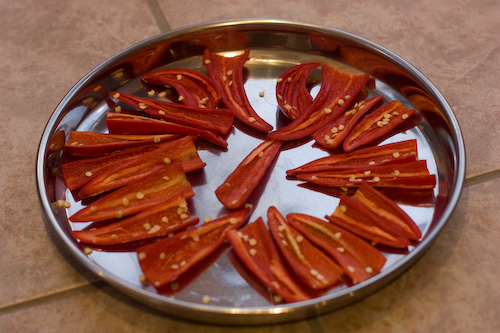
Once frozen I remove them and bag them up into sealable freezer bags or Tupperware containers before popping back in the freezer. Be sure to label the freezer bag with the variety of peppers/chillies and the date you froze them.
3. Decide Whether to Remove the Seeds Prior to Freezing
We get a lot of questions about whether you should take the seeds out of chillies before freezing them. There isn’t a right or wrong answer to this one. Personally I let the size of the pepper dictate what i do.
For regular sized varieties like cayenne, habanaro etc I tend to just freeze them whole. Seeds can usually be removed easily if you slice them when frozen prior to cooking.
For larger chillies and sweet peppers I tend to remove the seeds and pith prior to freezing. If you leave them in I find this can leave a bitter taste behind even if you remove them prior to cooking.
4. Blanching (Optional)
Blanching is a quick process of boiling and then rapidly cooling vegetables. This stops enzyme activity, which can cause flavour and texture changes over time. While chilli peppers don’t necessarily require blanching before freezing, it can help preserve their colour and texture, especially if you’re planning to freeze them for over 6 months.
Here’s how to blanch chili peppers:
- Bring a Pot of Water to Boil: Fill a pot with water and bring it to a boil.
- Prepare Ice Water: Fill a large bowl with cold water and ice.
- Prepare the peppers: Slice and de-seed the peppers
- Blanch the Peppers: Drop the peppers into the boiling water for 1 to 2 minutes.
- Cool Quickly: Immediately transfer the peppers into the ice water to stop the cooking process.
- Drain and Dry: Remove the peppers from the ice water and dry them thoroughly.
To be honest I only blanch larger varieties when my intention is to roast them at a later date. As mentioned above this helps them to keep their texture and colour. When I’m going to use them in soups, stews etc find there is no need.
Freezing Different Chilli Varieties — What Changes
The basic method above works for all varieties, but there are a few variety-specific things worth knowing:
Thin-walled varieties (Cayenne, Bird’s Eye, Ring of Fire)
These freeze particularly well whole — they’re small enough that a single pod is a usable cooking quantity and they go straight from freezer to pan with minimal fuss. Blanching is not necessary. They keep their colour exceptionally well for 12 months or more.
Medium varieties (Jalapeño, Serrano, Fresno)
Excellent frozen whole or sliced. Jalapeños frozen whole are particularly useful — they can be sliced straight from frozen with a sharp knife in seconds. If you pickle a lot of jalapeños, freeze any surplus whole for cooking use. See our pickled jalapeño recipe for another way to preserve these.
Large hot varieties (Habanero, Scotch Bonnet, Fatali)
We freeze these whole without deseeding. The heat is concentrated in the membrane and seeds — removing them before freezing reduces the usefulness of the frozen chilli in cooking. One frozen habanero taken straight from the freezer and finely chopped is a perfect cooking quantity for most dishes.
Superhot varieties (Naga, Carolina Reaper, Trinidad Scorpion)
Freeze whole in small individual portions — a ziplock bag with one or two pods is ideal. Label clearly. The fumes when chopping frozen superhots are intense — open windows and consider wearing eye protection.
Sweet peppers and bell peppers
Unlike hot chillies, sweet peppers benefit from deseeding and slicing before freezing as they’re almost always used that way in cooking. Flash freeze sliced peppers in a single layer before bagging — this way you can pour out exactly the quantity you need rather than dealing with a solid block.
What to Store Frozen Peppers In?
The simple rule is to use airtight containers. I usually use one of the following options:
Freezer/Zip Lock Bags: These are great for smaller quantities. Be sure to remove as much air from the bags as possible to avoid freezer burn.
Tupperware boxes: Air tight plastic or glass containers are perfect for larger quantities. Use good quality plastic containers as some cheaper ones can degrade and breakdown in low temperatures.
How Long Do Frozen Chillies Last?
Again a tough one to answer. Consult the manual of your freezer and it will probably say fresh fruit and vegetables should be used within 3 months of freezing. Personally I have used frozen peppers that have been frozen for over a year or two and have not had any problems or experienced any loss of taste.
To maximise their life be sure to dry them thoroughly prior to freezing and use airtight containers.
To use them simply take them out of the freezer and chop them as if they were fresh. Once finely chopped you’ll find they defrost in a couple of minutes.
A Quick Tip: Use Ice Cube Trays
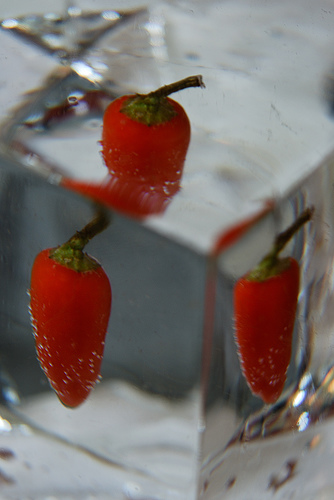
If you always tend to use finely chopped chillies when cooking then it can make a lot of sense to chop them prior to freezing them and split them into portions of similar size to what you use in cooking.
One great way of making frozen chillies easier to cook with is to put freshly chopped chillies into an ice cube tray with enough water to cover them and freeze. Next time you are cooking and want some chilli just pop in however many chilli cubes you need.
This method doesn’t really make sense if you have a lot of pepper to freeze however it will save you time when cooking later on!
Freezing vs Other Preservation Methods — Which is Best?
We’re often asked whether freezing is better than drying, pickling or making chilli oil. Honestly, each method suits different uses:
Freezing is the closest to fresh — frozen chillies taste almost identical to fresh ones once cooked. The downside is they go soft on defrosting, so they’re not suitable for fresh salsa or dishes where texture matters. Best for: cooked dishes, soups, stews, curries, sauces.
Drying concentrates the flavour significantly and completely changes the character of the chilli — dried chillies taste different from fresh, not just more intense. Shelf-stable without refrigeration. Best for: chilli flakes, chilli powder, long-term storage without freezer space. See our guide to making chilli flakes.
Pickling adds acidity and completely transforms the flavour. Pickled chillies are a condiment in their own right rather than a replacement for fresh. Best for: sliced jalapeños for topping dishes, serving alongside. See our pickled jalapeño recipe.
Chilli oil infuses the flavour into oil for a completely different product. Best for: drizzling, cooking oil, finishing dishes. See our chilli oil recipe.
Chilli chutney and preserves are the best use for a very large harvest glut — a single batch of chutney uses up a significant quantity of fresh chillies and produces something that keeps for a year. See our chilli chutney recipe.
For most UK growers the practical answer is: freeze the bulk of your harvest immediately, use some for chutney if you have a very large glut, and dry any thin-walled varieties that aren’t needed fresh or frozen.
How to Use Frozen Chillies in Cooking
The most important thing to know is that frozen chillies do not need defrosting before use in most applications. This is one of the most convenient aspects of freezing and the detail most readers don’t expect.
For finely chopped chilli in cooked dishes. Remove a pod from the freezer and chop immediately while still frozen. The firm frozen texture actually makes chopping easier than fresh, and the chilli defrosts in seconds once it hits a warm pan. This is our preferred everyday method. Just be careful your knife doesn’t slip off the frozen pods.
For sliced rings. Slice straight from frozen with a sharp knife. Frozen chillies cut cleanly and the rings separate easily rather than sticking together, provided you flash froze them individually first.
For whole chillies in slow-cooked dishes. Add directly to curries, soups and stews from frozen. The heat of the dish defrosts them within minutes and they impart their full flavour.
For dishes where texture matters. This is the one limitation of frozen chillies. If making a fresh salsa, garnish or any dish where the crisp texture of fresh chilli matters, frozen chillies won’t work. For everything cooked, frozen is an excellent substitute for fresh.
Using the ice cube method. As described above, finely chopped chillies frozen in ice cube trays with water are particularly useful for curries and soups where you want a consistent, measured amount of chilli heat. One cube typically equates to approximately one medium fresh chilli.
FAQ
Can you freeze chilli peppers whole?
Yes — freezing whole is the simplest method and works well for most chilli varieties. Wash, dry thoroughly and freeze on a baking tray before transferring to freezer bags. Whole frozen chillies can be chopped or sliced straight from frozen without defrosting.
Do frozen chillies lose their heat?
No — capsaicin is very stable and doesn’t degrade significantly during freezing. Frozen chillies retain essentially the same heat level as fresh. They may taste very slightly less fresh and bright than freshly picked chillies but the heat is preserved.
Do you need to blanch chillies before freezing?
Not for most purposes. Blanching can help preserve colour and texture if you’re planning to freeze for over 6 months, but for everyday cooking use unblanched frozen chillies work perfectly well and are quicker to prepare. We rarely blanch hot chillies.
How long do frozen chillies last?
Officially 3-6 months based on most freezer manufacturers’ guidance for fresh vegetables. In practice, properly dried and sealed frozen chillies keep well for 12 months or more without significant quality loss. As one of our readers confirmed, even 2-3 year old frozen chillies can be perfectly usable if properly stored.
Can you freeze chillies with seeds?
Yes — there’s no need to remove seeds before freezing most varieties. Seeds can be removed while chopping the frozen chilli before cooking if preferred. For larger sweet peppers where seeds would add a bitter taste, we recommend deseeding before freezing.
Why have my frozen chillies got freezer burn?
Freezer burn — the white, dry, papery patches on frozen food — is caused by moisture evaporating from the surface of frozen food. It happens when chillies weren’t dried thoroughly before freezing, or when freezer bags weren’t sealed properly with the air removed. Freezer-burned chillies are safe to eat but the affected areas taste poor — cut them away before cooking.
Can you freeze sweet peppers and bell peppers?
Yes — sweet peppers freeze well but benefit from deseeding and slicing first as they’re almost always used that way in cooking. Flash freeze slices on a tray before bagging so you can pour out exactly the quantity you need.
Can I use frozen chillies in fresh salsa or as a garnish?
No — frozen chillies go soft on defrosting and don’t have the crisp texture needed for fresh applications. Use frozen chillies only in cooked dishes where texture isn’t critical.
More Ways to Preserve Your Chilli Harvest
How to Make Chilli Flakes — dry and grind your own chilli flakes from homegrown or bought chillies. Simple, satisfying and the result is far better than shop-bought.
Chilli Oil Recipe — infuse dried chillies in oil for a versatile condiment that keeps for months. Drizzle over anything that needs heat.
Chilli Chutney Recipe — the best way to use a very large harvest glut. Rich, complex and gets better with age. Stores for up to a year sealed.
Chilli Jelly Recipe — sweet, spicy and beautifully clear. Makes an excellent homemade gift.
Pickled Jalapeño Recipe — quick, simple and keeps for months. Works with any medium-heat fresh chilli.
How to Freeze Fresh Curry Leaves — if you grow curry leaf plants alongside your chillies, the same flash-freezing technique applies perfectly.
How to Preserve Chillies — Complete Guide — our overview of every preservation method available, helping you decide which suits your harvest best.
Fermented Hot Sauce Recipe – For a completely different approach to preserving a harvest, this hot chilli sauce produces a tangy, complex hot sauce over 7-14 days. It’s easier than you think to make.
We have grown a lot of Padron peppers this year from professional packet seed. I know some tend to be hot.But the majority are hot. I also grew jalapenos and the heat is not that different. Should this be so.We eat pardons in Spain and they never seem to hot?
We have a woodburning pizza oven and Im going to try slicing my sweet chili peppers into rings, freezing them seperat then bagging them. Without blanching? What do you think.? Having fun with the peppers and the. Basil pesto .
Jackie,
I’m VERY jealous of your pizza oven – it’s definitely something I plan to build in the future at some point. Your plans sounds a perfect way of storing your chillies – good luck!
Hi, I’ve been freezing chillies for a few years and the other day found some Fresno’s dating back to my 2011 harvest at the back of my freezer.
It’s now 2014 and they still look fresh and clean with no freezer burn or deterioration. Even after cutting through them the flesh is thick and juicy with the seeds and membrane perfectly intact.
So my question is, if they look and taste ok after 3 years in the freezer, are there any health risks in using them, such as bad bacteria, botulism, etc?
Any advice would be greatly appreciated.
Bruce,
I would have no issues using them if as you say they look ok. Please don’t take my word as written though – I accept no responsibility for advice given here!
Personally I tend to have so much surplus each year the freezer gets refilled every 24 months or so. Any leftovers from the freezer tend to get used to make chutney in order to make room for new stock!
Thanks for the reply. It’s what I figured too, so went ahead with your chutney recipe which I’ve been using for years now. It’s so simple and absolutely great with cheese and crackers or as a relish for burgers or hotdogs. Keep up the good work with your blog.
Bruce.
Thanks for the advice will be freezing chillies today .
My fiirst year of growing chillies .Using a greenhouse. I used Super Tomato Feed from Suttons to feed them. Result 6 ft tall plants and groaning with chillies.
What do I do with them.
Look it up on the internet.Result ,loads of conflicting advice, until I came to Chilli King
Lots of clear sensible advice easy to understand and follow. Didn’t realise there were so many ways of dealing with chillis.Also the advice on management of the plants was so useful.
An excellent insight for a beginner and I’m quite sure for those who have been growing chillies for some time.
Very many thanks
Chris,
Glad to be of service 😉 !
Thanks for all the info. I have just discovered your website so good to find other Chilli fans and share tips. Good to know how to freeze them so will try that. Great site with lots to offer.
I rescued a couple of chilli plants from my local supermarket. Tired and neglected. Lots of TLC and turning their pots each day has rewarded me with long yellow hot chaps who have been basking in the sunshine and are absolutely delicious. I harvested them last evening, and in the ‘heat’ of the moment, chopped a few, after removing the seeds, and ground them in a mortar and pestle with three cloves of garlic and lots of fresh basil. Added olive oil, continued grinding and popped into a spice jar to await results! Fabulous! Penne all’arrabiata will be transformed and is on the menu tonight! Just a small amount will transform this dish, with smoked bacon, a tin of good toms, decent pasta and loads of parmesan, it will be delicious and easily recreated in the depths of winter. My home grown basil was delighted to be introduced to the chillis and the garlic just sets it all off. Loads of uses.
Thank you so much for giving me some tips to deal with the rest of my crop. Communicating with real chilli lovers is great! They are not just hot, they are aromatic, biddable – they pop off their stalks when ready, beautiful, and deserve TLC in their preservation.
Cool, never thought about freezing them, just the normal drying.
Thanks
Thanx a lot for the helpfull information, as only one member of my family eats chillies,the ability of freezing is a great help
Andrew Hill – Glad to be of assistance!