Best Greenhouse Heater for Overwintering Chilli Plants
If you’ve invested months growing your chilli plants from seed and you’re not ready to let a hard frost end the season, a greenhouse heater is one of the most worthwhile purchases you can make. The right heater means your best plants survive winter and come back fighting in spring — producing fruit weeks earlier than any seed-grown plant and often delivering a significantly bigger crop in their second year.
This guide is written specifically for chilli growers rather than general greenhouse gardeners, because the requirements are slightly different. Chilli plants don’t need a warm greenhouse all winter — they need a frost-free one. That distinction matters enormously for running costs as well as choosing the right heater.
For everything you need to know about the overwintering process itself, including whether to prune hard or leave plants to shed naturally, see our complete guide to overwintering chilli plants.

Do You Actually Need a Greenhouse Heater for Overwintering Chillies?
Honest answer — it depends on three things: how cold your winters get, how well-insulated your greenhouse is, and how risk-tolerant you are.
A greenhouse on its own provides significant protection. In our experience an unheated greenhouse typically stays around 2-5°C warmer than outside on cold nights. In many parts of the UK (particularly the south and southwest) this natural protection is often enough to keep chilli plants alive through winter without any additional heating. This is especially true if you’ve added bubble wrap insulation to the greenhouse.
However there’s an important caveat. On a clear night at -5°C outside, an unheated greenhouse typically holds 0 to -2°C inside — enough for hardy plants but not reliable frost protection for tender ones. Chilli plants (which are tropical in origin) can be damaged or killed by temperatures at or below 0°C. In the Midlands, North of England and Scotland, winter temperatures regularly drop low enough to make an unheated greenhouse genuinely risky for chilli overwintering.
The case for a heater: A thermostatically controlled heater set to 5°C provides insurance against unexpected hard frosts. A tube heater with thermostat can costs just £8-12 per month to run for a standard 6x8ft greenhouse kept frost-free. This is a modest investment against losing plants you’ve grown for a full season.
When you can skip it: If you’re overwintering plants in a conservatory or on a warm indoor windowsill rather than in a greenhouse, you almost certainly don’t need a heater. Indoor temperatures rarely drop low enough to threaten chilli plants.
The number one mistake: Running a heater in an uninsulated greenhouse is like heating a house with the windows open. Insulate first, then buy the smallest heater that keeps your greenhouse frost-free. Before spending money on a heater, line your greenhouse with horticultural bubble wrap. A £20 roll for a 6×8 greenhouse saves £75-100 over a single winter and pays for itself within weeks of the first cold snap.
What Temperature Do Overwintering Chilli Plants Need?
This is the key question and the answer is more forgiving than most people expect.
Minimum safe temperature: 5°C
Chilli plants can survive short periods down to around 0-2°C without dying, but consistently cold temperatures cause stress that weakens the plant significantly. The practical target for overwintering chillies is a minimum of 5°C. This keeps the plants safely dormant without the metabolic shutdown that temperatures below freezing cause.
You don’t need warmth — you need frost protection
The common mistake is buying a heater capable of maintaining 15-20°C when all you actually need is something that prevents frost. Set your thermostat to 3-5°C for frost protection and only raise it higher if you are germinating seeds. Mild spells in November and March rarely need heating at all.
A thermostatically controlled heater set to 5°C will barely run during mild spells – it only fires when the temperature actually drops toward freezing. This is why running costs tend to be so modest.
If you’re germinating seeds from late January:
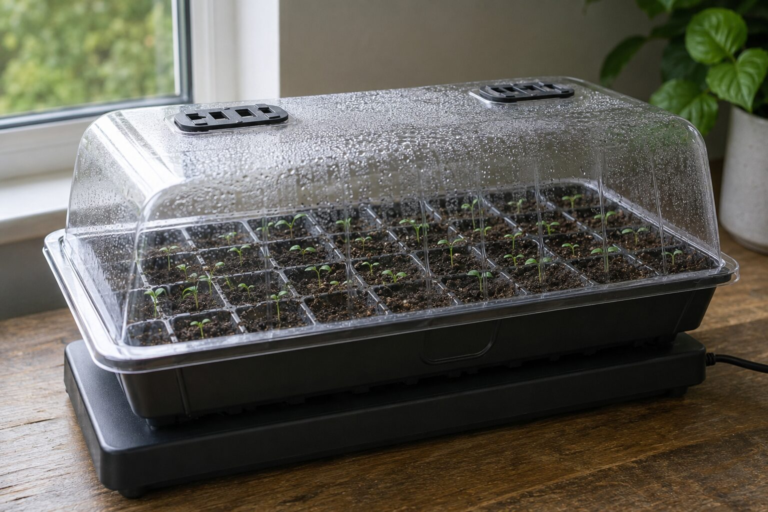
Some growers use the same greenhouse heater to maintain higher temperatures for early seed sowing. For germination you need 25-28°C in the compost — which a greenhouse heater alone cannot achieve. You need a dedicated heated propagator for that stage. See our guide to the best heated propagators for chilli seeds for recommendations.
Types of Greenhouse Heater — Which is Right for Chilli Growers?
Electric Fan Heaters — Our Primary Recommendation
Electric fan heaters are the most popular choice for hobby greenhouses. They plug into a standard 13A socket, heat the space quickly, and circulate air to prevent cold spots and fungal disease.
The air circulation benefit is particularly important for overwintering chilli plants. Cold, stagnant air in a sealed greenhouse encourages fungal diseases (botrytis or grey mould in particular) that can devastate overwintering plants. A fan heater keeps air moving even when the heating element isn’t running, which significantly reduces this risk.
For chilli growing specifically, look for the following features:
- Thermostat — non-negotiable. Without one you’re either running the heater constantly (expensive) or not at all (risky)
- IPX4 waterproof rating minimum — greenhouses are damp environments; only use heaters rated for moisture exposure
- Fan-only mode — useful for summer ventilation when you don’t need heat
- Appropriate wattage — 2kW suits a standard 6x8ft or 8x6ft greenhouse; larger greenhouses need 3kW+
Tube Heaters — The Budget Frost Protection Option
Electric tube heaters are long, slim heating elements mounted horizontally, typically at low level near the plants. Using tubular heaters in your greenhouse is an economical, low cost way of providing steady background heat that can cost just 2p per hour.
They don’t circulate air — they just radiate gentle warmth — which makes them less effective at preventing fungal disease than fan heaters. But for basic frost protection on a tight budget they work very well, and a tube heater with thermostat costs £8-12 per month to run for a standard 6x8ft greenhouse kept frost-free.
The main limitation for chilli growing is the absence of air circulation — mount them low near the plants and pair with occasional manual ventilation on mild days to reduce fungal disease risk.
Paraffin Heaters — Only If You Have No Electricity
Paraffin heaters work without mains electricity which makes them the only option for remote greenhouses or allotment polytunnels. The downsides for chilli growing are significant — they produce moisture as a combustion byproduct (increasing fungal disease risk), need regular refuelling, require ventilation to prevent carbon monoxide buildup, and offer less precise temperature control than electric heaters.
If electricity access is impossible, paraffin works but in our experience electric is better in every other respect.
Our Recommendations — The Best Greenhouse Heaters for Chilli Overwintering
Budget Option — Tube Heater with Thermostat (Under £30)
Best for: Growers in milder parts of the UK, small greenhouses or conservatories, those who primarily need insurance against unexpected hard frosts rather than consistent heating
A basic 60-80W tube heater with a built-in thermostat is the lowest-cost solution for frost protection and works well in a well-insulated small greenhouse. The 4FT Tube Greenhouse Heater Anti Frost ECOHEAT 240W is ideal for protecting plants from frost during the colder months in smaller greenhouses, conservatories or grow rooms — customer feedback suggests it is effective for preventing frost damage and reviewers note its quiet operation.
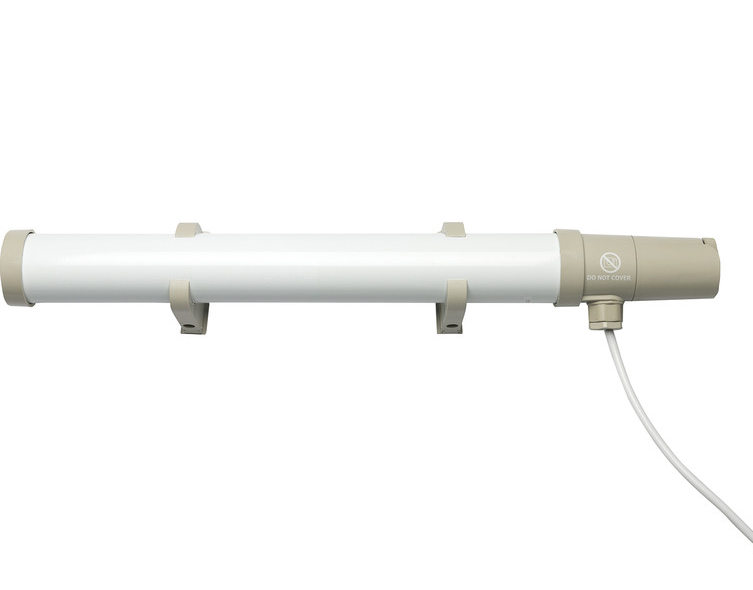
Running cost is minimal — a low-wattage tube heater with thermostat set to 5°C will run for very few hours per day except during the coldest spells. Check current tube heater prices on Amazon UK →
The limitation: No air circulation means slightly higher fungal disease risk. Not suitable for larger greenhouses — one heater covers approximately 6-8 square metres maximum.
Mid-Range Option — Electric Fan Heater with Thermostat (£50-£100)
Best for: Most UK chilli growers with a standard 6x8ft or 8x6ft greenhouse, anyone in the Midlands or North where temperatures drop reliably below -5°C in winter
A 2kW electric fan heater with a built-in adjustable thermostat is the right choice for the majority of chilli growers overwintering in a standard greenhouse. The fan circulates air to prevent fungal disease, the thermostat ensures the heater only runs when needed, and 2kW provides sufficient output for most hobby greenhouse sizes.
IMPORTANT: Look for models with an IPX4 minimum waterproof rating — anything less is not suitable for greenhouse use. A frost-setting option (typically 5°C or a snowflake symbol) is a useful feature that makes thermostat management straightforward. Check current greenhouse fan heater prices on Amazon UK →
Running cost: A thermostat-controlled heater set to 2-5°C costs £8-12 per month to run for a standard 6x8ft greenhouse — this is the realistic running cost for a properly insulated greenhouse in most UK locations.
Premium Option — Bio Green Palma 2kW with External Thermostat (£120-£140)
Best for: Serious chilli growers who want precise temperature control, those overwintering a large number of valuable plants, growers who also want to use the heater for early season seed raising in a propagation area
The Bio Green Palma is consistently recommended as the top greenhouse heater choice. It has a powerful 2kW output that effectively heats a standard greenhouse, comes with a digital thermostat, and the included external thermostat can be placed remotely where your plants are for greater temperature accuracy.
The external thermostat is the feature that genuinely sets this apart. Most greenhouse heaters read the temperature immediately next to the heating element — which is always warmer than where your plants actually are. The Bio Green Palma’s remote probe lets you position the sensor directly at plant level, so the thermostat maintains these settings based on what the plants actually feel rather than the temperature immediately next to the heater.
Customer reviews confirm it is very quiet and doesn’t leave cold spots in a standard 10×6 greenhouse. The stainless steel construction is built for the humid greenhouse environment rather than indoor room use.
At approximately £130-140 it’s a meaningful investment but for someone overwintering 10-20 chilli plants of named varieties that are worth the effort, the precision temperature control and reliability justify the premium. Check current Bio Green Palma price on Amazon UK →
Running Costs — What to Expect
Running costs are one of the most searched questions about greenhouse heaters and the answer varies significantly with insulation quality and target temperature. Here are realistic figures for UK growers based on 2026 electricity prices:
| Setup | Monthly Running Cost |
|---|---|
| Tube heater, insulated 6x8ft, frost protection only (5°C) | £8-12 |
| 2kW fan heater, insulated 6x8ft, frost protection (5°C) | £12-20 |
| 2kW fan heater, uninsulated 6x8ft, frost protection | £25-40 |
| 2kW fan heater, insulated 6x8ft, 10°C minimum | £30-45 |
Electricity sits at 25p per kWh under the 2026 Ofgem price cap. Bubble wrap insulation cuts heating costs by 30-40%.
The practical lesson: insulate before you heat. A greenhouse without bubble wrap leaks heat through every pane — fit £20 worth of insulation first, then buy the smallest heater that keeps your greenhouse frost-free.
For chilli overwintering specifically — where all you need is 5°C minimum — costs are at the lower end of these ranges. A well-insulated 6x8ft greenhouse with a thermostat-controlled heater set to 5°C costs approximately £10-15 per month through the coldest winter months. Over a five-month overwintering season that’s £50-75 — a modest investment against losing plants that took six months to grow.
Insulation — Do This Before Buying a Heater
Insulating your greenhouse before buying a heater isn’t just about saving running costs — it’s about making a smaller heater work effectively. Adding bubble wrap insulation raises the internal temperature by 2-3°C and cuts heat loss by 30-40%.
How to insulate a greenhouse for chilli overwintering:
Line the inside of the glass or polycarbonate panels with horticultural bubble wrap — the type with large bubbles lets in approximately 90% of available light while significantly reducing heat loss. Clip or tape it to the glazing bars. Pay particular attention to the roof and north-facing panels where heat loss is greatest.
Leave the south-facing glass uninsulated if possible to maximise light to your plants during the short winter days. Chilli plants in dormancy don’t need much light, but any natural light during winter helps with the eventual spring recovery.
Seal gaps around the door and any ventilation panels that won’t be needed during winter — these are significant heat loss points.
A min/max thermometer with a remote probe is essential — it tells you the actual overnight minimum temperature inside your greenhouse each morning so you know whether your heater and insulation combination is achieving the temperatures you’re aiming for. Don’t assume — measure.
Positioning Your Greenhouse Heater
Where you place the heater matters more than most guides acknowledge:
Place at floor level, not at head height. Heat rises meaning a heater positioned at staging height heats the upper part of the greenhouse and wastes energy. Position at floor level so heat rises through the plant zone.
Don’t aim directly at plants. Fan heaters produce a direct warm airflow that can dry out and damage plants immediately in front of them. Aim the heater at a wall or allow at least 30-40cm between the heater outlet and the nearest plant.
Position the thermostat probe at plant level. If you have an external probe (as on the Bio Green Palma) position it at the same height as your plants — not at ceiling height where it will read warmer temperatures and underestimate how cold your plants actually are.
Keep away from the door. Cold air rushes in every time the greenhouse door opens. Don’t position the thermostat probe near the door or you’ll get false low readings every time you enter.
FAQ
What temperature should I set my greenhouse heater for overwintering chillies?
Set the thermostat to 5°C for reliable frost protection. Chilli plants can tolerate brief periods down to 0-2°C but consistent temperatures at this level cause stress. 5°C provides a comfortable safety margin without the running costs of maintaining higher temperatures. If your plants are already showing new growth in late winter, gradually increase to 8-10°C to encourage active growth.
How much does it cost to heat a greenhouse for chilli overwintering?
A thermostat-controlled heater set to 5°C in a well-insulated standard 6x8ft greenhouse costs approximately £8-12 per month to run. Over a five-month overwintering season (November-March) that’s £40-60 total — a modest investment against losing plants you’ve grown all season
Do I need a heater if I’m overwintering chillies indoors?
No — indoor temperatures rarely drop low enough to threaten chilli plants. A south-facing windowsill or conservatory is ideal for overwintering without any supplemental heating. The heater is specifically for greenhouse overwintering where overnight temperatures can drop significantly
Can I use any electric heater in a greenhouse?
No — domestic room heaters are not rated for the damp conditions in a greenhouse and can be dangerous. Only use heaters with an IPX4 waterproof rating minimum. The Bio Green Palma and similar greenhouse-specific models are designed for these conditions.
Will a greenhouse heater also work for early seed starting
It can maintain frost-free or cool conditions in a greenhouse from February onward, but it can’t achieve the 25-28°C soil temperature needed for chilli seed germination. You need a dedicated heated propagator for that. See our guide to the best heated propagators for chilli seeds.
My greenhouse doesn’t have an electricity supply — what are my options?
Paraffin heaters are the main alternative. They work without mains electricity but produce moisture as a combustion byproduct and need regular refuelling. Ensure adequate ventilation when using paraffin in an enclosed space. For an allotment greenhouse without power, the practical alternative to heating is moving the most valuable plants indoors for winter.
What size heater do I need for my greenhouse?
As a rough guide: a 2kW heater suits a standard 6x4ft to 8x6ft greenhouse. A 3kW heater is needed for larger greenhouses (10x8ft and above) or those with poor insulation. The thermostat matters more than the badge — a heater on a tight thermostat holds your target temperature without burning electricity you don’t need