
To overwinter chilli plants in the UK: stop feeding in October, prune back to 15cm of main stem (or leave unpruned for a natural dormancy), repot into fresh compost, move to a frost-free location at 10-15°C, and water sparingly — once every 2-3 weeks — until spring growth appears. Most varieties survive until late April before you give up on them.
Overwintering chilli plants simply describes the process of keeping your plants alive throughout the winter. Overwintering can mean your plants get a good head start to the growing season come spring.
Most people wrongly believe that chilli plants are annuals and will always die off during winter. This is wrong – with the right treatment it is easily possible to keep your chilli plants going for many years.
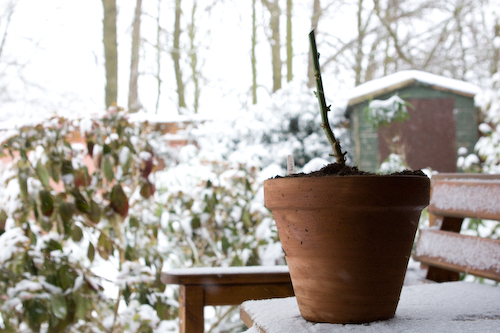
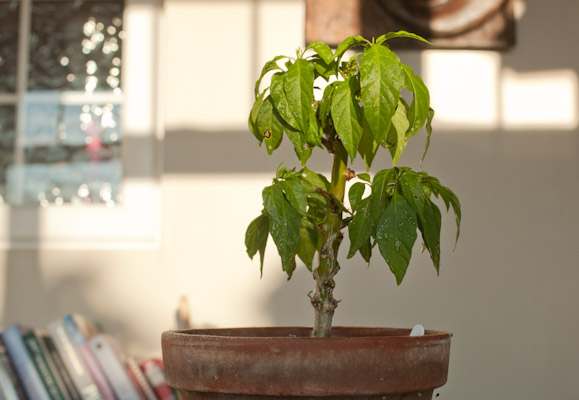
Seeing your pepper plants burst back into life in the spring can be very rewarding. However an added benefit is that you can expect to be picking chillies much earlier from overwintered plants.
Why overwinter your chilli plants?
There are several benefits to overwintering chilli plants:
Extended Plant Lifespan: Chilli plants are perennials, meaning they can live for multiple years when cared for properly. By overwintering, you’re preserving your plants for the next growing season.
Increased Yields: Overwintered chilli plants tend to be more productive in their second year. These higher yields are a result of more established root systems that older plants will have compared to young plants.
Preserve Rare or Favorite Varieties: If you’ve grown a particular chilli variety that you love, overwintering ensures that you can enjoy the same peppers year after year without the risk of losing them to winter cold.
Earlier Harvests: If you can successfully overwinter your chilli plants they will have a massive head start over any plants you try and grow from seed in spring. The strong root structures will already be developed which can lead to faster growth in spring and early summer. In our experience overwintered plants tend to flower and then start fruiting anything from 2-4 weeks earlier than young plants. The net result is earlier harvests from your chilli plants. This can be particularly useful for varieties such as naga or habanero that tend to ripen late in the season here in the UK.
Cure your winter boredom: Winter can be a boring time for gardeners. Overwintering peppers can provide you with some good entertainment in the dead of winter when there is little else to do in the garden.
How does overwintering chilli plants work?
Much like when and animal hibernates a plant that is overwintered acts almost the same. The plant reacts to the lower temperatures and low light levels of winter and effectively shuts down all growth phases, so much so that all signs of life disappear. For a long period of time the plant will look as if it has died. This process helps the plant protect itself from its new cold and dark environment and reduces it’s need for light and food. Once conditions improve the following spring the hibernation will reverse and the plant should sprout new growth again.
The above process is how chilli plants react in warmer climates such as Asia and South America however the colder winters we experience in Europe and North America will more often than not kill the plants. To ensure your plants survive the colder winter and come back to life next spring stronger than ever there are a few simple steps you will need to take.
When to Start Overwintering Chilli Plants?
Over the years we have found that timing is crucial when it comes to successfully overwintering chilli plants. You should aim to start the process after your harvest is complete and before the first hard frost of the season.
The exact timing depends on your location and climate, but a general rule of thumb is to begin preparing your chilli plants for overwintering once the daytime temperatures drop consistently below around 50°F (10°C).
Ideally you want to start preparation just as the plants begin to switch to a dormancy phase. Go too soon and your plants will spring back into growth mode and use precious energy on foliage growth.
How to Overwinter Chilli Plants
1. Select healthy plants to overwinter
Not all your plants will make it though the winter. If you are anything like me, available space such as in the greenhouse or conservatory or a sunny windowsill will be limited so only choose your best looking, healthiest chilli plants to overwinter. Be sure to avoid plants with signs of pests or disease.
Of the 5 main species of chilli, pubescens tend to fare better based on my experience over the years, however it is possible to overwinter all chilli varieties if you treat them well. As a rule it is best to overwinter plants that take longer to fruit such as habaneros, naga etc as opposed to fast growing varieties like Cayenne or Japlapeno.
As summer is coming to an end give each plant a careful check over looking out for any signs of disease or pests. If you find either separate out the good plants from the bad to avoid any further infestations. Only attempt to overwinter your strongest looking plants as weaker plants will have a much lower survival rate. When night time temperatures fall (to around 10 degrees) you should start thinking about preparing your plants for the winter. In the UK this tends to be about the end of October.
Be sure to remove any chillies from your plants as you do not want to waste any! If the plants have unripe fruit then you can try and ripen them off the plant.
2. Prune Your Plants in Late Autumn
Prune back each pepper plant hard so you only leave about 15cm of the main stem. This can seem severe however it is needed to increase the plants survival chances. Remove most of the foliage leaving a few healthy leaves while taking away any dead leaves or remaining pepper pods. Only leave healthy strong branches that will be able to support new growth come spring.
With reduced foliage your chilli plant roots will not need to use much energy to survive winter. The plant can retreat into a state of dormancy until spring arrives.
The Two Schools of Thought on Pruning
One of the most debated questions among experienced chilli growers is how hard to prune when overwintering — or whether to prune at all. Based on our 20+ years of overwintering and the experiences shared by our readers, there are two distinct approaches:
The hard prune method: cutting plants back to 10-15cm of main stem as described in Step 2 above. This is the most commonly recommended approach and for good reason. With minimal foliage the plant needs very little energy to survive winter and can retreat into dormancy. The downside is that hard-pruned plants sometimes produce smaller lateral branches in spring rather than a strong main stem, which can limit the size of the plant in subsequent years.
The “do nothing” method: leaving the plant largely unpruned and letting it shed its own leaves naturally. The plant will drop most or all of its leaves and look thoroughly dead for weeks or months. This can be alarming but when spring arrives new leaves usually emerge from every node on every branch simultaneously — the result is often a much larger, more branched plant than the hard-pruned version. One downside is that unpruned plants take up more space and are more vulnerable to fungal disease in damp conditions.
Our experience and that of many of our readers suggests the “do nothing” method produces the best results for plants kept in a warm environment overwinter. The natural dormancy process happens at the plant’s own pace.
For plants kept in a cooler space overwinter (think greenhouses or conservatories) a hard prune is often the best way to go. Less foliage to support and the cooler temperatures will mean the plant goes deeper into a dormancy state.
3. Repotting
After trimming back your chilli plants it can be a good idea to remove them from the pot, shake off the root ball slightly and repot using some fresh compost. This will help the plant grow back healthier in the spring. If your plants are in large pots (bigger than 30cm) you can also trim back the roots slightly and pot into a smaller pot to help concentrate the energy.
Related: Take a look at our article on the best potting mix for chillies.
4. Heat & Light
Chilli plants are not particularly cold tolerant and need to be protected from frosts overwinter. Overwintering your chilli plants inside a heated greenhouse will greatly increase their chances of survival. Ideally you should aim to keep your plants at around 50-60°F (10-15°C) which is the ideal range to keep them dormant.
For advice on choosing the right heater for your greenhouse — including running cost figures and our specific recommendations — see our guide to the best greenhouse heaters for overwintering chillies.
If you don’t have a heated greenhouse then an unheated conservatory works very well. Failing that try to find a sunny windowsill in a cool room in your house.
If you are keeping them in an unheated greenhouse or conservatory just be careful of low night time temperatures of below 6-8 degrees Celsius. When overwintering my plants in an unheated conservatory I use a cheap plant heat mat to keep the roots slightly warmer – this works really well.
Alternatively a small heated propagator is useful for the most tender plants during cold snaps — see our guide to the best heated propagators which covers thermostat options suitable for overwintering too.
If your overwintering space gets limited natural light, supplementing with a grow light from November through February can help plants maintain their condition and spring back to life more quickly. See our complete guide to grow lights for chilli plants for recommendations.
5. Protecting Against Late Frosts
Even after you’ve moved your overwintering plants to a greenhouse or conservatory, unexpected cold snaps can catch you out. A few things worth having to hand:
- Frost fleece — a layer draped over plants on a cold night provides 2-4°C of protection. Cheap and reusable. A roll of horticultural fleece is worth keeping in the greenhouse throughout winter.
- A min/max thermometer — knowing the actual overnight minimum temperature in your overwintering space is much better than guessing. A digital min/max thermometer with a remote probe lets you check from inside the house. Aim to keep minimum temperature above 5°C for safety.
- A greenhouse heater on a thermostat — for particularly cold winters a small electric greenhouse heater set to 5°C provides a safety net without running constantly.
6. Watering Chilli Plants overwinter
It is crucial to avoid over watering your chilli plants during the winter. Due to the lower temperatures, it will take much longer for them to use the water you give them. As a result water much less frequently than in the summer to avoid mould building up and the threat of root rot. Check them once a week and only water if necessary, maybe as little as every 2-3 weeks.
Without a doubt the best way to check if your plants need watering is to use a plant moisture meter. If the soil shows as dry then water a little. These devices are cheap and do not need power or batteries so make a great addition to any grow kit. During winter I let the soil dry out completely between waterings.
Stop feeding completely through winter — see our guide to feeding chilli plants for the full seasonal schedule including when to resume in spring.
7. Be Patient
It can often feel like you’ve killed you plants, particularly if they shed their leaves. Be patient and trust the overwintering process! Manage watering well – do not let them dry out fully or over water.
As soon as light levels and heat increase in the Spring the magic will start to happen.
When spring finally does arrive it can take a few weeks before the plants spring back into life and new growth forms. When new growth appears the plants mature root structure will enable them to grow quickly and flower/fruit long before any plants you are starting from seed that year.
8. Bringing Your Plants Back in Spring
Once you start to see new growth emerging in spring (typically from late February indoors and March-April in a greenhouse) it is time to start nursing your plants back to full health.
Start feeding again. As soon as you see clear signs of new leaf growth, begin feeding with a diluted balanced liquid fertiliser at half strength. Gradually increase to full strength over the next month. Be sure not to feed dormant plants.
Begin watering more regularly. Once new growth appears and temperatures increase so will the plants demand for water. Increase watering frequency gradually in line with the plants needs – use a simple plant moisture meter to monitor how dry the compost is.
Repot if needed — if your plants look pot-bound or the compost is was not changed after the prior years growing early spring is the ideal time to pot on into fresh compost.
Move toward more light — if plants have been in a dark corner of a greenhouse, move them toward better light as days lengthen. If growing indoors a spell on a sunny south-facing windowsill from March onwards will accelerate the recovery significantly.
Harden off before going outside — don’t move overwintered plants directly from a warm interior to outdoor conditions. Even in May, a cold night after a warm room can set a recovering plant back significantly. Harden off over one to two weeks as you would any tender plant. See our guide to hardening off chilli plants for the full process.
Expect early flowers — one of the rewards of successful overwintering is that plants often produce flowers weeks before seed-grown plants. If flowers appear very early when the plant is still small and recovering, consider removing the first flush to allow the plant to put energy into establishing itself before committing to fruiting.
Ready to start growing again in spring? If so check out our full growing guide.
Common Questions About Overwintering Chilli Plants – FAQ
Can all types of chilli plants be overwintered?
Yes, most varieties of chilli plants can be overwintered successfully, including popular types like jalapeños, habaneros, and cayenne peppers. Some more sensitive varieties may require extra care, but in general, the overwintering process is the same for all chilli plants.
Do I need to prune chilli plants before overwintering?
Pruning is highly recommended before winter sets in. By reducing the amount of foliage the plant’s roots need to support over winter you reduce the stress on the plant during the winter months. Pruning your chilli plants also reduces the risk of pest infestations and diseases.
How long does the overwintering process last?
The overwintering process typically lasts for 3-5 months, depending on your climate. Once the outdoor temperatures rise above 50°F (10°C) consistently, you can begin reintroducing your chilli plants to the outdoors.
Will overwintering make my chilli plants produce more fruit?
Yes. As described above overwintering will increase the fruiting period of your pepper plants leading to a higher yield of fruit.
Are pepper plants perennial?
Yes. Most people incorrectly believe that chilli plants are annuals when in fact they are perennials.
My overwintered plant looks completely dead — should I give up?
Not until Mid April is my usual advice. Chilli plants can look thoroughly dead – no leaves, dry stems, no sign of life whatsoever – and still come back to be strong productive plants. Before giving up, scratch the surface of a main stem with your fingernail. If the tissue underneath is green rather than brown, the plant is most likely still alive. Give it until late April before deciding it hasn’t made it.
Can I overwinter chilli plants in an unheated greenhouse?
It depends on your location and how cold your winters get. In mild parts of the UK (south west, coastal areas) an unheated greenhouse often provides enough protection. In colder regions or during harsh winters with prolonged freezing temperatures your plants may die in an unheated greenhouse. A frost fleece wrap and a small electric heater on a thermostat set to 5°C provides insurance against unexpected cold snaps. I use a heated plant mat with great success.
My overwintered plant is flowering in January — is that normal?
These things happen. Some plants decide to keep producing flowers deep into winter – particularly if the autumn is mild. This isn’t necessarily a problem but very early flowers rarely set fruit successfully due to low light levels and lack of pollination. I typically remove them to encourage the plant to save its energy for spring.