I’ve posted before about
overwintering peppers on the site and we still get loads of emails from readers asking about when and how to do it. Therefore I decided to post a detailed description of what i do to over winter my chillies.
Over wintering a pepper plants is not as hard as many people think. Basically we are trying to emulate what happens to a regular tree in the winter – the leaves fall off and the tree goes dormant throughout the winter. Come the Spring and warmer weather fresh growth appears that will support that years fruit/seeds.
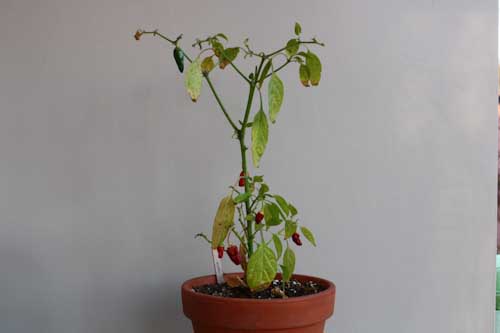
As i mentioned in my last post despite being almost mid December my chilli plants still have ripe pods on them. That said thanks t the recent cold weather most of the plants are now looking very tatty with yellowing leaves, the last of the fruit losing their freshness.
Preparation
The first job is to carefully remove from it’s pot to assess the root ball. Assuming all looks healthy I gently rub off some of the compost from around the root ball. On older more mature plants, or those with pot bound root balls I generally trim about 1/3 of the root ball off with some regular pruners. This should encourage new root growth in the early spring when the plants kicks back into life.
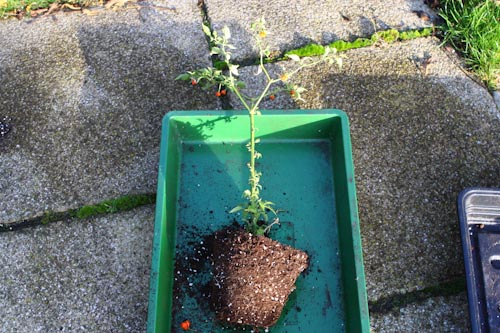
With the root ball shaken out and trimmed the next job is to cut the stem about 15cm from the soil line. This seems harsh but it will prevent the plant from trying (in vein) to support the foliage throughout the winter and encourage dormancy.
A quick clean cut with some garden pruners is all that is needed. I’ve heard of some people using various powders or gels on the cut stem to prevent infection entering the plant however i’ve never had any issues so think it unnecessary.
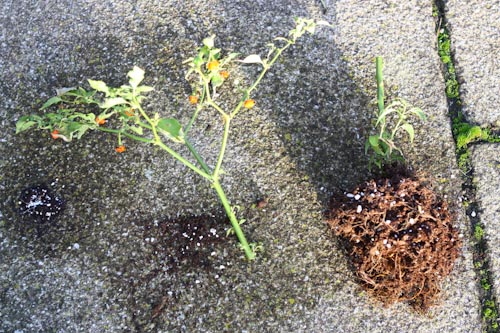
Once trimmed I remove any of the excess foliage or side shoots from the remainder of the stem before getting ready to re-pot the plant. I use my standard potting medium for re-potting.
The fresh compost around the roots will ensure there is plenty of nutrients for the roots when the spring arrives. Once complete a light watering is all that is needed before popping the plants in the greenhouse.

Below is a picture of the of scotch bonnet I over wintered last year. You can see the old main stem that was cut. I was surprised that the plant didn’t put on much new foliage growth over the summer. I suspect the reason is that I didn’t re-pot it into any fresh compost when I over wintered it so it has been in the same potting medium for 2 years. As you can see in the picture below it was quite root bound.


Despite this neglect it produced a steady supply of blistering hot peppers this year. I’m going to try to over winter this plant again and have treated it to a root-cut and some fresh compost so hopefully it’ll repay me with another high yield next year.
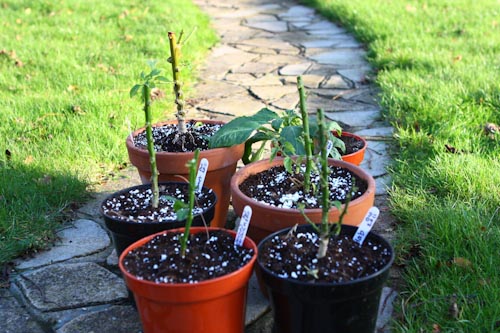
Below are the 6 plants I’ll be over wintering this year.There is a couple of orange habaneros, two scotch bonnets, a naga and even the scorched Super Chilli F1 that produced a massive crop.
Where to Store The Plants
A common question we get asked is where to store the plants you are overwintering. Ideally they should be somewhere that stays about 5 degrees, gets some light and has some air circulation. A greenhouse (heated overnight in very cold weather) is ideal.
In my case these plants will be living in the chilli house over the winter. It is reasonably well insulated with double glazing so I don’t need to worry too much about frosts. If we get a sustained cold period with snow like last year I may put a little electric heater in there overnight just to keep the chill at bay.
I’ve tried overwintering plants in the house before and find that the warm weather encourages them to put on fresh growth too early (before Spring arrives) and therefore the plants miss out on the dormant period.
Left outside chillies will usually get wiped out by heavy frosts or snow. If you don’t have a greenhouse then a windowsill in the shed or garage may do the job, failing that a spare room that isn’t fully heated would be good.
Feeding and Watering
Overwintering plants don’t need a lot of water. As the plants should be dormant for the next couple of months at least be careful not to over water them. Doing so will encourage fungus and disease around the roots.
I generally won’t start feeding them until there are clear signs of fresh growth in the spring. So in the mean times i’ll be planning what seeds to plant and have a think about building my self watering containers.