
How to Water Chilli Plants — The Complete Guide
The short answer: water chilli plants when the top inch of compost feels dry to the touch. In a UK summer this typically means every 2-3 days for container-grown plants, more frequently during heatwaves. Chilli plants hate both overwatering and underwatering — consistency is more important than frequency.
That direct answer is what most people searching this question want. But getting watering right for chilli plants involves understanding a few nuances that make the difference between thriving plants and struggling ones. Here’s everything we’ve learned from 20 years of growing chillies in the UK.
This article covers mainly watering. Given feeding and watering are related be sure to read our complete chilli plant feeding guide for how to combine the two effectively.
Why Watering Chilli Plants Correctly Matters
Chillies are more sensitive to watering than most vegetables. Both overwatering and underwatering cause visible stress symptoms — and the two can look deceptively similar at first glance. Understanding what your plants are telling you is the foundation of good watering practice.
Water is the mechanism through which plants take up nutrients from the compost. A plant that’s underwatered can’t access the nutrients in the pot even if they’re present. A plant that’s overwatered has damaged roots that can’t absorb water or nutrients effectively — and sits in cold, wet compost that encourages fungal root rot. In both cases the plant shows stress: drooping, yellowing leaves, poor growth and flower drop.
The goal is consistent moisture — compost that’s damp but not wet, that never dries out completely between waterings but also never becomes waterlogged.
How to Tell When Chilli Plants Need Watering
Several methods work well depending on your setup:
The finger test — push your finger an inch into the compost. If the top inch feels dry, water thoroughly. If it still feels damp, wait another day. This is the most reliable method for most growers and costs nothing.
The pot lifting method — pick up the pot and assess its weight. A dry pot feels noticeably light; a well-watered pot feels heavy. This is our preferred method once you’re used to it — after a few weeks you develop a reliable intuition for when pots need water without needing to check the compost directly. It works equally well for large pots where the finger test only reaches the surface.
Clear plastic cups — for seedlings specifically, transplanting into clear plastic cups allows you to see the moisture level in the compost directly through the sides. The compost colour changes visibly from dark (moist) to pale (dry). This is one of our most-recommended tips for beginners — it takes all the guesswork out of seedling watering.
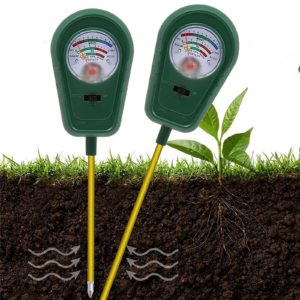
A plant moisture meter — a moisture probe inserted into the compost gives a digital or dial reading of moisture level. After discovering these devices a few years ago I have one for the greenhouse and one for the plants in the house. They are particularly helpful for large pots where surface conditions don’t reflect what’s happening deeper in the root zone. A basic moisture meter is inexpensive and takes the uncertainty out of watering decisions.
How Often to Water Chilli Plants
There’s no single answer because frequency depends on pot size, compost type, temperature, humidity and the growth stage of the plant. As a rough guide for UK conditions:
Seedlings in small pots or module trays — check daily. Small volumes of compost dry out very quickly, particularly under grow lights which generate warmth. Young seedlings are very sensitive to drying out — their tiny root systems have no reserves to draw on.
Plants in 3-5 inch pots — every 1-2 days during active growth in warm conditions. More frequently in a greenhouse during summer.
Plants in final pots (7-10 litres) — every 2-3 days in typical UK summer conditions. During heatwaves, large greenhouse-grown plants may need daily watering.
Overwintering plants — once a week or even less. Dormant plants have very low water requirements and overwatering in winter is one of the most common causes of plant loss. Allow the compost to dry out significantly between waterings from October through February.
These are starting points — your specific conditions will require adjustment. The finger test or pot-lifting method should always take precedence over a schedule.
Seasonal Watering Guide for UK Growers
UK chilli growers deal with dramatically different conditions through the year and watering needs change accordingly.
January — March (germination and seedling stage)
Water seedlings carefully — small volumes, little and often. Use room-temperature water. Check daily but water only when the top of the compost looks pale and dry. Overwatering seedlings in cold conditions causes damping off — a fungal condition that collapses seedlings at soil level.
April — May (potting on and early growth)
As plants move into larger pots and temperatures begin to rise, water requirements increase. Establish your pot-lifting routine now — you’ll use it all season. Still be cautious about overwatering in cool April weather.
June — August (peak growing season)
This is when water requirements are highest. Container-grown plants in full sun or a warm greenhouse may need daily watering. During hot spells check twice a day — morning and evening. A plant that wilts in the morning heat but recovers by evening is coping. A plant that wilts overnight has been seriously underwatered.
September — October (harvest and wind-down)
Reduce watering gradually as temperatures drop and plants slow their growth. Continue to water regularly as long as plants are in active growth — but don’t let pots sit wet in cool weather.
October — February (overwintering)
Reduce to once weekly or less. The plant is dormant and needs minimal water. Cold, wet roots in winter is the most common cause of overwintered plants failing to come back in spring. See our full overwintering guide for more detail.
Overwatering vs Underwatering — How to Tell the Difference
Both cause drooping and yellowing leaves, which makes diagnosis confusing. Here’s how to distinguish them:
Underwatering: Compost is bone dry, pot feels very light. Leaves may feel slightly crispy or thin. Plant recovers relatively quickly once watered — typically within a few hours.
Overwatering: Compost is wet or soggy, pot feels very heavy. Stems may look soft or darkened at the base. Lower leaves may yellow and drop. Plant doesn’t recover after watering because the roots are damaged rather than dry. May smell slightly of rot.
The quick test: lift the pot. If it’s very light and the compost is dry — underwater. If it’s heavy and the compost is wet — overwater.
See our guide to drooping chilli plants for a full diagnosis guide and our yellow leaves guide for more on the symptoms of both conditions.
What Type of Water to Use
Tap water is perfectly usable for chilli plants but benefits from standing overnight in a watering can before use. This allows two things — the temperature equalises to room temperature (cold water can shock plant roots), and some of the chlorine evaporates. Neither effect is dramatic but both are beneficial, especially for seedlings.
Rainwater is the best option if you have a water butt. It’s naturally slightly acidic (which chillies prefer), free of chlorine and at ambient temperature. If you’re growing many plants, a water butt is genuinely worth setting up.
Hard tap water — in hard water areas, tap water contains dissolved calcium and magnesium (lime) that accumulates in the compost over time, gradually raising the pH and making nutrients less available. If you’re growing in a hard water area and plants show signs of nutrient deficiency despite regular feeding, switching to rainwater or collected water often makes a noticeable difference.
Cold water straight from the tap — avoid watering seedlings or recently repotted plants with cold water straight from the tap, especially in winter. The temperature shock stresses roots. A watering can filled the day before will always be at room temperature.
Watering Technique — Top vs Bottom Watering
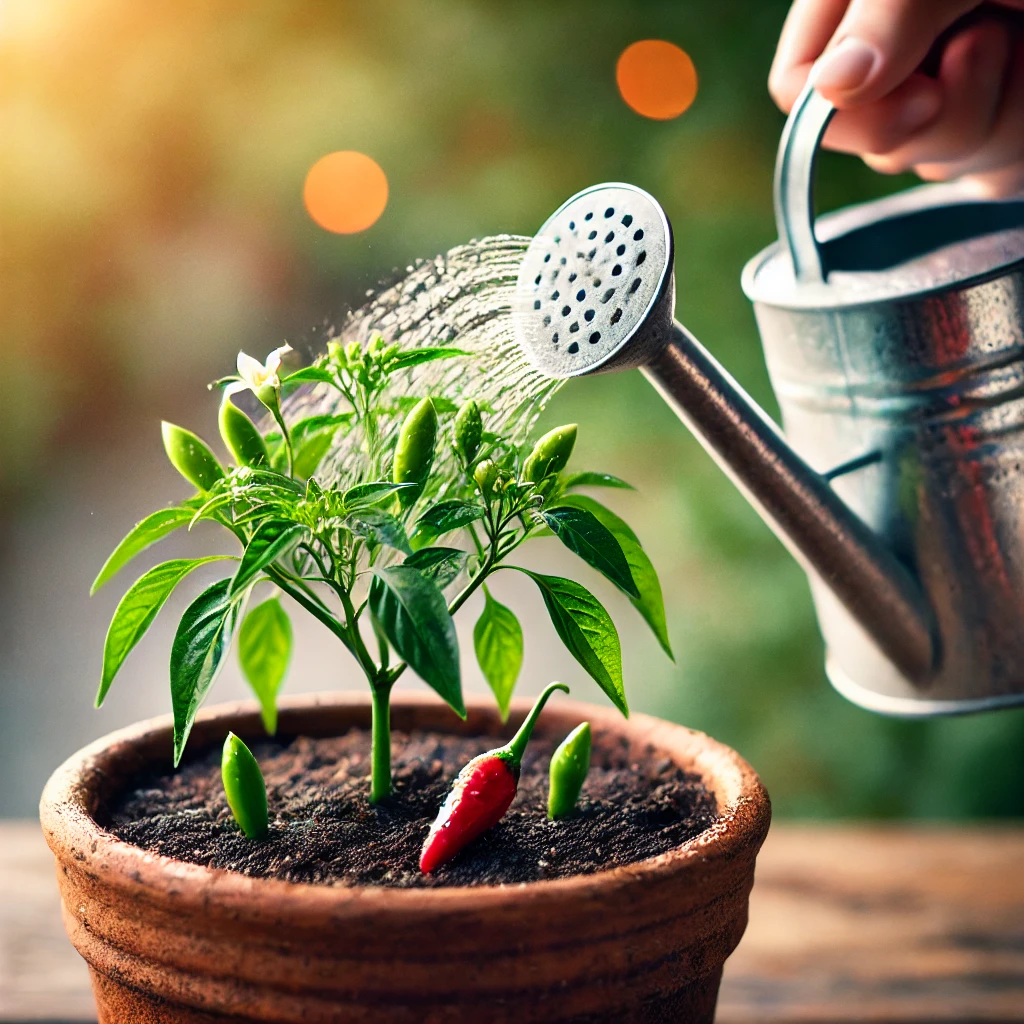
Top watering — the standard method. Pour water slowly onto the compost surface until it runs freely from the drainage holes. This flushes air through the compost and ensures all the compost is wetted rather than just the top layer. Always water until you see drainage — this confirms the water has reached the bottom of the root zone.
Bottom watering — place the pot in a tray of water and allow the compost to absorb water from below through the drainage holes. Remove from the tray once the top of the compost feels moist — typically 20-30 minutes. Bottom watering promotes deep root growth as roots extend downward toward the water source, and avoids wetting foliage which can encourage fungal disease.
We use both methods depending on the situation. Bottom watering for seedlings and small plants where precision matters. Top watering for established plants where speed and convenience take priority.
Never let plants sit permanently in a tray of water. Standing water under a pot restricts drainage, keeps roots permanently wet and encourages root rot. If you use saucers under pots, empty them after watering.
Self-Watering Systems — Worth Considering
For growers who travel frequently or want a more hands-off approach, self-watering planters and drip irrigation systems maintain consistent moisture levels without daily attention. We’ve used self-watering planters for several years with good results — the reservoir beneath the compost feeds water upward as the plant needs it, preventing both overwatering and underwatering simultaneously.
See our self-watering planters guide for how to build your own or choose a ready-made system.
Summary of Watering Tips for Chilli Plants
- Check plants daily during summer and water when the top inch of compost feels dry
- Always water until drainage runs from the bottom of the pot
- Lift pots to judge moisture by weight — lighter means drier Use clear pots or cups for seedlings to see moisture levels directly
- Let tap water stand overnight before use if possible
- Use rainwater if available, especially in hard water areas
- Never let pots sit in standing water
- Reduce watering significantly from October through winter
- Water more frequently than you think during heatwaves — a conservatory or greenhouse can reach temperatures that dry pots out in hours
FAQ
How often should I water chilli plants?
In UK summer conditions, most container-grown chilli plants need watering every 2-3 days. During heatwaves or in a hot greenhouse, daily watering may be needed. In winter, overwintering plants need water only once a week or less. Always check the compost rather than following a fixed schedule — pot size, temperature and variety all affect requirements.
Can you overwater chilli plants?
Yes — overwatering is one of the most common mistakes with container-grown chillies. Consistently wet compost damages roots, prevents nutrient uptake and encourages fungal root rot. Signs of overwatering include yellowing lower leaves, soft or darkened stems and a heavy, soggy pot. Allow the compost to dry out partially between waterings.
Should I water chilli plants from the top or bottom?
Both work well. Top watering is faster and ensures all the compost is moistened — water until drainage runs from the bottom of the pot. Bottom watering encourages deeper root growth and avoids wetting foliage — place the pot in a shallow tray of water for 20-30 minutes. Never leave pots standing permanently in water.
What happens if I don’t water chilli plants enough?
Underwatered chilli plants wilt, leaves become thin and slightly crispy, and the pot feels very light. Prolonged underwatering causes flower drop, leaf drop and in severe cases plant death. Most chilli plants recover well from a single episode of underwatering once watered promptly — the damage is done by repeated or prolonged drought stress.
Should I use rainwater or tap water for chilli plants?
Rainwater is preferable — it’s slightly acidic (which suits chillies), free of chlorine and at ambient temperature. Tap water is perfectly usable but benefits from standing overnight before use. In hard water areas, long-term use of tap water can raise soil pH and affect nutrient availability — rainwater or collected water avoids this.
When should I stop watering chilli plants?
Never stop watering entirely — even dormant overwintered plants need occasional water through winter to prevent the compost from drying out completely. Reduce frequency significantly from October onwards: once a week or less is usually sufficient for dormant plants. Resume more regular watering in spring when new growth appears.
How do I know if my chilli plant is overwatered or underwatered?
Lift the pot. A very light pot suggests underwatering. A very heavy pot suggests overwatering. Check the compost — dry and pale means underwatered, wet and dark means overwatered. An underwatered plant typically recovers within hours of watering. An overwatered plant doesn’t recover after watering because the root damage prevents water uptake regardless of soil moisture.
Related Growing Guides
Hopefully you learned some tips on how to water chilli plants. Take a look at some more relevant guides to help you on your chilli growing journey.



Hello,
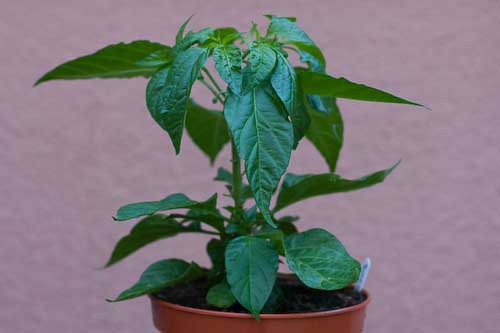
I have a chilli plant that is producing lots of big red chilli’s. According to the can it came in they are ghost chilli’s but they have absolutely no taste or heat. I keep the plant in a pot in my conservatory so it gets plenty of heat and I water if regularly. I did try watering it less but after a day or two without water the plant becomes saggy. Is there something I’m doing wrong?
Thanks
Andrew,
Where did you get your seeds from? If the seeds are not true (cross pollinated with another variety) then deformed fruit or lack of heat can occur. Stick with it and you may find the heat develops but i suspect your plant may not be a true variety. In my opinion it always pays to get your seeds/plants from a reputable supplier.
don’t stop watering them – this will put stress on the plant. the plant needs water to help it make the energy to help them ripen!
When should i stop watering my peppers (in order to get them to ripen to perfection)?