
Propagating Curry Leaf Plants from Cuttings
One of the most popular spices used in South Indian cuisine is the curry leaf. In this guide we will explain how to propagate curry leaf plants from cuttings.
Curry leaves should not be confused with the common ‘curry plant’ (which is not edible but smells of curry powder) often seen in garden centers here in the UK. The curry leaf plant or ‘Murraya koenigii’ to give it its full name adds an unmistakable fragrance to South Indian dishes. It can be used fresh or dried and is usually fried off early in the cooking process along with your spices (such as mustard seeds or cumin seeds) and onions.
I’ve yet to find a curry leaf plant for sale in person here in the UK – I’m guessing because they are not too keen on our cool climate.
In the UK curry leaves are usually sold pre dried in supermarkets in tiny packets for extortionate prices. Alternatively if you can seek out a local Indian or Asian supermarket you’ll sometimes manage to find fresh imported leaves for sale in large bunches. It is from such a bunch that I have experimented trying to propagate some cuttings.
I tried to take some cuttings from some fresh curry leaves a couple of years ago with little success. only a few of the cuttings appeared to have taken and survived for a few weeks before dying back. This proved to me that propagating them was possible but certainly not easy.
I have subsequently learnt that curry leaf plants are quite difficult to grow but can be incredibly rewarding if you give them the conditions that they need. For me this means they live in the conservatory during the autumn/winter/spring and I only put them outside in summer.
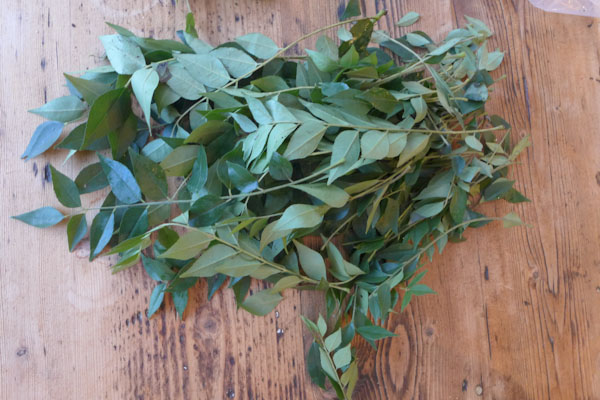
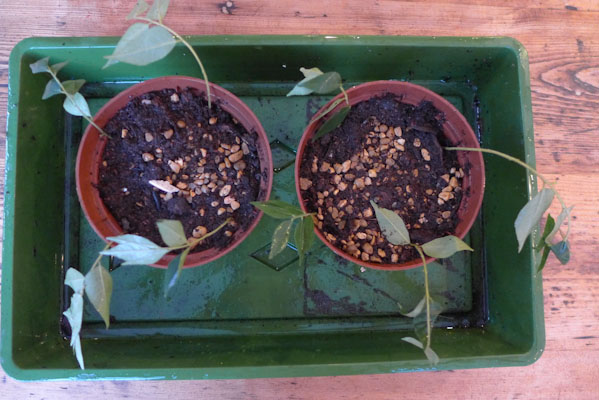
The potting mix I’ve used is a mixture of multi purpose compost, sand and horticultural grit. The key to taking any cuttings is to supply them with a free draining medium (hence the grit) that will supply the developing roots with lots of oxygen. As with all cuttings I place each one around the edge of the pot (4 in each).
Cuttings of any sort need to be kept out of direct sunlight and in a humid atmosphere for the first few weeks if they are to succeed. As a result I keep them on our north facing kitchen bay windowsill, inside an unheated propagator. I’ll mist the plants once a day to keep the humidity levels up.
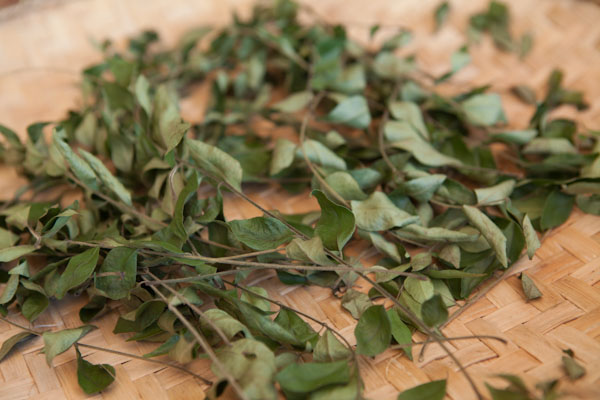
Based on my experiences so far I’ve put together the below guide on how to propagate and care for curry leaf plants here in the UK.
How to Propagate Curry Leaf Plants
Given the low success rates I’ve found that it is essential to use rooting hormone powder or gel on cuttings. Doing so will maximise your chances of success.
Root suckers.
This is probably the easiest and quickest way to propagate a curry leaf plant. However this method only works if you have a mature curry leaf plant already. Mature healthy plants tend to push out small shoots (suckers) from the roots around the base of the plant. If you are careful you can detach these suckers and repot them to create fresh new plants.
When you see a sucker, wait until it is around 10-25cm tall and it has a few sets of leaves. Water the parent plant well to soften the soil. Next carefully dig around the sucker and with a clean sharp knife separate it from the parent plant – being careful to remove a good amount of connected roots with it.
Once the sucker is removed pot it on into a free draining potting mix and keep it out of direct sunlight for 2-4 weeks while it established. Here is a great video showing the process in detail.
Stem Cuttings
Propagating from stem cuttings is hard but not impossible. The problem is that most bunches of fresh curry leaves that you buy in Asian supermarkets tend to mainly contain compound leaves (petioles). Unfortunately you cannot propagate from these leaf cuttings.
Instead you need to find a bunch of curry leaves (as fresh as possible) with part of the stem still attached. Remove most of the leaves and make a fresh cut next to one of the leaf nodes. Given the low success rates, I have found that it is essential to use rooting hormone powder or gel on cuttings. Doing so will maximise your chances of success.
Grow from Seeds
In the UK growing from seed is another good option. Seeds are readily available online. Like chillies the seeds will need needs a relatively warm temperature to germinate (between 16-24 degrees Celsius. For tips take a look at our guide to germinating seeds.
How to Care for Curry Leaf Plants in the UK
Growing curry leaf plants successfully in the UK is entirely achievable — our readers have been doing it for years. The key is understanding that Murraya koenigii is a tropical plant and in order to thrive it needs to be treated like one. Aim to give it warm, bright, slightly acidic conditions indoors for most of the year, with a summer holiday outside in a sunny sheltered spot when the weather allows.
Watering
Water is probably the single most important care factor for UK-grown curry leaf plants, and there are two things that matter enormously: what you water with and how often.
Use rainwater wherever possible. Tap water in most parts of the UK is hard — it contains dissolved calcium and magnesium (lime) that accumulates in the compost over time and raises the pH, making it more alkaline. Curry leaf plants prefer slightly acidic conditions and will show signs of stress — yellowing leaves, slow growth — in limey soil. For my acidic loving plants, I use water from a water butt to avoid these problems.
Over Wintering
Being tropical, these plants do not like the cold temperatures that we get in the UK over winter. I have found the best place for these plants over winter is a heated (if possible) conservatory. Be sure to reduce watering when the temperatures drop to avoid root rot.
Don’t be surprised if your plant drops it’s leaves over winter. This is perfectly normal and is just the plant going into dormancy until Spring arrives. It can be beneficial to prune back some of the stems (not by more than 50%) if the leaves drop. this will encourage fresh growth in Spring when temperatures and light levels increase. Much of the information in our chilli overwintering guide is relevant to overwintering curry leaf plants.
How to Store/Preserve Fresh Curry Leaves
By far the best way I have found to store fresh curry leaves is to freeze them. Compared to drying them freezing preserves that fresh aromatic flavour much better. Check out out full guide to freezing curry leaves.
Drying curry leaves also works well. I simply leave the leaves for 1-2 weeks on a sunny windowsill until brittle before storing in a dry airproof container..
If you are interested in growing other heat loving plants see our complete guide to growing chilli peppers.
I leave in Toronto, Canada (zone 4) with freezing winters but, my curry leaves shrub, in a large planter has survived for the past 6 years. I leave it out during summer where is soaks up the sun and flourishes between June and September and produced multiple baby plants. During fall, I bring it indoors and place it in front of a south facing window. Even during winter, I am able to get enough sprigs for my curries.
I got the sapling from a friend in New York. They had it growing in their backyard for years. It has survived multiple winters which has the same weather patterns as Toronto.
I have tried planting the sapling in ground couple of times in the summers but they never came out hibernation. Going to try it again this summer using one of the baby plants that are peeping out of the soil.
Hey guys. Unfortunately currey leaf cannot be propagated from leaf cuttings. You must use the stem. Bunches of curry leaves probably do not have any stem sections in there.
Best bet is to import plants or fresh seeds. In the northern hemisphere, here at least, they are finishing flowering, so could try getting seeds in a month or 2.
Best of luck!
Quite correct for the usual gardner but there are techniques available for tissue culture from the plant leaf which can provide numerous plants.
This is an old post, but I thought I would leave a comment. I’m also trying to grow curry leaves from fresh sprigs I purchased at my local South Asian grocer. I’m super fortunate that I know two places (here in Washington, DC) that sell them cheap and fresh. I’m not sure how well they’ll do, but I’m going to try placing them in water instead of soil. I’ve had success using just water with very woody ficus cuttings, so I’m hoping to get good results with these semi woody cuttings.
On another related note, I recommend freezing your fresh curry leaves to retain their flavor (essential oils). They stay very fresh for a long time in ziplock bags. This also works for ginger and Thai bird chilies which are used regularly in South Asian cooking.
Theo,
Thanks. Freezing is indeed a great way to preserve curry leaves. With regards to propagating them I think the freshness of the sprigs makes a huge difference to the chances of success…
You can buy curry leaf plants in the uk. I bought a small plant a few years ago which is now 6ft tall. Admittedly I took it to Greece, where the climate is much better, but if you keep it on a sunny windowsill it will be fine.
i’ve also being trying to source this plant in the UK. its essential for Tadkas and the kind of south indian simple veg curries so well suited to fresh garden produce and outdoor cooking in summer… its 2017 now… curry leaf plants are now available online – at a price – in the uk will generally cost you 40 quid plus to buy a small plant. the main thing is being able to overwinter them at a tolerable temp. in the right conditions.
As you said, they can be grown from cuttings – the problem being, sourcing a decent cutting with semi mature stem material, because unless you know someone generous with a large plant, you’re probably going to find yourself out of luck. as i understand it, the whole fresh leaves you can buy in the uk high street are compound leaves, those things do not have the semi mature plant stems you need. The petiole is what you are going try and propagate from. a leaf cutting in other words, not a stem cutting. or maybe try seed, which is much easier to find online.
Hey Im curious on how this experiment turned up. I’ve got a feeling that tropical cuttings need to be treated like they are in a tropical climate. Hot and humid, as when root some vietnamese coriander cuttings. But not too wet though.
I have a curry plant which is 6 months old and is doing very well. I keep it indoors on a sunny window seal. Do not keep it outside or the bugs will kill it. Do not use tap water to water the plant always use rain water as tap water tends to add unwanted lime. When re potting do not use ordinary compost. either use citrus compost which is slightly acidic or use a mixture of soil and coconut coir which you can buy online or from pound stretcher. Do not add building sand which has some lime content. In winter water it with slightly warm water once a week and let it dry out in between. Feed it with miraclegro once in 2 weeks.
Hi there,
I live in the UK and bought a curry leaf plant from Ebay a couple of years ago and it has grown successfully in my conservatory.
Hello there, it seem like you having problem with trying to propagating the curry leaf. Well, I don’t know if leaflet will rooted, but you need the STEM. The one that not too young*yellow-green* either old *woody hard*. Angle cut it and put in lukewarm water till the water cooled itself. After that cut once again. Stick the prepared stem 2-3cm in moist soil with good drainage. Always keep the soil moist and warm no need for direct sunlight ATM. The root will took few weeks to months. Depend. Or, you can skip the lukewarm water if you get the stem that still fresh in few hour. Try this one, mine work well.
I did air layering( propogation) on my curry leaf plant and I succeded. I live in sunshine State Notheren California where the weather is 100 plus in summer time. Good weather for growing almost any thing all it needs little TLC.
Pete,
I’m very jealous…I’m trying again this year but I may have to concede that it is just too cold here in the UK for curry leaves 🙁
No, it isn’t. I have been growing curry plants (my husband is Sri Lankan so this is imperative) for years in the kitchen. In summer they go out into the sun. Mine are a few years old and very tall. They lose their leaves in spring but have new growth at the same time on every tip after that ready for our summer.
Anita,
Thanks for the comment. Any other tips? How often do you repot them? South facing window over winter?
I haven’t managed to grow any yet – but have a friend who has a little potted plant that is quite bushy now – it’s about 15 months old. I have read that mid to late summer is the best time to take cuttings with a ‘heal’ and that covered and kept damp and warm in a light place they take 3 weeks to root up !! Some people even just put theirs in a glass of water on the windowsill till the roots grew and then potted them up. THAT is what I did with some of the Lemon Grass you get in the supermarket in little ‘sticks’ with virtually no roots. I put them in glasses of water in the spring – and then thick roots grow and a I pot them up. Which is great as now I have several large potted plants of them – about 18 inches tall and with plenty of new growth – to the point where I think I might have to split them up soon too !
SusanM – I may try some more heal cuttings if this batch doesn’t work. Regarding your idea of rooting cuttings in water I do this regularly with basil plants. Because basil are soft plants they root incredibly quickly so it only takes a few weeks to go from one plant to 10. You’ll never need to buy ready made pesto again!
Now THAT is interesting – as in the past I tried that with Basil – and it all rotted! Hmm.. perhaps I shall try again ! I have got a whole load of Lime Basil coming up – once it’s big enough I will try rooting some in water. [BTW grew this Lime Basil last year – it was wonderful ! ]
SusanM – I think the key with al cuttings is getting the light levels right. Lots of indirect light is usually the order of the day. I have a small north facing bay window in our kitchen which seems perfect. Lime basil – i’ve not tried that before….sounds like it would be right up my street!
I might have better results now – I am in northern Portugal !! lol!! And the lime basil is really good and comes from Suttons .. [Hope you don’t mind the link .. if you do .. I am sure you can cut it out ! ]
http://www.suttons.co.uk/Gardening/Vegetable+Seeds/When+to+Sow+Vegetables/Vegetables+to+Sow+in+May/Herb+Seeds+-+Lime+Basil+Mrs+Burns_163558.htm
Oooh I’ll be watching your progress with interest – I love limda which have the most amazing smell. I have found a few sellers of curry leaves on ebay but they are quite expensive especially compared to the bunch I can buy at my local Asian shop.
Curiousplants which is UK based seem to sell seeds but aren’t in season at the moment. Will have to try next year.
When I get a bunch of stems, I take the leaves off the stems, give them a good wash in cold water then freeze them. Whenever I make a dhal or some shaak (curry) that needs them, I can easily take a few leaves out of the box.