
Chilli Plants Turning Yellow – How to Resolve
One question that gets asked time and time again here on the Chilli King is why are my chilli plants turning yellow? Yellow leaves is a common sign of stress in plants which usually means you’ll need to identify the most likely issue in your growing environment. There are a number of possible reasons listed below that can cause yellow leaves. As is often the case with diagnosing problems it is usually impossible to say definitively what the issue is however below we have listed the common causes of yellowing leave on chilli pepper plants.
Nutrient Deficiency
One of the most common causes of yellow leaves on chilli/pepper plants is a lack of nutrients, particularly nitrogen. This is more common when growing peppers in pots as opposed to in the ground. The reason is pots can only hold a finite supply of nutrients in the soil or compost. The nutrients in a pot can become depleted after a few weeks of vigorous growth. To avoid this aim to feed your plants regularly to maintain strong growth and maximise flower/fruit production.
As a general rule we aim to feed our chilli plants once a week as soon as they start producing flowers. That said if you’re using small pots you might need to increase the frequency. While you can buy feed specifically formulated for chilli plants such as Chilli Focus which is great I tend to use regular liquid tomato feed. I water it down to half the recommended strength and feed my chilli plants once per week and continue to have great results.
For a full seasonal feeding schedule see our guide to feeding chilli plants.
Over Watering
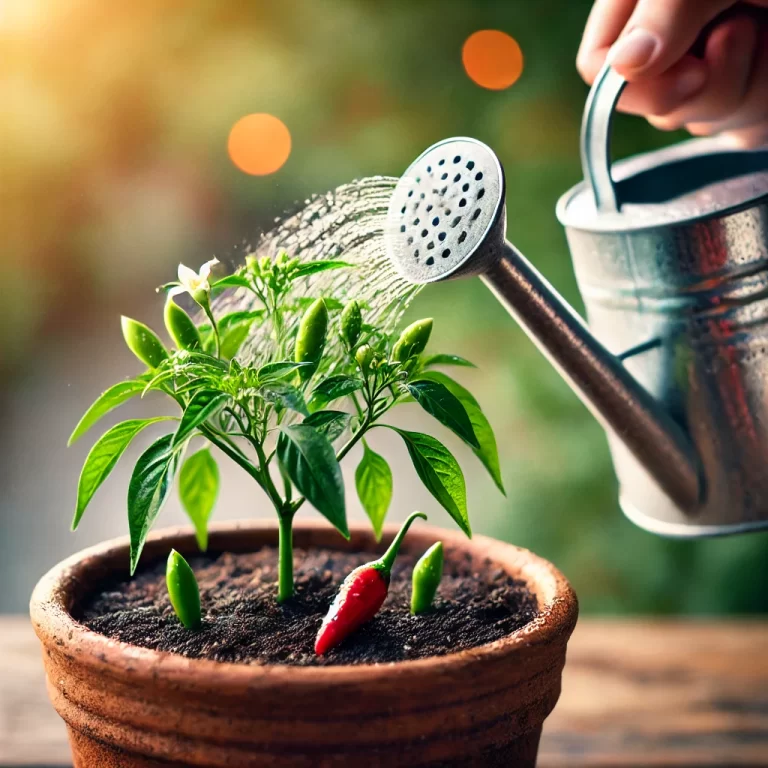
Another common cause of yellowing leaves is over watering. Over watering can wash the nutrients out of the soil around the roots. Based on numerous discussions with readers over the year we know a lot of people over water their chillies. As well as encouraging pests, fungus and diseases over watering can also reduce the heat levels in plants.
Even when the top of the pot looks dry it can still be moist just a cm or two below the surface. There are several ways to check the actual moisture levels below the soil surface.
- Use a basic water meter probe to check the moisture levels in the middle of the rootball. These meters are very cheap, reliable and accurate. They take the guess work out of it.
- Another simple method I use to see if my plants need watering is to lift the pot and gauge the weight of the plant/pot. Do it every day and you’ll soon get a feel of when the plants are very dry and in need of a water.
- If you are unsure after lifting the pot put you finger in to the potting medium to feel how moist the compost is.
Chilli plants are tough resilient plants and thrive in warm climates with minimal rainfall. In our experience it is better to slightly under water you chilli plants rather than over water them.
Getting watering right is one of the most important skills in chilli growing. See our complete guide to watering chilli plants for UK-specific advice on frequency, technique and seasonal adjustments.
Cool Temperatures
I’ve also noticed that plants which I leave outside at night or get exposed to cool night time temperatures tend to be more susceptible to yellowing leaves. Chilli plants love warm temperatures. Cool night time temperatures (which can be all too common here in the UK) are a common cause of yellowing leaves.
Spring can be a tricky time for growing chilli plants here in the UK. Even in a greenhouse, night time temperatures can drop very low which can stress the chilli plants. The problem is even more heightened if you start your plants of early in January/February.
If you are growing your plants outdoors, it can pay to move your plants inside each evening and then put them out again each morning to help avoid the pale leaves.
If cold temperatures are causing leaf problems in a greenhouse, a thermostatically controlled heater prevents temperature dropping to damaging levels — see our greenhouse heater guide.
Chlorinated Water
Water from a domestic tap will almost always contain small amounts of chlorine which can cause yellowing of leaves in young plants. Try to use rain water if possible as this will be chlorine free. If you do not have a water butt then try to let the water you use from the tap stand for 24 hours before being used on your plants. Doing this allows time for the chlorine to burn off and evaporate making it much more palatable to your plants.
Rootbound Plants
When a plant outgrows it’s pot the roots circle round the inner edges of the pot looking for fresh soil/compost to grow into. When this happens it usually means there are not enough nutrients left in the growing medium to support growth. If you leave pot bound chilli plants the next step is usually a yellowing of the leaves.
If your chilli plants have yellow leaves look under the pot to see if the roots are escaping from the drainage holes on the bottom of the pot. If they are the plant is likely rootbound. Repotting into a larger pot is likely to fix the issue. Take a look at our potting on guide for more details.
Low Light Levels
Plants kept in very low light conditions can develop pale, yellowing leaves as they lose chlorophyll. This can be particularly relevant for UK growers who are trying to grow chilli plants on north-facing windowsills or in darker parts of the house.
Chilli plants love high light levels so if possible it is always best to grow next to a south facing window or ideally in a greenhouse. In spring and early summer I use these Spider Farmer SF1000 grow lights to ensure my plants have optimum light levels. Then during the summer I move them out to the greenhouse where they get sufficient natural light.
The exception to this ‘high light levels’ rule is if you are trying to overwinter your chilli plants. During their dormancy period chillies will tolerate low light levels. For more details take a look at our full overwintering guide.
Grow lights are the most reliable solution for UK growers struggling with light levels — see our complete grow lights guide.
Natural Lower Leaf Drop
Much like other fruit plants such as tomatoes and cucumbers the lower leaves on chilli plants do naturally die off as the plant grows. Before dying the lower leaves can yellow before they dry out, go crispy and fall off. This is perfectly natural.
While not 100% necessary, I tend to carefully cut off and remove any yellowing lower leaves. This just keeps the plants tidier and reduces the risk of fungal infection that can be increased when dead/rotting organic matter is in close proximity to the plants.
FAQ
Can yellow chilli leaves turn green again?
It depends on the cause. Leaves that have yellowed due to nutrient deficiency can sometimes green up once feeding is corrected, but severely yellowed or damaged leaves often do not recover — they’ll drop off and be replaced by healthy new growth. Don’t worry about the yellow leaves themselves; focus on preventing new ones from yellowing.
How do I fix overwatered chilli plants?
Stop watering immediately and move the plant somewhere warm and bright to allow the compost to dry out fully before watering again. If the compost is severely waterlogged you can carefully repot into fresh dry compost and trim any black/brown, mushy roots you find. Most chilli plants recover from overwatering if caught early.
Can cold temperatures cause yellow leaves on chilli plants?
Yes — chilli plants are tropical in origin and highly sensitive to cold. Exposure to temperatures below about 10°C, particularly overnight, causes stress that manifests as yellowing, pale or dropped leaves. Always bring container-grown chillies inside when overnight temperatures fall, typically from September onwards in the UK.
Thanks very much for the advice. We some flood water that came in part of my garden,too
moisture must be the cause
Hi
Thank you for this informative post. I have overwatered my chillies unfortunately, is there anything I can do to dry them out. I have repotted them and had used epsom salts as I heard the magnesium is great for the plants. But maybe i soaked them too much? The leaves have become very soft and are yellowing. Can i revive them at all? Regards, Amanda
Amanda,
Best to simply leave your plants for longer between watering. You could also try feeding with some regular tomato food. Stick with them and hopefully they will recover!
Thanks for the advice. I have a 5 year old Scotch Bonnet mini bush on my window ledge and it’s leaves have gone pale recently.
Hope I can cure it with nitrogen fertiliser as you suggest.
Cheers. Paul. Liverpool UK.
Good luck Paul!
Thanks for the advice, I think I know what’s wrong now.
Helpful instructions
I found the information very helpful
Great article, thanks so much! Could be a few things at play here so will test out some of your tips. Frist time growing chillis and they’ve been doing great up until very recently so think I may have got over zealous on the watering after being away for a day! Thanks though!
First time ive grown chillies and have done it from seed, they are about 2″ tall and outer edge yellowing is that means overwateeing them, if I leave them a week will they come back stronger?
If i had to guess I would say overwatering or inconsistent moisture levels are the most likely causes.