≡ Menu

Disaster has struck. Yesterday morning i forgot to take the propagator lid off one tray of chillies that were on the conservatory window sill.  I got home and discovered that the seedlings that had germinated had been frazzled by the heat. The conservatory itself got up over 35 degrees so it must have been even hotter in the propagator!
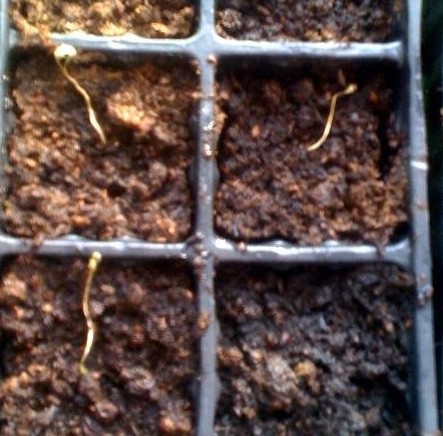
Scorched Chilli Seedlings

I’ve been keeping the lid on the prop at night to help keep the seeds that have yet to germinate warm at night.

Now i have several trays of chillies either germinating or in very early stages of growth it got me thinking about how vulnerable they are at this stage of growth. I tend to check on them at least twice a day to pick up on any issues as soon as possible and as you can see above this is often not enough!

Here’s a list of things to look out for:

Indoor Temperatures

In Spring time the weather can be very changeable. As i mentioned above I got caught out  by what turned out to be a sunny warm day, even though it was quite cool when i left the house in the morning.  After a long cold winter it is easy  to forget how hot it can get in a greenhouse, conservatory of windowsill when the spring sun finally gets going.

In my conservatory I tend to close lots of the blinds if it looks like being a sunny day to help keep the temperature down a bit.

In the greenhouse it is essential to fit auto vents that open via solar power automatically when the desired temperature is reached.

Night Time Temperatures

Warm sunny days are often followed by cold nights. It’s well worth investing in a simple min/max thermometer so you can keep an eye on night time temperatures (and daytime temperatures if you’re out of the house!). I aim to keep my chilli seedlings at no less than 15 degrees at night to ensure steady growth. I’ll move the thermometer around between my light box, window sill etc so none of my crop get too chilly.

Moisture Levels

Young seedlings are much more susceptible to all issues to do with watering. Add in to the mix that your seedlings may be in small seed cells or trays while being under artificial lights or a propagator and they can suddenly be more vulnerable to over and under watering.

In hot conditions small seed cells can dry out very quickly so aim to check the moisture levels at least twice a day. Pouring water onto such small quantities of compost can water log them increasing the chances of rot/fungus. Instead i always try to spray water using a basic hand sprayer at regular intervals.
2 comments

One of the most important things you need to do to maximize the growth of your chilli plants, particularly in early spring when the days are short,  is to maximize the amount of light they are getting. Without large amounts of light growth rates slow down and the number of ripe chillies you can harvest later in the season will fall.

This can be an issue if you are growing pepper plants here in the UK and don’t have either a greenhouse of nice sunny south facing window sill. Of course you can boost the light your plants receive by using artificial lighting but as i discussed in my last post there are cheaper ways to increase the light levels.

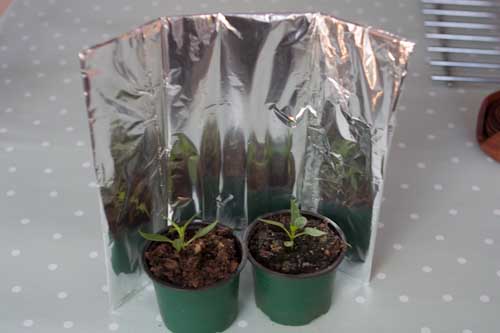
One of the easiest (not to mention cheapest) ways to boost light levels is to build a light reflector like the one below. The aim of this is to reflect the light coming through the window back onto the plants. This should ensure that your plants get the light they need from all angles.

Light Reflector

The Build

Here is what you’ll need for the build;

  • some flat cardboard
  • some pva glue
  • a roll of aluminum kitchen foil

1. First off measure and cut your cardboard. The size you require will depend on what size of chilli plants you are going to be growing.

2. Score the cardboard (or simply bend it) so that it forms a shallow ‘U’ shape. By surrounding 3 sides of the plants with the reflector, more of the light coming in through the window will be bounced around onto the plants.

3. Coat one side of the cardboard with glue then cover with aluminum foil, smoothing down with your hands to minimize any creases/bubbles. Alternatively you can simply tape the foil onto the card as in the picture above.

[ad name=”square”]

I get so many emails from readers asking what the trouble is with their young chilli plants. At this time of year (late winter/early spring) the answer is virtually always either lack of light or lack of heat.

The above method is great for making the most of the natural daylight if your keeping your plants on a windowsill. However be aware that a windowsill is often the coldest place in the house at night when temperatures can drop significantly. As a result i recommend you always move you plants away from windows at night.

4 comments

Now that some of my chilli seeds have germinated my main aim is to get as much light to them as possible.

While we’ve had a few glorious Spring sunny days the weather is still a bit unpredictable and the days not too  long. As a result it is crucial to get as much light you your chilli seedlings as possible. The more they get now the more developed they will be when summer finally arrives and the sooner you’ll get fruit from them.

I’ve written in the past about how I use regular fluorescent tube lights to help give my chili seeds a boost in the early spring. While this is cheap and very effective I’ve heard from quite a few readers that they don’t have the space for specific grow lights or a grow box.

I also use a couple of other methods to get supplementary light to my chilli plants early on in the year. Below are a couple of cheap ways you might be able to use without having to buy additional lighting equipment.

Kitchen Lights

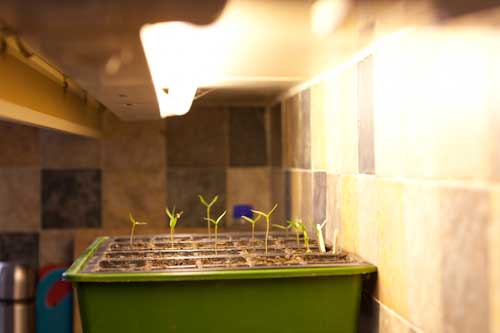
After moving house last year I recently discovered the previous owners had fitted under cupboard lighting in the kitchen. Not only is this great when cooking in the evening but i have recently started to realize it’s potential to help boost my chilli growing!

Kitchen Lights

Our kitchen is nice and warm at night i move a couple of trays of seedlings into the kitchen (from the conservatory) each evening and switch on the lights for the night.

These low powered lights are only 16Watts so don’t cost much at all to run yet they produce perfect light to help keep chilli seedlings growing, especially at this time of the year when the days aren’t the sunniest. These types of lights don’t produce much heat so you don’t need to worry about scorching your tender plants or them drying out too quickly.

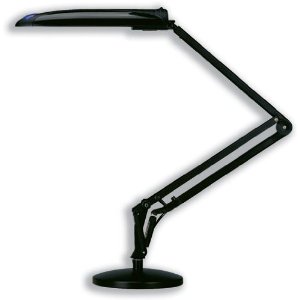
Desktop Grow Light

Desktop Fluorescent Lamps

If you don’t have under cupboard lights in your kitchen you may already have a desktop lamp that may be suitable for giving you chilli plants a boost.

Many desktop lamps, such as the one on the right use CFL bulbs which can be used as a temporary light source for your seedlings. You can pick them up on amazon pretty cheaply if you don’t already have one.

If you already have a lamp that might fit the bill be sure to check the type of bulb your desktop lamp uses as a regular incandescent bulb will not do the job. They produce the wrong spectrum of light and emit way too much heat which will scorch and likely kill your plants. Only use lamps with a Compact Fluorescent (CFL) bulb.

Cheap Grow Light Tips

It’s worth bearing in mind that with both of the types of fluorescent lights mentioned above that you need to keep the light very close to the seedlings to have the maximum benefit. I usually try to keep the seedlings within 15cm away from the light to get the most benefit.

These CFL lights are great for young seedlings however as chilli plants grow they require light from a different end of the light spectrum. As a result after a few weeks of CFL light your plants will either need regular sun light or a more specialized grow light that will allow the plants to flower.

General consensus states that plants should have at least 4 hours of darkness per 24 hours. As a result try not to keep your pepper plants under your grow lights 24/7.

When using higher grade grow lights it may become necessary to add a small fan to help circulate the air around seedlings in order to help keep them cool and reduce mold around the tender stems. Also circulating air will help strengthen the plants stems – essential if you are planning on moving them outdoors in the summer times.

When using grow lights you do need to keep an eye on your seedlings more regularly. As mentioned above you’ll need to check them regularly for excess heat (curled/scorched leaves), signs of being too dry or at the opposite end of the scale becoming moldy. Very young seedlings are very susceptible so be sure to check on them at least twice a day so you hopefully have time to rectify any issues before the plants are permanently damaged.

5 comments