≡ Menu

Following on from my last post here is another reader question (From James) regarding leggy chilli seedlings and grow lights.

Question

I started some some plants from seed. They took a couple weeks to germinate but they finally came up. the sun is too hot outside for the little seedlings so I put them under a grow light I bought at Home Depot. It is a Phillips incandescent bulb and I put it in a desk lamp and shined it down on the seedlings. About a week or two later the seedling have grown dramatically but they are all stems and have not even begun to show true leaves even though they are 3-4 inches tall. Is this normal?
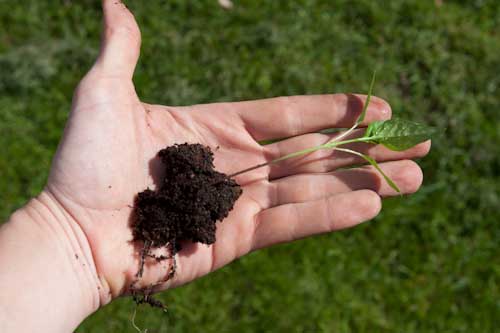
Pricked Out Cayenne SeedlingIs this seedling leggy?

I have seen pictures of much smaller plants that have at least two sets of true leaves and are have the size. I was thinking maybe the light frequency is wrong and should change lights. What are you thoughts?

Answer

There are a couple of points i’d like to discuss that are brought up by your question.

First of all I’ve noticed that different varieties of chillies tend to produce very different shaped plants, even at a very early stage of growth. The picture above is of a Cayenne seedling which always tend to be a bit leggy, no matter how much light they receive. At the other end of the scale varieties such as Naga or Jolokia produce very compact seedlings that focus their early growth on foliage production rather than putting on height. Therefore much will depend on which variety you are growing.

You mention that you are using incandescent bulbs. While they can be used to promote growth in the early stages the big downside of these bulbs is the large amounts of heat they produce. To be very effective they need to be very close to the plants, usually so close that the delicate seedlings end up getting scorched or damaged. By far the best type of lights to use for young chilli plants are Compact Fluorescent Bulbs as they output very little heat.

[ad name=”square”]

OK, so if your seedlings are a bit leggy what can you do? Recently I talked about the best ways to pot on chilli plants and mentioned that if plants are slightly leggy you can simply plant them a bit deeper when re-potting them. Doing so will encourage more roots to sprout from the buried part of the stem, making a stronger healthier plant in the long term.

4 comments

We receive so many questions from eager chilli growers we thought it is a shame to waste all of the replies we send back. So….from now on we’ll start posting questions sent in by readers along with the replies we send back. Hopefully by doing this we’ll share the love a bit and help other chill heads out there.

Question:

I have a chilli plant in it’s first season, and there are five chillies that have started to sprout (0.5-1.0 cm).  But there are lots of other flowers and buds following on behind. So, can a plant have too much fruit? Am I best to pinch out a few flowers to concentrate the growing energy to a smaller crop? I am in Aberdeen, Scotland, and we don’t get a great long growing season, so my chillies rarely turn all red.

Answer:

Well as a general rule I avoid pinching out flowers and prefer to let the plants do their own thing. That said there are a number of different ways you can help increase your chilli pepper yield.

One way you can help your plants is to use a feed in order to help growth and development. In early summer i start feeding my chilli plants with regular liquid tomato feed, diluted to about half the recommended dose. I water most days and apply feed once (sometimes twice) per week. Faster growth should allow the plant more time to mature the fruit it produces.

As you are growing your plants up in Scotland you are facing pretty cool conditions. Obviously you should try to maximise the light and heat the plants get by growing in a (heated) greenhouse if possible. If you’re growing outside and don’t have a greenhouse it may be worth buying some small plastic cloches to help keep the plants warm.

Finally as you mention the other remaining option is to pinch out a few of the flowers to concentrate the plants energies on fewer pods. In my opinion I’d only do this if the plant has set lots of fruit and by mid-late summer you really don’t think they are all going to ripen.

10 comments

Over the last few years of growing chillies by far the most common pest my plants have faced have been aphids. Over the last few years I’ve posted about how to treat an aphid infestation so this year i thought it was about time i was a bit more proactive and attempted to take preventative measure rather than  reactive ones!

Aphid Infestationimage credit

Having done a bit of research I’ve put together a little plan to help avoid having issues with aphids this year.

1. Keep growing area open

In the past I’ve grown most of my plants indoors either in the house or in a conservatory. I found that once i got an aphid infestation in such an environment it was very hard to get rid of. The main reason being that the aphids natural predators (bugs such as lady birds and hover flies) don’t have access to the plants when inside.

[ad name=”square”]

Obviously if the weather allows I’ll aim to keep as many plants as possible outside in the fresh air. That said as our Great British summer offers us spells of high winds and or colder temperatures I’ll inevitably have to move a portion of the plants indoors.

To combat the indoor infestations I’ll try and leave as many of the windows open in the chilli house in order to allow the predates equal access to the plants as the aphids. Luckily the conservatory I grow most of my plants in has many windows that can open fully.

2. Plant some marigolds

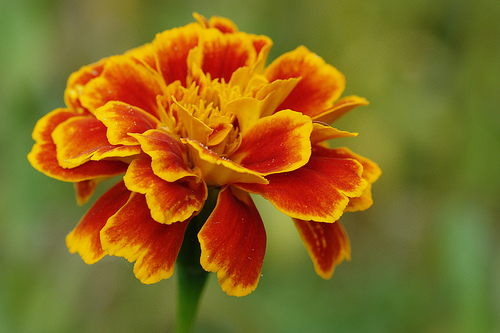
French marigolds are well known for their ability to help control aphids. Firstly they attract natural predators such as hover flies which will help avoid any infestations setting in. Secondly they are said to give off a chemical that acts as a natural repellent for the aphids.

These brightly colored flowers are usually readily available as plugs or small plants in most garden centers however to keep costs down and get as many marigolds as possible I’ve decided to grow my own from seed this year.

French Marigoldimage by brangal

Marigolds are fairly straight forward to grow – just sow the seeds in fine moist compost and keep them at about 18 degrees until they germinate. Once they reach 5-10 cm tall prick them out and pot into individual pots, window boxes or borders. As will most plants it is well worth taking a couple of weeks to harden the plants off before moving them outside or into a cold greenhouse.

3. Lady Bird Nests

Another easy method to attract ladybirds (which love to feast on aphids) is to put up some ladybird nest boxes in the garden. The way i see it the more lady birds i can attract, the less chance of my having any issues with aphids.

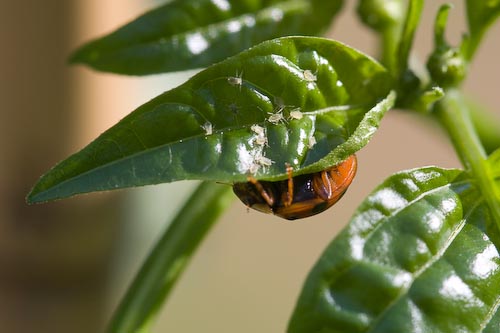
lady bird searching for aphids

The proof of the pudding was last summer when i spent about 20 minutes watching the ladybird above demolish an infestation of  aphids on one of my plants.

4. Sacrificial Planting

Another method I’m considering is using some sacrificial planting. This involves planting some plants nearby that aphids love, the idea being they’ll head there as opposed to onto my chillies. This seems a bit counter intuitive as there is always the risk they’ll head over to my chilli plants as they breed and infest the sacrificial plants.

9 comments