Aphids on Chilli Pepper Plants - How I Solved The Problem

June 30th, 2009

About a week ago i noticed that one of my plants (an orange habanero) was infested with aphids.

Aphids On Habanero Plant

Aphids On Habanero Plant

Aphids (sometimes called green plant lice) are small (usually, though  they can vary in size quite a bit) green insects that feed on plants mainly in temperate regions. They quickly multiply and can be very destructive, usually feeding on regions of new growth on plants.

To the right is a picture I took of the habanero plant in question. You can see that the aphids are focused mainly on the areas of new growth. I’ve found in the past that they simply demolish the new leaves/flowers as they emerge and if left to do this they’ll eventually kill the plant.

Getting Rid of Aphids - Tips & Tricks

I often hear people talking about spraying their plants with a weak soap water solution to deter the aphids from eating the plants. I tried this last year and to be frank it detered me from eating the chillies too! It also left my plants with a stick white residue from the soap suds.

One of the big problems with using insecticides to kill aphids is that they will also often kill the predators that eat the aphids meaning you only have a short term solution to your aphid problem.

This year I decided that i would opt for a much more natural approach to my aphid control. Perhaps the greenest way of pest control in gardening is to attract the natural predators of the aphids which include ladybirds, hoverfly and crab spiders amongst others.

Natural Solutions To Aphids

Much has been been made in the press recently about the invasion of harlequin ladybirds and how they are putting many species of insects at risk of extinction. Well the good news for us chili heads is that ladybirds are the number one predator of aphids.

So your number one strategy should be to attract more ladybirds. Believe it or not the easiest way to get more ladybirds onto your chillie plants is to simply buy ladybirds via the internet! I did this a couple of weeks ago and have had great success. I simply put the infected plant into the greenhouse and released the lady birds in there too and within two days the problem was gone!

Of course there is no guarantee that the ladybirds will stick around once they have no aphids left to eat.

Long Term Aphid Solutions

A longer term prevention strategy that has proved very effective to a good friend of mine is to buy a ladybird tower which provides any passing ladybirds with a ready made home in which to nest, ensuring you have an on site population of aphid munching beasts.

I’ve bought one of these little contraptions and placed it in the garden.  I have yet to have a ladybird family move in (it has only been up about 2 weeks) but i hope that once I have some new tenants move in I should avoid any further aphid infestations in the future! I’ll keep you possted!

2009 Chilli Growing Season Progress

June 14th, 2009

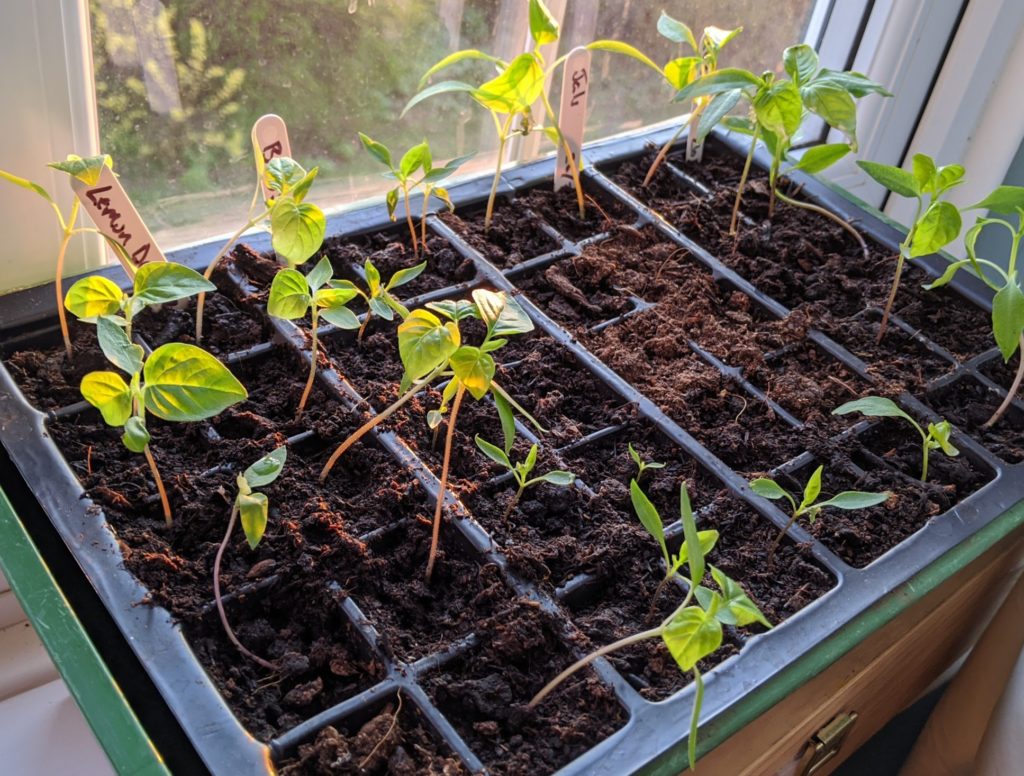
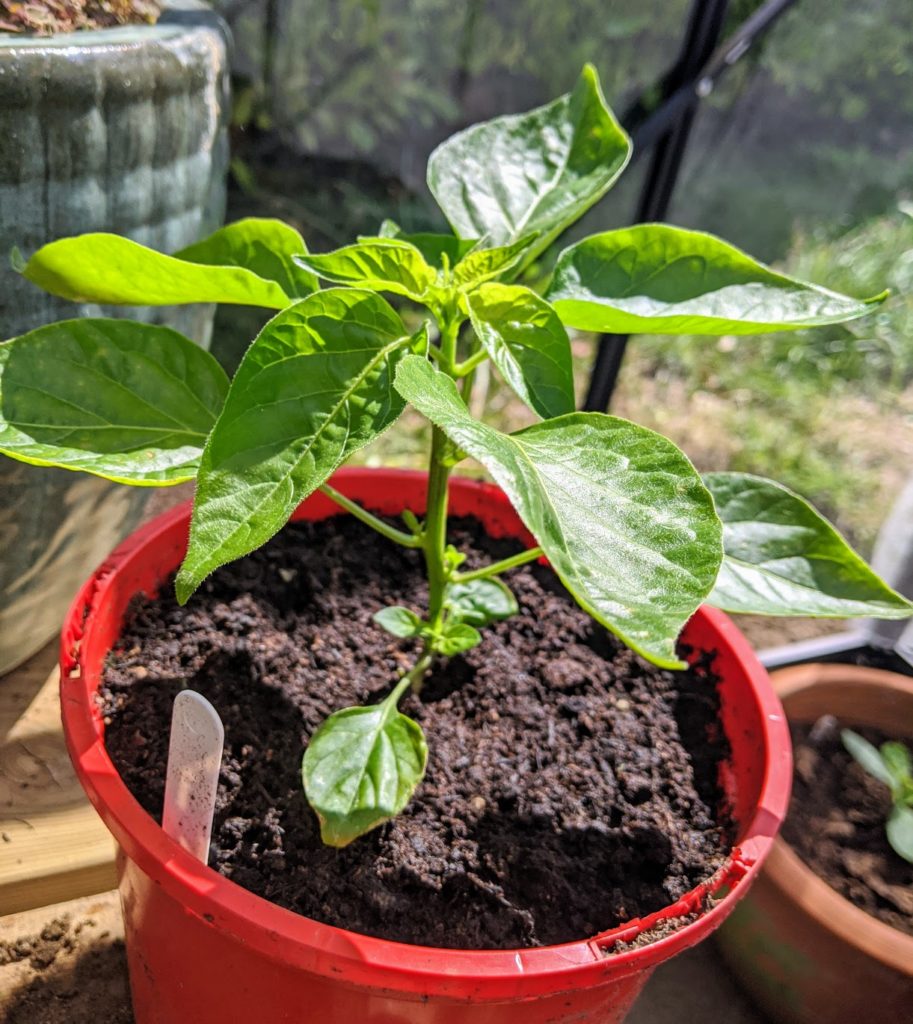
As mentioned in my last update I put my plants under a cfl grow light to give them a boost having started off this season so late. As you can see from the pictures the plants have made great progress under the lights

At the weekend I re potted the plants from the 3″ plastic drinking cups they were in to either 6″ or 8″ pots depending on the size of the plants.

Varieties I am growing this year are:

Orange Habanero

Orange Habanero


  • Bulgarian Carrot
  • Orange Habanero
  • Chocolate Habanero
  • Apache
  • Super Chilli F1
  • Scotch Bonnet

So far the best looking plants are the Bulgarian Carrots, Scotch Bonnets and the Orange and Chocolate Habaneros. The Scotch Bonnet has started to produce a few flowers which is pleasing as they can take quite a while to flower and fruit.

Unfortunately the downside to re potting into larger pots is that they no longer all fit under my 125W gro light. As a result some of the plants have moved out of the cellar and into a mini greenhouse outside. It will be interesting to compare the different growth rates between the two sets of plants. The big downside is that our current garden is very small and doesn’t receive a huge amount of direct sun light thanks to the neighbouring buildings (not to mention the unreliable British weather!).

Watering Chilli Peppers - A Few Tips

June 3rd, 2009

One question we get asked a lot here at The Chilliking is how much should I water my pepper plants?

Below we’ve compiled some watering tips to help you give your peppers the right amount of water they need to flourish.

Chilli Watering Tips

  • Plant your seedlings in clear plastic drinking cups. Not only will this save you money on expensive pots but you will also be able to see how dry/moist the roots are. You’ll soon see that the surface can look bone dry while just a centimeter or two below the surface the soil will be perfectly moist.
  • Chillies hate wet feet. Ensure your plants have lots of drainage and do not let them sit in a tray full of water. Always water from the top and allow any excess water to drain out of the roots by putting holes in the bottom of the pot helping to reduce fungal infections of the roots.
  • Avoid using tap water straight away. Try to let it stand overnight in a watering can or bottle before giving it to your plants. This will firstly let the temperature get up to room temp so as not to shock the plants as well as letting some of the chlorine evaporate meaning your plants get cleaner water!
  • If using liquid feed avoid the temptation to use strong doses. We recommend liquid tomato feed diluted to half the recommended strength.
  • Water regularly. Letting your plants dry out then giving them a big water can flush out valuable minerals from the soil/compost. Aim to water at least every 2-3 days, more regularly if required. Regular drinks will place less stress on your chillie plants.

The above tips are only advice. Different chilli varieties grown in different environments will al respond differently.

If you are experiencing problems with your plants (e.g flower drop, yellow leaves etc)  it is well worth doing some split testing to find out what solves the problem.

Simply take half of the problem plants and experiment - water less/more, add feed, bottom water etc and see what if anything helps cure the problem. Oh and if you find something that works be sure to pass on the tip by posting it on our chilli forum!

Grow Lights for Chillies

May 10th, 2009

Up until a couple of weeks ago the chilli seedlings had been under regular flourescent tube lights down in the cellar. With the arrival of some good weather a few weeks ago I moved them outside into the mini greenhouse. Unfortunately the weather seems to have taken a turn for the worse again - sunny one minute, cloudy and cold the next.

Last summer the weather was really poor (cool, wet and not much sun) for growing chillies. While I had some success many of the varieties I grew that take longer to fruit (such as chocolate habanero) ended up only producing a small number of fruit before winter arrived. I am keen not to suffer the same fate again this year, despite my very late start.

Chillies Under CFL Light

Chillies Under CFL Light


I have been a bit concerned that my plants are a little small for the time of year (i didn’t plant the seeds until March this year compared to November in previous years!). Unfortunately our garden gets very little direct sunlight (only a couple of hours per day) so I thought it was about time I gave the plants a little boost in order to try and catch up with the growing season.

I have an old Compact Flourescent Light (CFL) 125W Gro Light that I bought a couple of years ago but never got round to using tht I have finally rigged up down in the cellar. 

The light gives out 125W which is quite a bit of light! It came with a small reflector when I bought but it looks a little small. I plan to help deflect some more of the light towards the chilli seedlings by covering the inside of a large cardboard box with aluminium foil then placing the pots inside the box.

One thing i need to be careful is to monitor how much heat the CFL light kicks out. The seedlings are still quite small so I need to be careful not to frazzle them. I’ve started off with the bulb about 10 inches above the top of the plants. I’ll lower it a bit each day until I get within 3-4 inches so long as the plants do not singe or wilt - if they do i’ll just raise it an inch or two and leave it here!

As these big bulbs through out a lot more heat than the regular household flourescent lights (though much less than other types of lights) i have previously used I will consider buying a small fan to help keep them cool. In addition a fan can help reduce fungus that can thrive in a hot/moist environment. The air circulation from a fan also helps the plants grow strong stems which will make them stronger and better prepared for when they eventually make it outside!

The Perfect Pizza Recipe

April 30th, 2009

I made some cracking pizzas at the weekend. Following on from my pizza consultations last year with Scott at RealProjects I believe I have now perfected my pizza dough recipe. Below is the latest cut of the recipe;

This recipe makes about 4 10 inch thin pizzas.

The Perfect Pizza

The Perfect Pizza

Ingredients for the perfect pizza dough recipe:

1 sachet of fast action dried yeast
400 grams of tipo “00″ flour (available from most Italian delis or use strong bread flour if not)
100 grams of semolina flour
1 table spoon of salt
2 table spoons of honey
300 ml of water

Method:

Mix the flour, semolina and salt and place on the work surface in a pile and make a well in the middle. Mix half of the water with the yeast and honey then pour into the well in the flour mixture. Slowly mix the flour into the water well, slowly add the remainder of the water while mixing.

When all of the mixture has turned to dough you have to knead it for ten minutes. Obviously if the dough is too sticky add a little flour or if it is breaking up a bit add a tiny bit of water. After 10 minutes kneading shape into a ball, dust with flour and place somewhere warm for about an hour to proof.

While waiting for the dough to rise you can make your tomato sauce for the base.

After about an hour the dough should have roughly doubled in size. Now simply give the dough a quick knead for about 2 minutes (this process is known as knocking back) then divide into 4 pieces and roll out. The bases should be thin (the true Italian way) and about 10 inches in diameter.

Now simply add your tomato sauce, chunks of mozzarella and toppings of your choice.

Here are my tips that will help you make potentially average pizzas great:

1) Use a pizza stone if you can get one. If not try getting a piece of granite from the local stone merchant. Pre-heat this in the oven prior to cooking to ensure it is as hot as possible.

2) Pre-heat your oven and always have it on it’s highest temperature. Wood fired pizza ovens are far hotter than domestic ovens so to have a chance of getting good pizza you need the oven on max.

3) After you have rolled out the bases, place them onto sheets of baking parchment before adding your sauce and toppings. This will make it much easier to get the pizzas in and out of the oven quickly (helping you avoid either dropping your pizza or losing too much heat from the oven by having the door open for too long.

let there be light

March 26th, 2009

Ok so the class of 2009 are well and truly germinated, one week after planting the seeds. To help speed things up i used a heat mat from a reptile aquarium to provide the seed trays with a constant source of heat.

I germinated the seeds in the cellar but as the first seeds sprouted a few days ago not only do they need heat, but also light.In fact i’ve noticed a few of the seedling stating to droop slightly despite having moved the trays onto the window sill. Unfortunately i don’t have a south facing window so need to supplement them with some artificial light.

The most effective, tidiest and cheapest solution i have found is to mount a couple of small flourescent tube lights on a piece of mdf board. I have cut the board to fit snuggly over a cheap  chest from the local diy store, into which i place the seed trays. This will last until the seedlings are about 4 inches high and ready to go outside once the last frost has past.

The Chilli Lightbox

You can buy a lot more expensive rigs for growing plants however this whole set up probably cost less than £20 and works very well. A trip to your local b&q will supply you with everything you need. The flourescent tubes I use are the “cool white” variety as they kick out less heat than the regular ones which can scorch the delicate seedlings..

The type of light these tubes kick out is only really helpful to young seedlings so unfortunately you can’t really use this set up for all year round indoor growing. If that is your plan then you’ll need to invest in some more specialist kit i’m afraid.

Inside the lightbox

What i am planning on doing is moving the seed trays on to the windowsill during the day and back into the light box at night. As they’ll be receiving light pretty much 24-7 i expect to see some pretty quick growth.

The cool whiite tubes do not kick out too much light which is great. In fact, combined with the box the temp in the trays is a few degrees warmer than room temperature so the ungerminated seeds should still have a good chance of making it. In the past I have had seeds take up to 5 weeks to germinate so am not too worried that only about 50% have sprioouted to date - they were only planted 1 week ago.

2009 Chilli Season Underway

March 18th, 2009

Well usually at the ChilliKing our growing season starts some time in November. Unfortunately due to other projects we have not had a chance to get some seeds in the ground…..until now!

Here are the varieties we got under way yesterday:

  • Orange Habanero
  • Chocolate Habanero
  • Aurora
  • Tabasco
  • Bulgarian Carrots
  • Scotch bonnet
  • Jalapeno

None of the seeds were pre-soaked. The seeds were simply planted in cell trays and covered with around 10mm of regular potting compost (sieved). I’ve tried pre-soaking seeds before and had mixed results.

The first chillies of 2009 hit the soil!

The first chillies of 2009 hit the soil!


Making Up For Lost Time

In order to try and catch up for lost time we are using a heat mat to speed up the germination process. The heat mat was purchased from a reptile shop (they are designed to keep reptiles tanks nice and warm by emitting a constant heat). The seed trays were simply placed inside regular plastic propogators which in turn were placed onto the heat mat. The extra heat provided by the mat should at least half the usual time taken for the chillie seeds to germinate.

Follow Our Chilli Growing Progress

We’ll be posting progress on our growing season right here on the blog so keep checking back for progress updates.  In addition we’ll be posting updates on our twitter feed.

Just follow this link to keep up to date: http://twitter.com/thechilliking

How to Cook the Perfect Curry

December 30th, 2008


Most people are scared of attempting to cook a curry from scratch. The common misconception is that it is easier to reach for a ready made curry sauce from the supermarket in the belief that you will save yourself the hassle and worry about what spices you need, what order to use them and in what quantities and what dishes need which ones! Forget ready made sauces, they are generally full of oil, salt and preservatives and taste terrible when compared to traditional home made Indian food.


The real secret to making a good curry


In order to make your curry making much easier and more intuative the best plan is to do what the Indians do and use a Masala dabba or ’spice box’.  Rather than fiddling around with those little jars of spices that tend to sit unused in your cupboard you simply pop the lid off and you have everything you need to make a good curry set out in front of you. Here are some spices you may find in the typical masala dabba: 

  • Turmeric
  • Chilli Powder
  • Ground Cumin
  • Mustard Seeds
  • Cumin Seeds
  • Coriander Seeds
  • Garam Masala


When you have everything there in front of you it is amazing how easy it is to make a great dish as many curry dished start off with a similar base.


The following is a great base that can be used as a start to many Indian dishes:


1. Add one teaspoon of mustard and/or cumin seeds to some hot oil

2. When the seeds start popping add some finely chopped onions (for some recipes add garlic/ginger here)

3. Fry off the onions slowly until they go a nice golden brown colour

4. Add one teaspoon of turmeric

5. Add one teaspoon of garam masala

6. Add one teaspoon of ground cumin

7. Add half a teaspoon of chilli powder


Gently fry off the onions and spices for a couple more minutes and you have a great base for many currys. From here you can simly add some cooked meat, fresh chillies, vegetables or tinned coconthen some chopped tomatoes (fresh or tinned), and/or a tin of coconut milk to form your gravy. The options really are limitless.


The beauty of this method really lies with the masala dabba. You simply chop and fry your onions, pop open the dabba, add your spices and away you go!


Want one? Check out our Masala Dabbas in the Chilliking Shop!

Technorati Profile

Chilli King Online Store Now Open

December 24th, 2008
With the 2009 chilli growing season drawing near we are glad to announce that our online store is now up and running!

Now is the time to start planning which chillies you are going to grow in 2009 and we are pleased to offer a selection of chilli seeds for sale online. As an added bonus we are offering free postage and packaging on all orders within the United Kingdom.

Over the coming months we’ll be increasing the number of chilli related offerings available online, so be sure to check out the online shop from time to time. As you’d expect all payments are secure and all you need to get started is an active paypal account. Happy shopping!

BUY CHILLI SEEDS NOW


Eat Chillies to Lose Weight

November 11th, 2008

Most people know that having a higher metabolism means you burn more calories. 


But what exactly is metabolism? Metabolism is the amount of energy (measured in calories) that your body burns in order to maintain itself. Every individual’s metabolism is dependant on a huge number of variables such as their fat to muscle ratio, body weight, fitness, diet etc. Roughly speaking if you burn more calories each day that you consume over time you will lose weight.


Muscle is known to burn more calories in order to sustain itself than fat so roughly speaking the fitter you are, the higher your metabolism will be and the more calories your body will burn. This is why people exercise to help lose weight.


Wouldn’t it be great if there was a way to raise your metabolism without all the hard work in the gym? Well eating chillies have been shown by several studies to raise you metabolism by as much as 20%. So maybe chillies are the new super food that can help you lose weight.


Well before you get too excited eating chillies only raises your metabolism for a very short period of time so the overall effect of extra calories burnt per day is not huge from ‘normal chilli consumption’. In order to eat enough chillies to make a big increase in the calories you burn every day you’d need to eat such huge quantities that you would most probably damage your stomach!


So as with all things diet related the boring advice of taking regular exercise and eating a healthy balanced diet holds true once more. However it would be fair to say that chillies will help a little in the battle against the bulge!